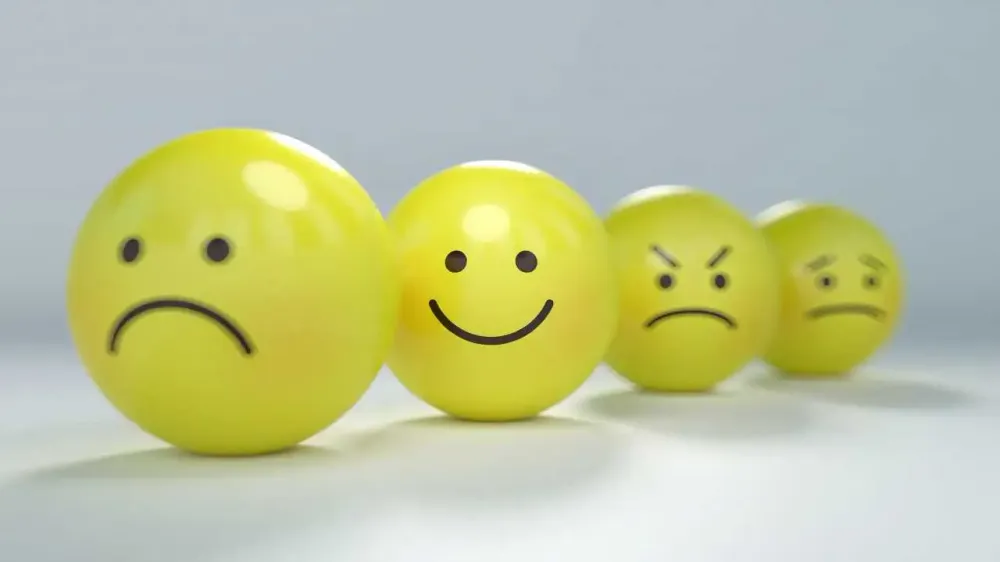
I can't, I don't deserve it, I'm not up to this — negative beliefs stop us from realising our potential in full.
They mostly come from childhood, yet they affect the whole of our later life. Negative beliefs have enormous power over what we do and keep us from being successful and happy. But you can break that power and turn it into something positive.
What are negative beliefs?
The word «beliefs» says a great deal in itself: these are sentences you believe in and that shape what you do. Now, these beliefs can be positive and support you in everyday life and in your decisions. Or they can be negative and keep you from unfolding your true potential. Negative beliefs like these might be, for example:
- I'm no good at this.
- I can't do it.
- Other people are better than me.
- I'm not worth it.
- I don't deserve success.
- Nobody loves me.
- I'm not pretty.
- I'm always out of luck.
These sentences and others like them have nothing to do with reality. They are not facts to be taken for granted. They are learned or acquired beliefs. The roots of these beliefs are often buried in childhood, because the self-esteem we feel as adults is largely governed by the way we were brought up.
Partners or colleagues also shape the way we see ourselves: if people keep telling us «you can't do that», one day we really will believe it and take it into our thinking as a negative belief. The negative has become our deepest conviction and holds power over what we do.
But, as with much in life, something negative can be turned into something positive — if only you want it enough.
How do negative beliefs affect my life?
Nobody should underestimate the power of thought, because every fundamental thought sets off a chain reaction inside us that can have either a positive or a negative effect. Positive beliefs can inspire us and carry us forward; negative beliefs hold us back in many ways and keep us from being happy.
An example:
- You think: «nobody likes me», «I look plain» or «I'm too fat».
- The reaction: you lose confidence and do not dare to talk to other people.
- As a result you may come across to those around you as distant and negative — and nobody talks to you. That reinforces the thought inside you: nobody talks to you because you are too fat or too plain.
- This in turn makes you withdraw even further and feel your negative beliefs confirmed — with the result that point 1 takes even firmer root among your beliefs.
The self-fulfilling prophecy runs its course and draws you into a vicious circle you can no longer step out of without changing your attitude. Because whatever it is you believe, you will always find confirmation that props your attitude up. This is as true of negative beliefs as it is of positive ones!
Which direction you want to move in is for you to decide. So it is never too late to question your own beliefs and to look into where the negative ones came from. Much of this happens in the subconscious and runs automatically. The first step, therefore, is to become aware of your inner attitude. Once you know where your beliefs came from, you can change them — and change your life.
Here is how you can turn negative beliefs into positive ones.
Happiness, money, love — you can achieve far more by changing your beliefs. You have to expose your negative beliefs and convert them into positive ones:
- Recognise your negative beliefs. The first step is to spot negative beliefs and take them in consciously, because as a rule our parents' attitudes, common sayings or personal experience are deeply rooted in our innermost being. The moment you learn where your beliefs come from, you may already have your first AHA moment.
- Question your beliefs. Now those beliefs are put to the question. Do they still hold today? Or are they in fact a thing of the past? Because we often go on looking for confirmation of these beliefs again and again, even though in reality they no longer exist in our life. Your task now is to gather concrete evidence that refutes your outdated beliefs. Did your parents teach you that «you get nothing for free in life»? Then think back on whether things have ever happened to you that simply "fell from the sky". Or whether someone gave you a present or a bit of joy for no reason at all, with nothing owed in return. It might be a lump of glucose at the chemist's, a friendly smile from the shop assistant at the bakery, or a friend who gave you her time to do something together.
- Refute your negative beliefs: you may gradually come to see that your negative beliefs are in fact entirely groundless, and even the exact opposite of reality. In our example, your new understanding would be: «you get a great deal for free in life». If you go through life with this new belief and your eyes open, you will find that gifts and pleasant things are waiting for you round every corner. The result: you will automatically let positive things into your life, and you will change what you do as well.
- Word your beliefs properly. Now you are ready to change your negative beliefs and to word them differently. In a positive belief there is no room for negation in any form. Words such as «not», «no» or «never» are dropped from the sentence or rephrased into their opposite. The sentences above then become, for example:
- I'm no good at this. => I am good at this.
- I can't do it. => I can do it. (think how much you have done already: finished school, got into another place of study, finished that too, found a job (or had one already)...)
- Other people are better than me. => I am just as good as other people.
- I'm not worth it. => I am worth it.
- I don't deserve success. => I will be successful (and perhaps I already am, you simply have not noticed).
- Nobody loves me. => Somebody certainly likes me.
- I'm not pretty. => Somebody thinks I'm lovely.
- I'm always out of luck. => I'm often in luck.
5. Anchoring them in the subconscious: in time these new positive beliefs will settle firmly into your subconscious and will shape your life and your actions just as the negative ones did before — only in a positive direction, one that will lead you to happiness and contentment.
In psychotherapy this method is called «cognitive restructuring».
Anyone who finds it hard to let go of such deep-seated beliefs, or to change them on their own, can ask our counsellors for professional support in person, or become a resident of the club.
If you enjoyed this article, share it with your friends! Thank you