Sex as a prayer — what a title for a book! That is the name of a book about sex with the subtitle: A guide for men and women to ecstatic loving and deep passion. The foreword to this book by David Deida says: “At least for a while we enter a timeless, spaceless and blissful union with the wondrous Beloved: and what better definition of spiritual liberation could there be?” Oh, how I would like such conclusions to come from everyone, including those who are cut off from a relationship with God and with their own sexuality. Sadly, that is not how it is.
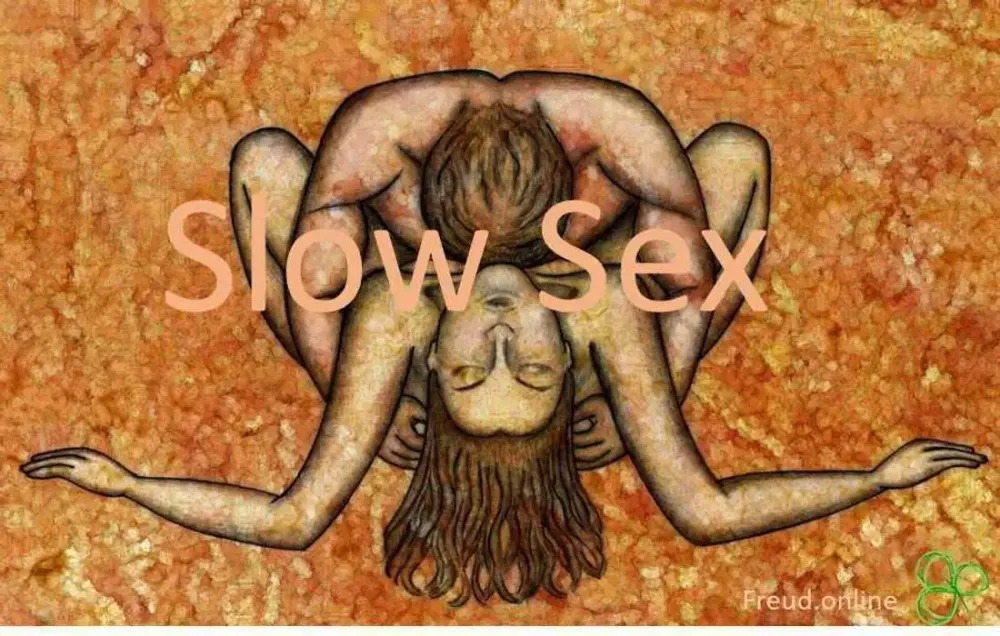
What is slow sex?
Sex is often aimed only at friction, pressure and direct stimulation of the genitals. Although these means are mostly effective when it comes to orgasm, they do not necessarily bring pleasure. The longer, the more sensitive and the more pleasant the path towards growing arousal, the better I can feel wholeness with my skin and my hair, my lips, my hands, the penis, the vagina and the vulva, my breathing and my movements, and the more pleasant the interaction with the partner. All the more rapturous, tangible and pleasant is the orgasm, and the emotional closeness that follows it; and the physical and emotional satisfaction, that is, the shared enjoyment. A sexuality like this needs time and a certain slowness. Not much more time (though it may be — and that is a matter of practice), but enough time for us to be able to interact with each other and with ourselves and to relax completely.
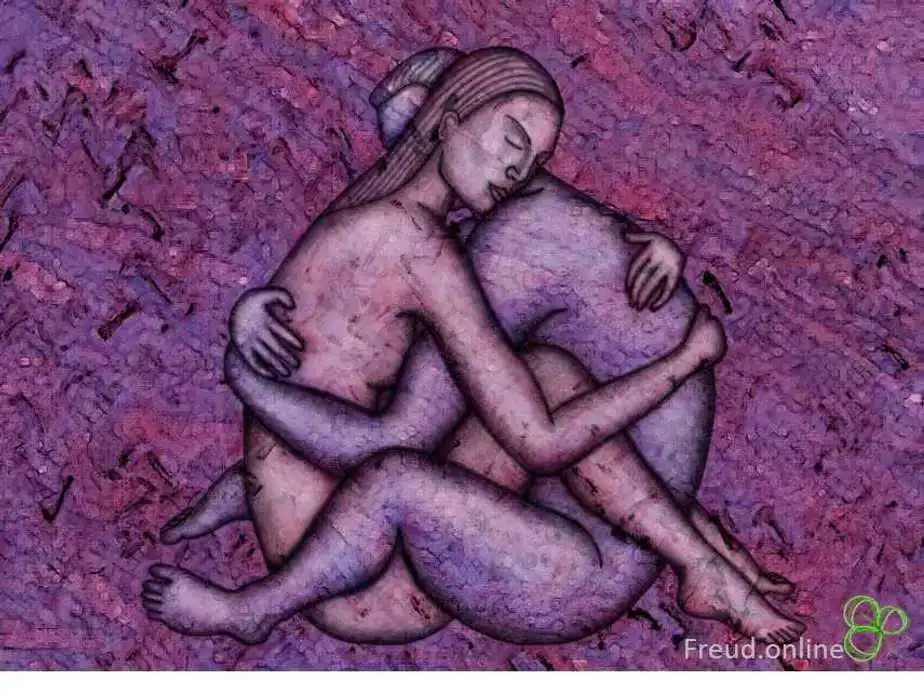
To reach this form of sexuality it often takes experimental discoveries of the body, in order to find out how it works and how it responds when aroused. That is as true of women as it is of men. Because the fact that men can reach orgasm more easily and more quickly does not mean that they experience a whole, real, complete orgasm; it is rather something along the lines of simply “letting off steam”. As they come to know themselves and their bodies, men and women learn how to call up arousal, how to heighten it and how to change the level and the strength of the pleasure. How to stay in a state of arousal, how to flow and how to play, how to feel pleasure and enjoyment from themselves and from their loving partner. Man and woman need each other, they need this longing to be acknowledged — without fear — a longing that wants to express itself in body, mind and soul. “This flow of sexuality is directly connected with God. And once you have traced this flow, you will never again be the person you were,” the foreword to the book goes on.
Yes, sexuality — the way sexuality is lived — affects my personality and my life. A satisfying, deeply lived sexuality gives me joy and a fulfilled life in which I can be who I am. Free below makes you free above — free above makes you free below. David Deida writes: “The feminine grows spiritually by learning to live love rather than to hope for it. The masculine grows spiritually by learning to live freedom rather than to fight for it. They are different, but they lead to the same spiritual bliss.”
The path to sexual depth is different for men and for women. Men, as David Deida says, “must first learn to enter her body, then to feel their partner deeply and, finally, to stay fully present and conscious, enjoying the utmost voluptuousness, delighting in every cell of the partner's body, and then to dissolve into pure openness with their partner”. You could also say: to dissolve into the woman. And here we are dealing with an embracing rather than a mechanical penetration in sex, with “a love of sex” rather than with “a fixation on sex”. This openness, this openness and showing of vulnerability, comes hard to men, because they are afraid of being defeated at that moment, that is, afraid of showing themselves to be weaklings. They are afraid of the demands and the pressure that go with having to get and keep an erection, to bring the woman to orgasm and on no account to ejaculate too early. Ilan Stephani writes in her book LIEB UND TEUER: “Men are the unhappy sex. The sex industry makes a man more and more unhappy, because it hands men the norms and standards for their self-esteem; only in shame, in secrets, in hidden complications and in lies can he be ‘himself’.” According to Stephani, men suffer from a collective unconscious pain because of the penis. Slow sex lets you get past this fear, and your penis becomes a connection with the woman — sensitive, generous and powerful genitals that want to give, to receive and to feel. This is what men would like to experience: sex in which they really can possess their woman.
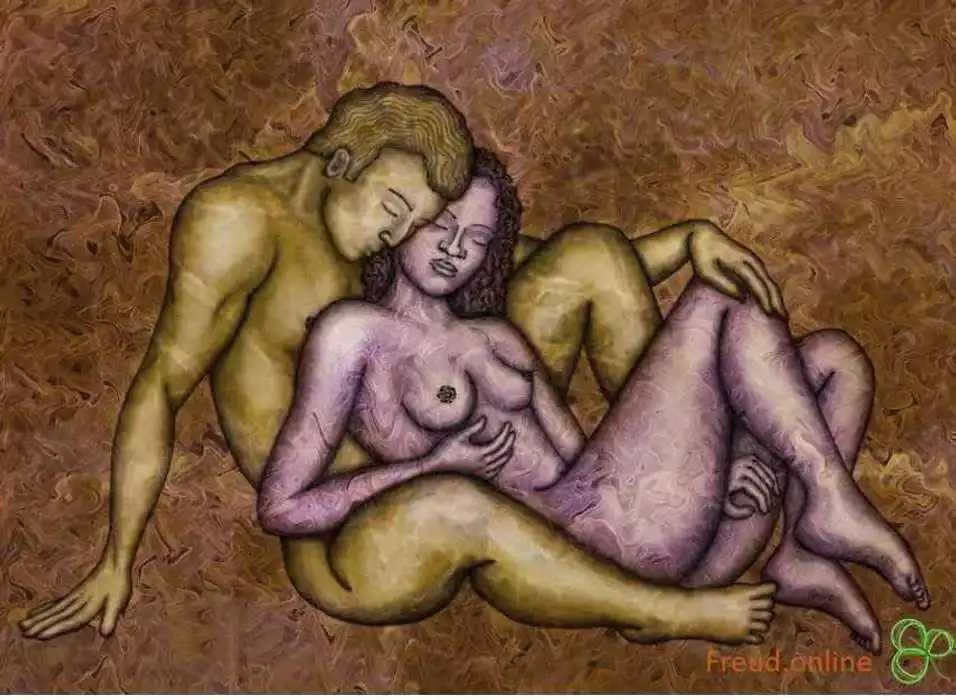
Men long for a woman for whom sex is a pleasure and an enjoyment, not a duty. A sexually relaxed, self-confident woman lets a man be rid of the pressure about what he must do in bed and how, the pressure imposed on him by society and by the porn industry. Sexual relaxation, on the other hand, lets women feel desire deep in their body and in their loving heart. It means that she knows how to enjoy her body and the feeling of pleasure as a whole, that she knows how to enjoy her partner's body, that she merges with him, wants to take his penis into herself and to enjoy both her own lust and his. Women often want to keep control of themselves and of what is going on around them, not to give in, not to forgive; the stress of everyday life or a partner's bad mood is something they cannot push aside and forget. The sexual part of a woman is very active — it unites and reconciles rather than putting up, holding back and serving. Women can become sexually happy and satisfied; all they have to do is want to discover really good sex.
Our body can teach us this kind of sex, if we give ourselves over to it with the pelvic floor, with slow movements of the pelvis, with rocking of the pelvis, with letting go of the upper body, the shoulders, the head, with belly breathing, with a moaning out-breath; give yourself over to these sensations of the body, of the mouth, of the hands, to the breath, to the penis, to the “vulvina”, let them do what they want. Or perhaps they do not want to do anything. Because even a relaxed pelvic floor, a relaxed vagina, a relaxed penis, a relaxed body can feel pleasure — perhaps even deeper and more all-embracing pleasure. Resting, moving and touching each other by turns, we leave room for arousal, feel it and let it rise. The Asian arts of love, for example, do not tell men to begin “hard” and to come back soft; on the contrary — to begin sex softly and to end with an erection. This art of love tells us to do less but to be “here and now” more. In this way the sexual act brings us into contact with each other through the very depth of mind, heart and body. As one woman writes: “My vagina almost by itself received the touch of the penis that inspires it!”