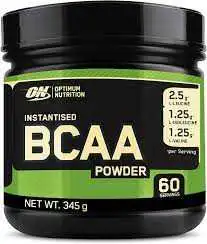
You often hear from people who are into sport that BCAAs are their main supplement, the one that helps them lose weight without losing muscle. Let us work out what this magic pill really is You often hear from people who are into sport that BCAAs are their main supplement, the one that helps them lose weight without losing muscle. Let us work out what this magic pill really is
What BCAAs are
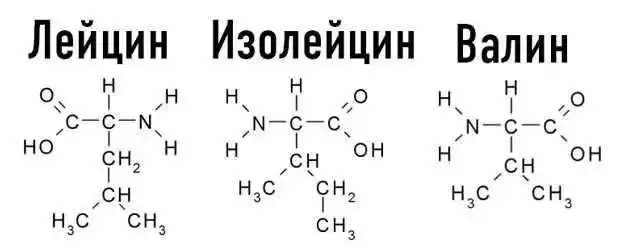
- BCAAs (branched-chain amino acids) are the essential amino acids VALINE, LEUCINE and ISOLEUCINE
- • Their molecular profile rests on the fact that they carry various branched chains attached to their basic configuration.
- • The term essential amino acids refers to the fact that they have to come from our food, since the body cannot synthesise them on its own.
- • These three amino acids are extremely hydrophobic and are always found inside proteins.
- • The three amino acids are similar in structure and function.
What leucine does
Enter some text ...
- it acts as a substrate for metabolism in the muscles during periods of cellular energy depletion, thereby helping to preserve the contractile fibres and the muscle protein that would otherwise be broken down enzymatically under those conditions.
- Given that leucine supports the synthesis of glutamine, taking leucine supplements before and after intensive training, as well as between meals, can help to normalise glutamine levels both in the blood and in the muscles.
- It supports an anti-catabolic effect
- It stimulates the immune system
- It supports the repair of bone, skin and muscle tissue
- It stimulates the secretion of growth hormone.
- It is needed for the formation of haemoglobin.
- It stabilises and regulates blood sugar levels.
- It stimulates energy synthesis.
- A deficiency may cause hypoglycaemia.
What valine does
- Valine is an aliphatic amino acid closely related in structure and function to the two other BCAAs named above (leucine and isoleucine).
- It should always be taken together with leucine and isoleucine.
- In nature it is found in flour, cottage cheese, fish, meat and vegetables.
- The functions of valine include:
- It stimulates protein synthesis.
- It supports mental alertness and emotional calm.
- It improves muscle coordination.
- It is indispensable in preventing nervous and digestive disorders.
- It supports tissue repair.
- It stimulates energy synthesis.
What isoleucine does
- Isoleucine is concentrated in muscle tissue.
- A young person needs about 20 mg of this amino acid per day per 1 kg of body weight.
- In nature it is found in meat, fish, cheese, almonds, chicken and lentils.
- The functions of leucine include:
- It is needed for the formation of haemoglobin.
- It stabilises and regulates blood sugar levels.
- It stimulates energy synthesis.
- A deficiency may cause hypoglycaemia.
What BCAAs do
- An anti-catabolic effect.
- They support protein synthesis.
- They preserve the glycogen stores in the muscles
- They stimulate insulin production.
- Energy synthesis.
- Support fat loss on a low-calorie diet.
- It has a vasodilating effect.
- They are an important source of energy during periods of carbohydrate depletion.
- They stimulate the release of anabolic hormones such as growth hormone.
- They are used as an adjunct in the treatment of chronic renal failure.
- They also serve as an adjunct in cases of reversible hepatic encephalopathy.
How to use them
- For BCAAs to be effective, they should be taken together with a protein-rich diet (above all, one rich in animal protein).
- The recommended daily dose of BCAA supplements for adults is 100 mg per kg of body weight, preferably 15 to 30 minutes before training. The ratio of the amino acids in the supplement should be 3 (leucine) : 1 (isoleucine) : 1 (valine).
- It is advisable to take enough vitamin B6 alongside BCAA supplements, as it acts as a cofactor in the reactions that convert amino acids.
- The three amino acids — valine, leucine and isoleucine — have to be taken at the same time to ensure their absorption.
- BCAAs should not be taken together with tryptophan and tyrosine, since they compete for the same transporters and inhibit the absorption of the latter two.