In this article I shall tell you how a video interview works. That is, how to present yourself in front of a camera, how to talk to a robot recruiter, and how to record an address to the nation.
Congratulations: the day has come when every self-respecting employee gets the chance to record New Year wishes, the way presidents usually do. So what is this all about?
Normally an interview happens with living people. A recruiter or an HR specialist questions you, asks tricky questions, tries to get under your skin and see how you react. Those days, it seems, are ending. The age of digitalisation is here, and now you will have to deal with robots. At the first interview, at least.
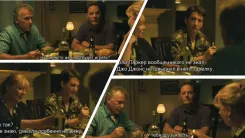
These days you may be sent a link to an online portal where a nice photograph of a recruiter "invites" you to answer five or six questions on video. In this article, and in the video you will find below, you will read about a real case from a job search. That is exactly the sort of invitation to an "interview" that landed in my inbox.
The "invitation" to an interview
Companies usually react to the CV of a qualified specialist within two weeks. You may get a letter (most likely sent automatically the moment someone ticked a box in the recruiting software). That message will ask you within one week to go through an online video and present yourself to some unknown representatives of the company. If you think this is an interview over Skype, you are mistaken! You will never get through to the recruiter named in the letter (they may well be nothing but a piece of software). And since the letter was sent by a robot, we shall have to go on blind.
How does a video interview portal work?
On the first page you get to enjoy a photograph of your "personal" recruiter, who "personally" and just for you, in automatically generated text, explains how the portal works and how the interview goes. The instructions are simple:
- You can take the interview at any time during the week, at home.
- Dress in office clothes — no filming in your underwear!
- Look into the camera
- Answer the questions briefly, clearly and to the point.
Then you set up your webcam and microphone and the portal checks the quality of the connection. At the next stage we try ourselves out on two demo questions. This demo phase can be repeated several times, so you can test yourself in front of the camera and even get over some of your fear of it. If it is not working, you can log out of the portal and continue later.
Once you have pressed the "start the interview" button after the demo questions, there is no way back. The recording starts, within a hard time frame. Twenty minutes later you have either recorded yourself or dropped out. The recording runs in a single session, with no second take. You also cannot pause or leave the interview early.
You can cut your preparation short and start answering the question early. There is no need to wait out the whole recording time either. After just three seconds you can stop the recording, wait until it is saved on the server, and move on to the next question. The video has gone to the server. Everything you did wrong now sits in the HR department for ever. That, by the way, is one of the reasons why it is sometimes wiser to decline a video interview.
The whole interview lasts between nineteen and twenty minutes. Nineteen minutes means not a minute more. You are given a fixed time to prepare, a fixed time to answer, and then straight on to the next question. No waffling, no philosophy — just like the army.
What remains unclear is what happens if the connection drops. In the video you can see the system freezing at one point. So make sure your internet is up to it beforehand, if your future job matters to you.
On etiquette, skills and equipment
Even though you can take the interview at home at your computer, you are asked not to sit there in your underwear and a vest. You put on a business suit, just as you would for any interview.
And here is the main reason why this video may be of interest to you. We are entering a new era in which our ability to present ourselves in an online community comes first. That means:
- being able to speak while looking straight into the camera
- being able to talk to a camera as if we were talking to viewers at home
- being able to answer questions concisely, briefly and to the point.
Very few people have these skills today. How many of us can look straight into a camera and answer questions under pressure?
You can start by setting the webcam exactly at eye level. Not from below, not from above. You will have to get the height right at eye level. Nothing is more off-putting than your haughty look from above or your meek image from below. And, importantly, we shall have to learn to speak straight into the camera. Do not forget a decent microphone either. Not a headset, but a proper microphone outside the webcam. The way it is done on television.
What about the questions?
Before each question you get time to prepare, from twenty seconds to two minutes. After that the video camera starts recording automatically.
Take the first classic question from the recruiting textbook: "what motivates you to work for us in this position?" You are given two minutes to prepare. When the time is up, the recording starts automatically. Within two minutes you answer the question briefly, concisely and to the point, looking into the camera, and go straight on to the next one.
The next stock question: "Introduce yourself briefly and tell us about your THREE main professional achievements." Preparation time: five minutes. Time to record the answer: one minute! Note that the introduction and the three achievements together get one single minute. So practise, ideally with a video camera running, and study yourself.
The next question is already loading and there is no time for coffee. Along comes a devilishly serious, professional question: "what strategic risks do you see for our company, and why?" Preparation time: thirty seconds (!!!), answering time: thirty seconds, if you please! Now that is a demand on your skills! A question like that, in a time frame like that, can bury a person on the spot.
Among the subject questions that also test professional skills, you may get things like:
- What is your experience with artificial intelligence? Which AI projects have you worked on?
- As an outside expert, how could our company improve its e-commerce strategy and its customer service?
- How much dough do you want to make, and how fast?
Do not blow it on the last question, folks )))
Good luck out there!
So, in this article and in the video we have read, watched and thought about how modern digital video interviews without living people work. There are no live recruiters left. There is only you and your ability to speak clearly, concisely and briefly into a video camera. I wish you the practice you need to get there. If you want to build the skills, come to our events. Good luck with your job search!