What do you do when everything is just too much? These 3 self-regulation techniques will help you cope with stress. Be it at the office or in everyday life.
Relieving stress: everyday life is often far too hectic
Office, children, home, leisure: what looks to some like ordinary everyday life is for others, at times, too much- sheer stress. And it is not only the days when we have a great deal to do and a great deal of contact with other people; the fast pace of our times, with the expectation that you are constantly “available” (you must always be in touch), is also the reason why many people feel a great deal of stress every day. Studies have shown again and again that stress-related illnesses have become more frequent in recent years.
What stress does to the body
We all go through stressful states. They can be set off by ordinary everyday events tied to family and work, and by grave life situations too.
https://freud.online/articles/posledstviya-stressa-dlya-organizma
We often do not even notice how tense we are
The more to-dos in a day, the more the inner pressure builds. But often we notice how tense we really are only in rare, quiet moments of pause. And instead of relaxing, we carry on working and put rest off until “better times”. It is precisely the short breaks that matter so much and help to reduce stress - and with a few easy self-regulation techniques it happens faster still.
Relieving stress: 3 self-regulation techniques
How to reduce stress when everything is too much: these 3 self-regulation techniques will help you cope with stress.
Method 1: first take a deep breath, using the 4-7-11 method
Put all your tasks aside, switch off your phone so that it does not distract you, put down your pen and your papers and take a pause. With the 4-7-11 method we step out of the circle of our thoughts. Then: breathe deeply into your belly and count to four. Then breathe out for seven seconds. Repeat the whole thing eleven times. Numerous studies prove the effect of conscious breathing as a relaxation technique. Under stress we breathe too shallowly. Deep breathing, by contrast, supplies the body with enough oxygen again and lowers blood pressure. At the same time, counting creates a new focus and interrupts stressful thoughts.
Method 2: change stressful thoughts with the ABC theory
The psychologist and psychotherapist Albert Ellis (1913–2007) developed the ABC method for recognising and dismantling patterns of stress. It is about the trigger (A), the appraisal (B) and the consequences (C) of a stressful situation.
We can ask ourselves: what makes me stressed? How do I appraise the situation? And what consequences does that appraisal have for my behaviour? Say we have a deadline round our neck (A). The time pressure sets off the thought: “I will never manage it.” (B) And so we put the task off. (C). We can change what happens between the trigger and our behaviour - namely our thoughts: “I can do this!”
Method 3: set priorities with the 80/20 rule
Your own urge to do everything perfectly is the most stressful thing of all. Perfectionism is a stone we lay in our own path. The 80/20 rule (the Pareto principle) helps to reduce stress and to concentrate on what matters. What really matters Vilfredo Pareto (1848–1923) described that the greatest effect can be achieved with little effort. Those 80% of the result can be reached with 20% of the effort. In most cases, needless energy goes on the remaining 20% of success. If we lower our own expectations, drop excessive perfectionism and do our best - as best we can - we still have energy left. No one expects us to do everything perfectly.
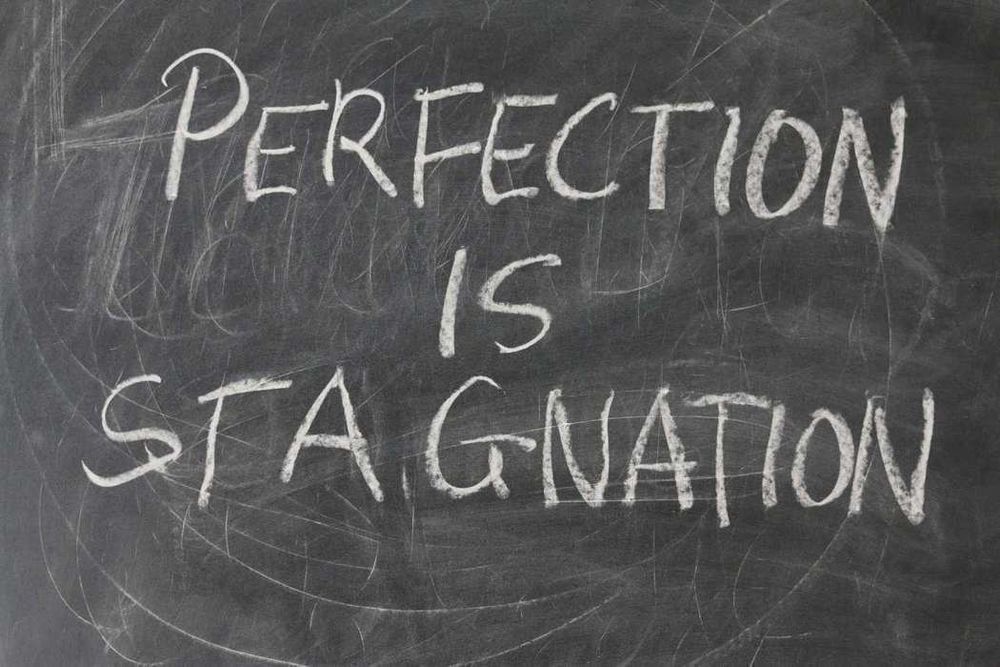
How to let go of perfectionism and reach your goals - Psychology centre - Freud's Legacy development club
These tips will help us let go of perfectionism and reach our goals with ease!Ever since school, women have been brought up to be better, harder-working and more accomplished in order to succeed. And so they often labour under the illusion that their perfo
https://freud.online/articles/izbavit-sya-ot-perfektsionizma-i-tem-samym-dostich-tselej
Relieving stress: why EVERYTHING is too much
Incidentally, the word “everything” points to another stress phenomenon: black-and-white thinking. All or nothing. Now or never. These dysfunctional thought patterns create stress and make it worse. Between the two extremes there are shades of grey that we can perceive: much, little, often or rarely. What stresses us is single situations, which taken together make the barrel overflow. And that is exactly where the solution lies: start with the single situations and so reduce the stress step by step.

4 best allies against stress - Articles - Freud's Legacy. A club of psychology and personal development
Chronic stress, like sudden stressful situations, can affect the body in a great many ways:Nervousness and irritabilityTiredn...
https://freud.online/articles/luchshaya-trojka-dlya-borby-so-stressom