Or: how realistic is it to lose weight in one particular part of the body? Experience shows that almost everyone is, on the whole, happy with themselves — except that the arms are somehow not quite right, or it would be nice to get the fat off the tummy, or to make the thighs a bit smaller… Getting results with diet and exercise takes time and effort, so anyone who wants a quick fix is forced to look for a faster solution.
Targeted fat burning, also known as ‘spot reduction’, is a type of exercise that many people turn to when they try to lose weight in particular areas of the body.
This method, however, is the subject of quite a lot of argument.
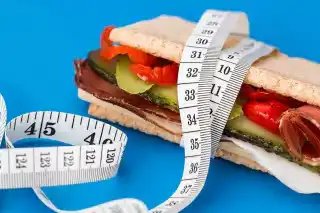
Spot reduction: truth or myth? Or: how realistic is it to lose weight in one particular part of the body?
Experience shows that almost everyone is, on the whole, happy with themselves — except that the arms are somehow not quite right, or it would be nice to get the fat off the tummy, or to make the thighs a bit smaller…
Getting results with diet and exercise takes time and effort, so anyone who wants a quick fix is forced to look for an easier and faster solution.
Targeted fat burning, also known as ‘spot reduction’, is a type of exercise that many people turn to when they try to lose weight only in particular areas of the body.
This method, however, is the subject of quite a lot of argument.
Spot reduction is a set of exercises aimed at burning fat in particular areas.
An example of spot reduction is training the triceps to get rid of excess fat on the backs of the arms. This routine works on one particular area rather than training the whole body.
So why do people want to reduce the amount of fat in particular areas?
There are endlessly many reasons why people want to lose weight: reducing the risk of chronic disease, or simply looking good.
While some people tend to distribute fat proportionally over the whole body, others hold on to it in particular areas such as the belly, the buttocks, the arms and the flanks.
Sex, age, genetics and way of life — all of these play a huge part in gaining weight and in building up stubborn deposits of fat.
Women, for example, have a higher percentage of body fat than men and tend to store surplus fat on the hips and buttocks, especially during their childbearing years. During perimenopause and menopause, however, hormonal changes can shift the fat towards the abdomen.
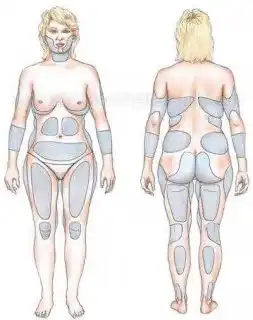
Men are more likely to put on weight around the middle throughout their lives.
Gaining weight can be very distressing and drives many people to look for easier alternatives than keeping to a diet or becoming more active. Spot reduction is one of them.
This method concentrates on working the muscles of the problem area in order to burn fat quickly in particular parts of the body.
Fat burning, however, does not work that way, and there is little scientific evidence to support that claim.
How does the human body burn fat?
To understand why spot reduction may not work, it helps to understand how the body burns fat.
A human being certainly could not survive without body fat: it takes part in building the cell membrane, protects the internal organs and produces hormones. The body also stores fat to protect itself in case of famine. A fully formed body has a fixed number of fat cells. They stay with a person for the rest of their life. The body uses them as containers for storing fat. The fat stored in the cells will stay there until that energy is needed.
People living in developed countries today have no shortage of food. But evolution ‘works’ slowly, and the body still goes on storing away every extra calorie it has not spent. Hence the number of people who struggle with excess weight.
Physical exertion speeds up the metabolism, because the demand for energy grows. As a result the body spends its stored energy and burns calories. To lose weight you have to spend more calories than the body takes in with food.
How is fat burned?
Physical exertion speeds up the metabolism, because the demand for energy grows. As a result the body spends its stored energy. All food is ultimately broken down into water, carbon oxide and ATP. A certain amount of ATP is present in the muscles and is spent first. This is what explains the ability of muscles to contract instantly, without needing to raise the concentration of oxygen in the blood by taking deep breaths. The ATP in the muscles burns up very quickly, and the body starts drawing on other nutrients to synthesise it, in the following order: carbohydrates — glucose, glycogen.
Fat — in the bloodstream, in the muscle tissue, under the skin.
Protein. This is what happens every time a person takes a deep breath during intense exercise. With the out-breath, the body gives off the carbon oxide produced in the course of fat burning.
You cannot choose where your body will lose fat, but you can choose which part of the body you want to make more toned.
It is important here to combine targeted exercises with cardio training, to speed up the result. There is also a mistaken belief that it is cardio training that helps us burn fat. I will write about that in my next article — how effective it is to burn fat by cardio alone.
It is true that targeted exercises such as abdominal crunches and leg curls on a machine strengthen the muscles and bring out their definition. But these exercises do not burn many calories.
Doing a great many abdominal exercises, for instance, will strengthen the abdominal muscles, but you will not see any definition in that area unless you reduce your overall percentage of body fat.
That is why cardio training, whole-body training and healthy eating are essential if you want to see real results.
Targeted toning exercises do strengthen and build muscle, but to see definition you have to lose weight through fat-burning workouts and healthy eating.
How do you shrink the problem areas and work on definition?
- Cardio training: cardio such as running or cycling engages a great many muscles and burns a large number of calories. It also helps in the battle with that annoying lower belly.
- High-intensity interval training (HIIT): HIIT consists of short bursts of intense work followed immediately by rest. Studies show that HIIT can be more effective for burning fat than steady-state cardio exercise.
- Whole-body exercises: instead of concentrating on one area of the body, whole-body exercises such as burpees burn more calories and lead to greater fat loss than targeted toning exercises.
- Combined exercise: combining strength training with cardiovascular exercise has been shown to be more effective for weight loss than concentrating on one type of exercise alone.