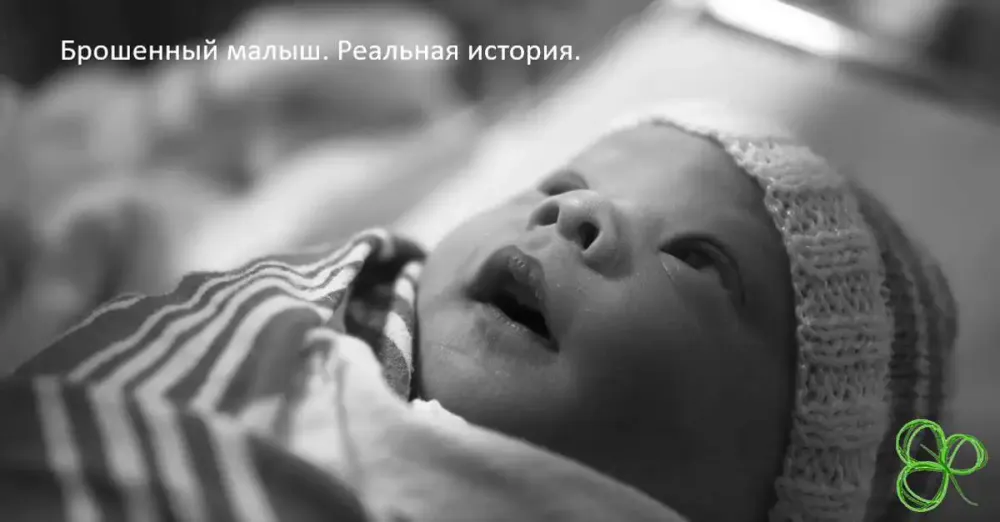
This is not just an article, it is a true story. At the end I offer a couple of hypotheses, a few guesses. I would very much like to hear from you, dear readers, what you think — and perhaps someone knows similar stories. Share your thoughts and observations; perhaps you know grown-up ‘abandoned babies’ — what do you notice in their character?
A maternity hospital. An ordinary day. The ordinary bustle of work.
An unusual patient.
A pretty, very young woman of 16.
She had given birth, but she did not look at her son and did not touch him — that had been decided beforehand.
Nobody knows her name. In the papers there is only a number.
The baby was taken to the nursery.
The mother — this young, sweet creature, who had not even had time to grow up — was facing a serious ordeal. Beside her, an imperious, domineering grandmother with bright make-up and long nails, forever chattering on the phone. She filled the whole ward; there was very little room.
In the box for the father there is a dash.

A beautiful baby with clear eyes, who had never tasted his mother's milk or her tenderness, understood nothing yet — but long before, months ago, back in that other world, he had sensed and felt that here it was not so bad, there seemed to be food and a place of his own, but it was not cosy, it was cold. He knew he was not wanted, but he was glad he had been given a chance to be.
Many hands rocked him and held him. Hands in white coats; it was good and pleasant, he could feel warmth and care, but with a faint scent of sadness. Food flowed to the baby from a bottle, and from the hands in white coats came the energy of love.
But somehow something is missing? Why is there an emptiness?
Frightening.
Lonely.
Evening.
Silence.
The visits and the hospital bustle were over.
The grandmother had finally gone, and there was more room.
A nurse came into the ward.
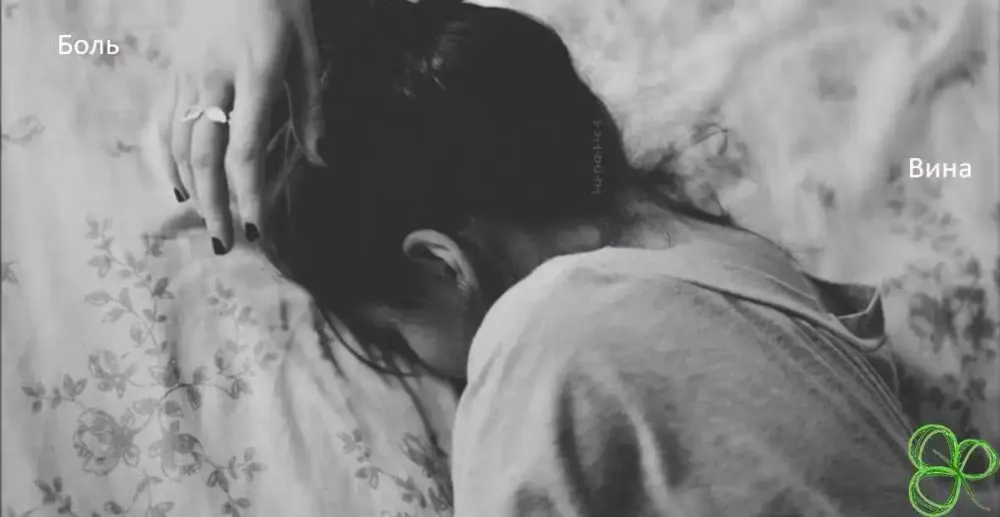
The ‘mother’ was sitting quietly on the bed.
Crying.
Her look was lost and sad; deep inside a struggle with herself was going on, deep inside there was a judge and a defendant — what do you do when you are only 16, and you have to obey your mother, but she is not here right now and there is more room, room for your thoughts to fly.
The nurse saw a young soul in weightlessness, pulled in a thousand directions at once. She felt pity, and pain.
A thought. A pair of scales.
On one pan, the hospital rules; on the other, a young, bewildered creature and her baby.
She made her choice and began to speak.
Words without judgement. Words with love and compassion. Words that give you the strength to understand who you are and what you want. She understood and felt it all; she could see that this woman would never forgive herself — she was not made that way — and so she would have no peace for the rest of her life.
The young creature won her little war, and despite her domineering mother, despite her persuasion, despite the fact that the child's father had simply walked away and vanished from her life, she wanted to give life, and she stood firm on that. So there was strength in her, there was love in her; they had simply been trampled down and squeezed out — after all, she is only 16.
And now there is only the evening and the nurse beside her. It became easier, better; strength was coming back, thoughts were clearer, wishes sharper, decisions firmer. And so as not to give in again tomorrow, the mother went to the nursery and for the first time took the baby in her arms, held him and fed him with her own milk.
That was it! Now no one will part them, now they are together again, as they had been for the past 9 months — what a wonderful feeling, how good and calm it became for them both.
And the white coats stood a little to one side, quietly wiping away tears of joy.
Tomorrow came. The grandmother arrived, and now the ward felt cramped to her, because there were three of them there now: a mother, a son and love.
She left, defeated.
It was a wonderful day. The name of the mother and of her son appeared on the chart; there was no need to hide any more, and a new life and its creator could be set down on paper.
Evening again. Silence. The nurse came into the ward. No tears. There is a smile and there is beauty: a mother feeding her baby.
And another day. Everything is fine. But then a quiet whispering starts, the white coats are watching with curiosity and excitement. What has happened?

The father. The father has come!
How did he find out? What invisible force brought him here?
Flowers and a guilty look. He asked for the ward number.
In fear he opens the door and goes in.
The air is ringing. What will happen? Everyone is on edge.
He came out.
All is well: a face lit up with a smile looked at the white coats and said — THANK YOU!
What the future may hold. Some hypotheses.
Through a great many experiments, scientists have shown that genes are nothing and that what matters is the environment (listen to the lectures of Professor Robert Sapolsky, Stanford); as the professor put it: ‘if you have to choose between genes and environment, choose the environment.’ As a counsellor, I am glad to hear that such things have already been shown by experiment, and not only on the basis of my own practical work with clients, and that of my colleagues, and our observations.
If the mother was under stress during pregnancy, the child will be prone to states of anxiety, their resilience to stress goes down and their level of fear goes up. So we may assume that a baby who spent 9 months developing amid stress, fear and uncertainty, his mother's tears and her thoughts of abortion, will naturally be hugely affected in his psycho-type (character), in the particular features and deviations of his psyche — which in turn is directly linked to physical health.
The baby was born into a situation where no one wanted him to appear (least of all the grandmother). As they grow up, such people are usually very good at adapting to others, at trying to please them, at becoming the very best — because only that way am I worthy of living, and only that way will I get a little piece of love. Such children are quiet, they do well at school, they do not act up or make a noise, they keep their heads down — which of course their parents like.
My guess is that the grandmother will show her grandson again and again, in words or without them, that he is here by accident. Add to that her attitude towards his father…… one can only guess what will come of it.
Dear readers, dear colleagues, write in with your thoughts and hypotheses — or perhaps you too know real examples of such babies, now grown up. It would be very interesting to learn what can really come of it.
Thank you for your time!
© Natallia Nechai