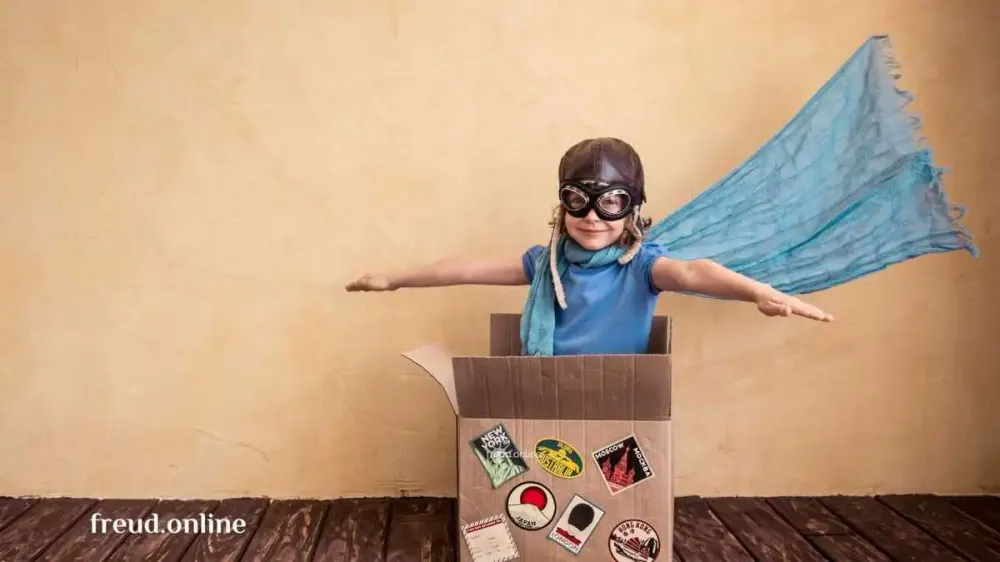
Every person has an Inner Child. It is a little girl / little boy who echoes in everything we are. In our Inner Child there sleeps a world of inner images, feelings, memories and experiences that we built up in childhood and that are kept in our memory. It stands for our instinctive side, for the feelings that come from the “sixth sense” and are at work in every moment of our life. Depending on whether we accept and love the Inner Child in us or reject it, it also shows through in our whole being in adult life.
Where the notion of the Inner Child comes from
The concept of the “Inner Child” was introduced by Eric Berne. He said that a person has three entities, “the Child, the Parent and the Adult”; such terms are easier to grasp than, say, Freud’s “the id, the ego and the superego”. Alice Miller and Donald Winnicott called it the “True Self”, and for me this trio also brings to mind “Spirit, Soul and Mind”. Whichever way you look at it, people had noticed even before there was any psychology that a human being consists of several parts.
The “Child” is the part of our psyche that is the most valuable of all, the part that holds life and energy, intuition and sincerity. It is thanks to the Child that we experience and come to know such feelings as:
- joy,
- interest,
- curiosity,
- creativity,
- delight,
- love,
- desires.
Everything
that “gets to” us as adults depends directly on the Inner Child. Our
strong emotional reactions, which are always accompanied by reactions of our
body (a faster pulse and breathing, heaviness in the chest, more sweating,
the sensation often described as “my heart sank into my boots”, a powerful surge of energy and
so on) — all of these are the reactions of our child.
This part of our psyche is, in my view, formed while we are still in the womb, and in the opinion of S. Freud and E. Berne our Inner Child is already fully formed by about the age of six.
How does this happen?
In infancy and in the very earliest childhood, when we are not yet fully aware of ourselves as a separate person, do not understand the meaning of words and do not yet know the world or our place in it, we learn these “sciences” not through reason but through emotions and feelings, through the reactions of our psyche and of our body to the events of the environment.
Our parents and the figures who were authorities for us take a direct part in shaping this most valuable part of our psyche. Thus the most important thing is the environment we grow up in, starting from conception. This hypothesis is confirmed, among others, by the professor of Stanford University Robert Sapolsky (the American neuroendocrinologist, professor of biology, neurology and neurosurgery), who holds that genetics is of secondary importance for the shaping of personality: the main thing is the environment.
For instance, a woman who has been through stress in the second trimester of pregnancy will give birth to a child in whom anxiety will predominate. And if the mother also belongs to the “anxious parents”, you can imagine what kind of “Inner Child”, what “character” and, accordingly, what “life script” her child.
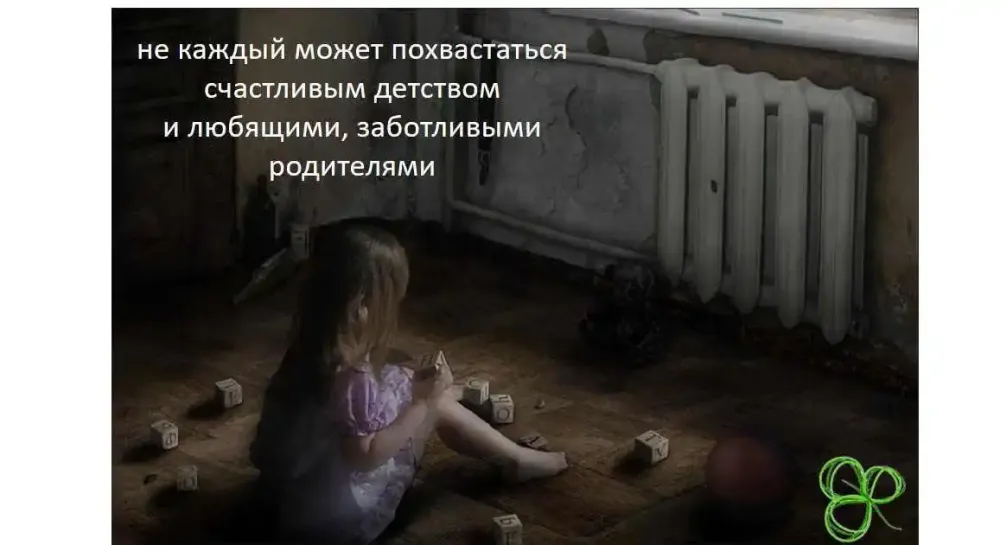
Sadly, in my own practice I see that not everyone can boast of a happy childhood and of loving, caring parents. Memories of childhood often have a negative tinge; memory speaks of hurts, of fears, of hopelessness, of feelings of being unwanted, helpless, without any rights, and so on. And so, in order to survive somehow, we worked out rules of behaviour that differ from our true desires, from our true “Self”, and we go on using them unconsciously in adult life as well. And if from time to time you feel that you are “not living your own life”, that “something is missing”, that “something has been lost”, that “something has not been opened up”, that “I am not myself”, that you have a “fear of showing your true feelings”, then your Inner Child has definitely hidden itself very deep.
Do not despair, though: it can all be put right through a conscious acquaintance with the Inner Child and through further work with it. It is quite a long and difficult road; I always prepare my clients for the meeting with the Inner Child, because it is a very painful process, accompanied by vivid, deep emotions.
Why do we remember negative emotions or events more easily than positive ones?
In fact it is all quite simple and complicated at the same time. Neurobiologists have long been studying this fact, and for the time being the conclusion of their research runs like this: when we receive positive feelings and positive emotions, the “happiness” hormones (dopamine, serotonin, endorphin) are produced — roughly speaking, they send our body the signal “all is well”. But when the hormones of stress and fear are produced (adrenaline, noradrenaline, cortisol), our body receives the signal “danger!” and accordingly mobilises all its forces for survival, which naturally affects the brain, and the brain creates neural connections — a more intense process than under the influence of the “happiness” hormones. Strong neural connections are formed, thanks to which, the next time the “danger” signal comes, the body already knows what to do.
This is, of course, an explanation in the roughest of terms; our aim is not a detailed study of the body’s physiological processes, of the classification and action of hormones, or of neurobiology. I think the principle of why we are more inclined to remember negative experiences than positive ones is clear.
How does the Inner Child affect our life?
To be honest, the answer to this question is a kind of revelation that is hard to bear; in practice not everyone bears it, and very often people break off the therapy because they cannot come to terms with the answer and digest it. In fact this part of our psyche influences everything: the level of education, of intelligence, of development, the choice of partner, of friends, of profession, of style of dress, the way of speaking, one’s career……………….In short, everything!!!!! It is not easy to realise that we are in fact no more than puppets in the hands of a wounded child! Of course, there is also the influence of our inner parent, but at bottom it is the child; and if the child is “unwell”, then do not even dream about the adult (this has nothing to do with the date of birth).
To change your life for the better, to get rid of everything that stands in your way, to get to know yourself at last, your real feelings, desires and dreams, you have to heal your Inner Child.
How do you find your Inner Child?
Before you set out to “look for your Inner Child”, it is worth preparing yourself — so to speak plunging into this unknown world of the unconscious under the eye of a counsellor. A professional who works with the methods of transactional analysis will help you to find your child and to get to know it, and will show you how to stay in contact with your Inner Child from then on and how this knowledge will help you in your everyday life.
On the internet many people offer a step-by-step strategy for “getting acquainted with the Inner Child” and for “working with the Inner Child”, or an auto-training course for “healing the Inner Child”; you can of course make use of that and give it a try (personally I have my doubts about it), but experience suggests that without a mentor much of it will remain unclear and therefore ineffective. It is like learning mathematics on your own or learning it with a teacher: the difference is obvious.
At the Freud's Legacy club you too can walk this road with the help of professionals and find your Inner Child — register and go for it!
How can you tell that your Inner Child has been healed?
People with a healthy Inner Child no longer spend energy (the law of conservation of energy) on inner conflicts; everything in them is in harmony, they calmly deal with whatever life brings them, they are full of energy, love, ideas and forward movement, they are glad of every day, they have a flexibility that helps them live peaceably among others. In short, one can say that such a person is alive and lives in harmony with themselves and with the world!
I wish you may find, get to know and come to love your Inner Child!