A dating club for serious relationships
A relationship is a luxury you can afford when the matchmaking is done by counsellors: wise, pragmatic and good at reading people

1. Send us a request. It's simple
We call you back, work out your personality type as we talk, and tell you who suits you best.

2. Our counsellors pick the right one
and do it anonymously — a partner who suits you and is compatible with you.
3. You meet them, easily
— your candidate. If it clicks, share your impressions with us.
See for yourself!
We use a partner-matching algorithm based on the S-Theory's account of character compatibility.
Who is this dating club site for?
Time to pair up!

Who suits a man?
- Can't see any women worth your while?
- No time for dating?
- Don't know who to choose?
- Hesitating to enter a relationship?
- Don't want to step on the same rake twice?
- Plenty of dates, and none of them the right one?

And who suits a woman better?
- Dreaming of meeting your prince, and he still hasn't turned up?
- Longing for strong emotions, flirting and adventure?
- You know all there is to know about men, but your worlds have never crossed?
- You want a guarantee that it will all work out for the best?
- You want a partner who ticks every box?
- You have combed through the dating sites, and none of those men are right?
Where to start?
You already know it all and want to start looking for a partner who suits you and is compatible with you? Then off you go!
Test and club
free
- the DatiCo character test
- your personality type and your statistics
- dating club 16+: profiles of people whose type matches yours
The personal DatiCo report
490 ₽
- PDF, 30-45 A4 pages
- 9 pieces of material on your type
- a breakdown of your test statistics and 10 analyses
Consultation
4 900 ₽
- 60 minutes, online, one to one
- your type checked live, plus your own questions
- if you have bought the report — top up 4,410 ₽; the credit is valid for 30 days
What do you get?
With our counsellors you will SIMPLY, PROPERLY, EASILY find out, see and find:
Who suits you, and who is guaranteed to be a disaster?
Where to meet people, among which professions and hobbies, and how to catch a candidate's eye?
How do you build a harmonious relationship? Which needs, sore spots and defences will lead to conflict, and how do you resolve them?
Take a look into the future: how will this new acquaintance develop?
What is your personality type, your paths of development, the traits best put to use in building a couple?
And of course you get the contacts of the people with whom you can build the closest and strongest relationship
Why does it work?
Years of counselling experience, a school with a history, and teachers in four countries
Experience
- 10 years of counselling
- more than 50 personal personality-type analyses
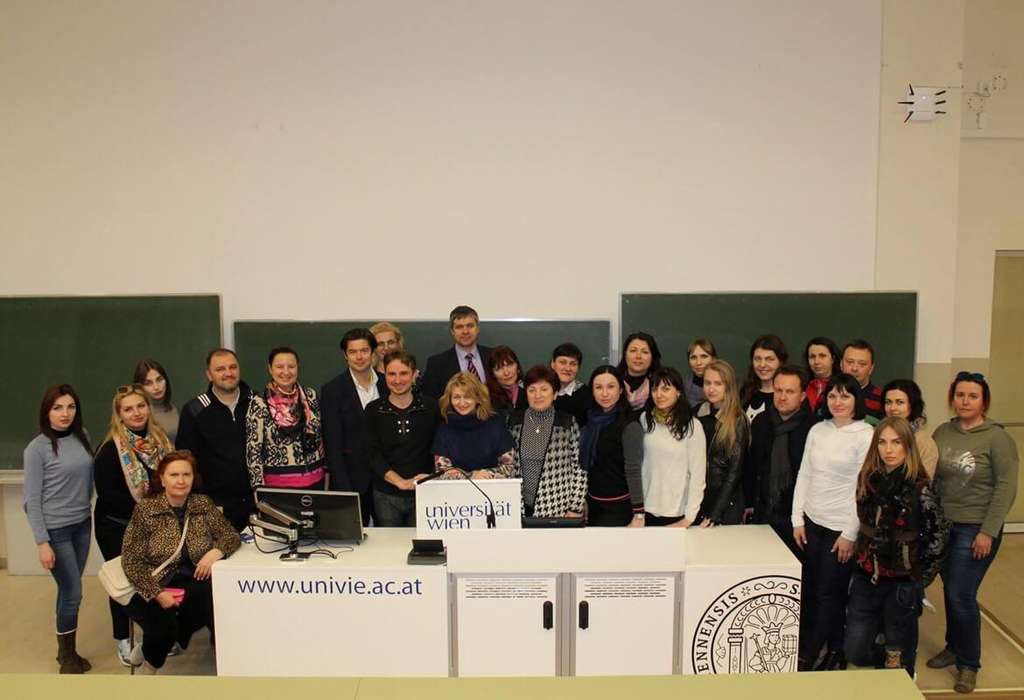
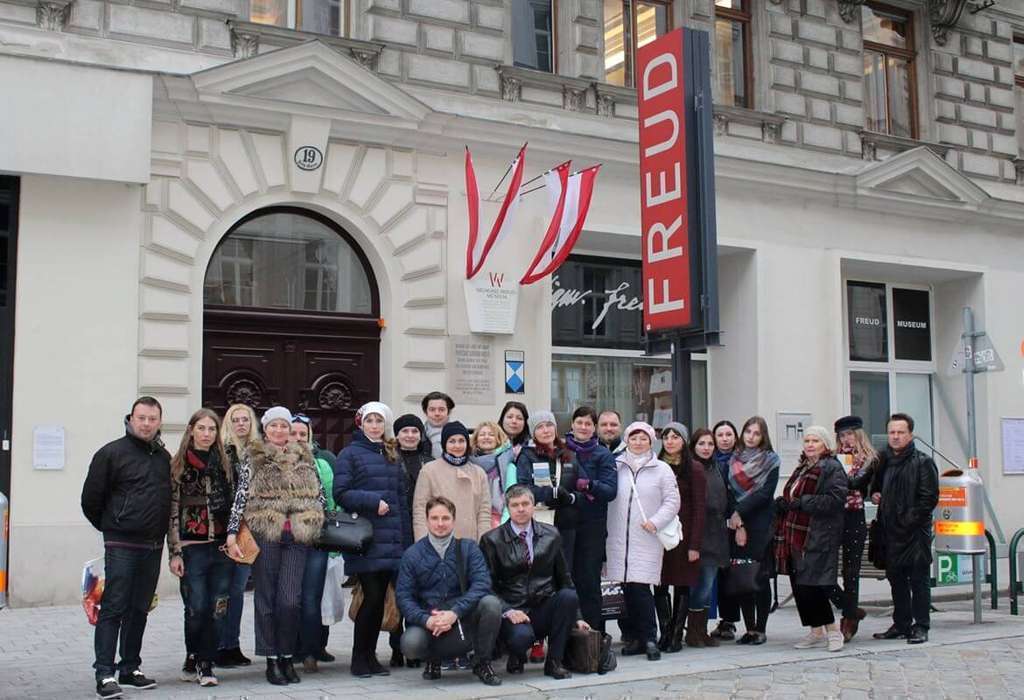
- the Freud's Legacy club in Vienna — since 2018
The science
- We take into account your Individuality
- the Ego and the structure of your nervous system
- Personality and your beliefs
The school
- The S-Theory of Personality Development: in development since 1999, named in 2002
- certified teachers in Russia, Belarus, Lithuania and Austria
The S-Theory is an author's school of thought, not a clinical method; the result of the test is not a medical diagnosis.
Stories of how couples met
Read the stories of how "incompatible" personalities meet, live together and complement each other



Who are these "matchmakers"?
We are licensed counsellors from a range of backgrounds, with families and in relationships ourselves, who apply the theory to our own lives and bring it into your reality.


Want to know even more?
Read one of our many articles on what simple, easy and joyful relationships are built on

Frequently asked questions
What does the matchmaking process look like?
The dating club for serious relationships, in which we choose a partner for you (someone you find things easy, simple and joyful with), works like this:
- You fill in the form, we call you back and answer your questions free of charge.
- Once you decide to switch "into search mode", you register and pay on the portal. We then have a Skype call of about 45 minutes to determine your personality type.
- Then, a couple of days later, a second call with the results and a profile of a partner compatible with you. We describe their type, their style, where they work, how they talk, what they are afraid of and what they dream about. In short, we tell you everything about you and about your partner.
- If that man or woman is in our database, you get their contact details. Which does not let you off searching on your own!
- And the most interesting part is the feedback on how your relationship is developing.
Is it free?
You can meet people for free... the usual way. But something about your free choices is not working out. So that you do not step on the same rake again, we will spend two hours with you personally, and for a month afterwards you can work through the issues that keep you from living in a simple, easy and joyful relationship together with our specialists. The price includes:
- One hour of determining your personality type
- One hour of counselling about you, about the partner who suits you and about your past life
- 30+ hours (!!!) of group meetings on all kinds of topics, where, among other things, you can meet someone...
In other words, a paid dating club for serious relationships is almost free!
I'm in city X. Which regions do you work in?
A dating club for serious relationships is an online project, independent of geography. We mainly cover four time zones: from the eastern shore of the Atlantic to the Volga. People come to us from
- Russia, Ukraine and Belarus,
- Spain, the United Kingdom, Belgium
- Switzerland, Germany, Austria,
- Slovakia, the Czech Republic and Slovenia
- Israel, and many other countries.
If this is a dating club site, where is the list of candidates?
Yes, this is a dating club site. But the list of candidates depends first and foremost on your personality type. And that still has to be determined. So we suggest candidates once we have the result. Tried and tested, so to speak)
To find your person, three things have to match:
- a compatible personality type
- a suitable age
- a suitable city
What do we determine, and why?
We determine your character — what you were born with and what has stayed unchanged since childhood. Over a lifetime we accumulate experience, habits and skills. The behaviour that was typical of us when we were young comes to look unwise or irresponsible with age. And yet all that experience matters less for your personal life than the way you behaved as a child.
A personal relationship is no place for exercising skills. It is the one area where you want to relax and be yourself, to behave naturally and without strain. And it is precisely this behaviour that forms the foundation of a relationship.
But if we behave freely with a partner, it also matters that our "naturalness" does not hurt them. That is why we find some people easy and others very hard. Our job is to find you a match with whom things will be easy, simple and joyful.
What is "character"?
In scientific terms, character is called the personality type. Many clients object at first: "I am unique". But if we had nothing at all in common and were purely individual, psychology as a science could never have come about in the first place. What is more, not a single religion would have arisen either.
When people look for answers to their questions about life, those answers turn out, one way or another, to coincide with the answers of a particular group. Besides questions there are also difficulties, problems and complications, which are likewise similar within a group of people. It is this similarity that we establish during the consultation.
A person's character begins to form prenatally, during pregnancy. We are born already carrying one of the four temperaments described as long ago as Hippocrates. In the first six months of life one of the three forms of the nervous system settles in. And by the age of six the personality type is finally shaped through the family environment. At school the character is run in, and it stays unchanged for the rest of one's life.
A serious dating club. But are the methods serious?
In determining personality types we draw on established psychoanalytic traditions, for example
- Jung's introversion and extraversion, the locus of control, the active and the passive position
- Freud's fixations, Lowen's natural rights of the personality
- Grof's matrices, and much more
Many of these traditions are brought together in the S-Theory, a system that gathers more than 100 years of psychoanalytic observation. The S-Theory was developed by Sergey Shishkov and colleagues at the Moscow Research Institute of Social Psychology and the Psychology of Personality Development. Our own contribution is to apply a system built for counselling to everyday life.
So where are the photos?
A dating club for serious relationships works without photos, because... they are a secondary feature. Looks are determined by the personality type, and if the two of you suit each other, then physically everything will fit too. Tell me your personality type and I will tell you how you look.
On the one hand, it is far from obvious that everybody likes slim women or slender men. There are personality types drawn to the "Winnie-the-Pooh" build, for instance. On the other hand, our character is fully reflected in the body: in the fat or the muscle, in a stoop or an upright frame, in a long neck or a certain roundness. And the best part: every personality type has a match of its own.
This is a serious dating club. For finding someone for a one-night stand, or hanging out for three months and then splitting up, there is Tinder and the rest.
What are "simple, easy and joyful" relationships?
How wonderful that there is hope for a normal relationship without therapy!
That is what one of the club's clients said. Here is a surprise: two complete headcases can live together in harmony. A dating club for serious relationships does not require "skills for a healthy relationship", "conflict-free communication" or "freedom from codependency". Instead, we look for compatible personality types. That makes it possible
- not to butt heads with each other in the relationship, but to exchange energy and draw on it
- to meet each other's needs "for free" and naturally
- to show emotion freely without treading on your partner's sore spots.
"I know everything about myself, I'm a big boy now"
To choose a man or a woman for YOURSELF, you have to know YOURSELF. That is exactly why a dating club for serious relationships begins with determining your personality type, and with building, together with your counsellor, a shared understanding of "who I am".
And here is what we observe: 80% get themselves wrong. People respond to the description of one personality type and, after profiling, settle on another. That is the first benefit: AT THE DATING CLUB YOU MEET YOURSELF
Why are some people easy for us and others hard?
Each of us, by virtue of our character (which is formed by the age of six and stays unchanged for life), has:
- skills that come easily and cost us no energy. Some people analyse with ease, others experiment without a second thought.
- weaknesses, that is, the things that come terribly hard to us.
- neuroses, that is, the things we take offence at in a relationship. These are the traces of childhood trauma, when we "blow up" over nothing.
We are always drawn to people who fill in our "weaknesses", that is, who make up for our weak points with their own skills. We pick our "other halves", so to speak, and it works both ways: I give you what costs me nothing (through my Skills) and fill in your Weaknesses, and the other way round.
On the other hand, behaving naturally, freely and in a relaxed way in a relationship, I may "blow up", "get irritated" and "lose my temper". And here it matters that my partner does not take such "antics" to heart. Those are the people we find easy.
How can someone make that choice for me? You don't know me!
It is hard to comment on the claim that counsellors do not understand people... but let us try. Where do you think the largest collection of people's life stories is kept — from their birth and childhood all the way to old age? With counsellors, perhaps?
A hundred years ago psychology emerged as a science. Since then millions of life stories have been collected and catalogued — grouped by similarities in people's past as well as in their behaviour, speech and appearance. Today that knowledge can be put to uses such as finding the person with whom things will be easy, simple and joyful for you.
Why narrow down the search?
It is often recommended to date seven candidates at once. Seven is the limit of memory — enough to at least keep the names straight and not get confused. It is a sensible tactic: when you do not know who you are looking for, you look everywhere, like for a needle in a haystack. Hence the sound advice: if you are dating "blind", go for numbers. Dating, by the way, is costly. It takes a mass of time, effort and energy. And sooner or later it wears you out.
We offer a different alternative: you will be meeting the people who suit you from the outset. At the very least that saves time. And you can compare notes straight away, checking our pointers about a potential partner's strengths and weaknesses.
I hear the objection: "this limits my experience". Agreed: if the aim is to ignore the experience of humankind and instead build your own from scratch, then you have to try everything, and plenty of it. Maybe you will get lucky. Or maybe it will turn out the way it does for everyone else.
Why do we choose the "wrong" people?
Often at the second meeting, when we suggest a suitable personality type to a client, reactions like these come up: "No, I've always gone for someone else", "People like that I'm friends with, but I don't fancy sleeping with them".
A little later, a couple of weeks on, clients get used to the new idea and even start to remember that they had fallen in love with such types before. Why the rejection or avoidance?
We often choose partners who resemble those who hurt us in childhood. It might be a mother who scolded us. Or a despotic father. Then, unconsciously, we spend a lifetime choosing people who resemble them, in order to "close the gestalt", to get even for a childhood trauma, to resolve for ourselves a situation that was unresolvable at an early age. As counsellors, we recognise this tendency and will talk it through with you.