The subject of extraversion and introversion turned out to be interesting, but not covered fully enough. I am making up for it and taking it further. What is temperament, what features does it have, and how are they connected with extra/introversion? It all sounds familiar — and yet precise definitions are hard to come by.
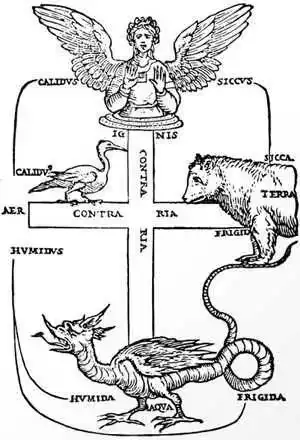
Temperament (from the Latin temperamentum — “a stable mixture of components”) is a stable old tale, physiologically, psychologically and historically. In other words, it does not change. Back in antiquity Hippocrates, born in 460 BC, settled it three thousand years ahead of time that a person's behaviour depends on which of the “vital juices” predominates. A juice could have two features: hot/cold and dry/wet.
That gave four elements:
- Phlegma, the “mucus”, cold and wet, which makes a person calm and slow-moving — the phlegmatic.
- Sanguis, the “blood”, hot and wet, making a person lively and cheerful — the sanguine.
- Chole, the “bile, the poison”, hot and dry, which makes a person hysterical, rude and “hot” — the choleric.
- Melaina chole, the “black bile”, cold and dry, making a fellow sad and fearful — the melancholic. “Black bile”, incidentally, was held to be the only element that was not naturally present in the body.
The same elements matched times of day, points of the compass and organs of the body.
Humankind and medicine lived inside this theory for almost three thousand years, right up to the 17th century. In the Middle Ages it was assumed that illness arises when one of the “juices” dominates, since the body was supposed to keep its juices in harmonious balance. That is why bloodletting solved every problem, and a person's health was judged by the colour of their urine:
- Sanguine people, the Kirkorov sort, had a reputation as pleasant folk with “golden rain”
- Melancholics, on the other hand — crafty and in a poor mood, like Tymoshenko — were supposed to have grey urine.
But times changed, science moved on, and instead of four temperaments we now identify… four temperaments! Science has moved on so far, by the way, that from social-media data and search queries it can work out which temperaments lean towards which gifts, professions, cars and much else besides. Scroll through the chart below yourself
The simplest and most elegant theory on this subject that I have come across of late had to do with personality types.
Nik Garkavy“A sound theory is simple and beautiful. If you are being handed a theory that explains something reasonably well but here and there needs stretching and sleight of hand — do not accept it! Do not fall for illusions!”
This theory brought together, very simply and elegantly, a whole set of scattered puzzle pieces and gave a coherent picture of the world and, indeed, of the temperaments.
Extraversion or an active life position?
There are introverts and extraverts. Introverts study the world around them through themselves, extraverts study themselves through the world around them. I have already described this in more detail in another article. And now let us go further. Both kinds can be active or passive. It is the same yin and yang, steel or water, expansion or preservation.
Active people get a kick out of risk (justified risk, I should add, from their own point of view); they happily hang about in big groups, go dancing, chat with everyone, and generally do much of what is usually, and groundlessly, ascribed to extraverts alone. Active people also take the leading roles in the family or in a relationship, and they take the initiative,
Passive people, on the contrary, are set on calm and preservation. They are far more careful with risks, are very rarely career-climbers, and choose safer, more reliable paths, roads and solutions. Passive extraverts can sit at home for months on end, talking to people over the internet and by phone. They are unlikely to lock horns over leadership, influence and power. They are often all for somebody else being responsible for everything: the system, public opinion, a conspiracy theory, a partner and so on. And here it matters to draw a distinction: passive people are perfectly self-reliant, they can achieve a great deal and can take responsibility for their own lives — but why bother, when there are those Active ones who charge into the fire ahead of everyone else, and gladly at that.
So what do we have in the end: we have introverts and extraverts, and each of them can be active or passive. That makes four patterns of behaviour, matching the four temperaments. And we also have a very simple and logical definition of temperament: it is our innate way of dealing with tasks, questions and problems. And that way is shaped directly by our intro/extraversion and by our activity.
The features of temperament
Cholerics are none other than active introverts — the ones who come to know the world through their own sensations, while not forgetting to create all sorts of situations for the purpose, not always comfortable for those around them, to take up a fair amount of space, to make noise and kick up a fuss where needed, and to head stubbornly for their goals, periodically ignoring obstacles and barriers.
Phlegmatics are introverts too, but passive ones. They tend to take the observer's position, noting every small thing and detail precisely, analysing the situation and not particularly trying to influence it. While cholerics are dashing about, selling people on themselves, on their overvalued ideas, or on both at once, phlegmatics will watch all this, chuckle to themselves and then do what the phlegmatics themselves need and find worthwhile.
Active extraverts are the sanguines. “Public opinion” and a heap of clichés have written them down as eternally positive, loud, good-natured types, and that is partly true — but only partly. Being extraverts, they need company and commotion, because that is the only way they get answers from the world about themselves and their feelings. And sometimes there really is too much of that commotion, even by other extraverts' standards. But their smile, their resolve and their enthusiasm are disarming, and all the noise they can make for no reason at all draws the attention of the introverts around them and charges them up for good deeds and great undertakings.
And finally the melancholics. They are the passive extraverts that remain. Like all extraverts they know the world around them and come to know themselves through it, only more calmly, more quietly. They have a great many friends to talk things over with, they are true team players, they will throw themselves in front of the guns to protect their partner, and melancholic women are the very ideal of femininity.
And, naturally, absolutely pure temperaments are all but impossible to find. Over a lifetime, and depending on circumstances, each of us can show more or less activity, and sometimes even show in our behaviour traits of temperaments with a different way of knowing. But traits are one thing, and our innate basic build is quite another. That, and only that, decides how we present ourselves to the world and where our strengths and weaknesses lie, and it is exactly that which shapes our personality types.
And what am I to do with that?
Live! As we have already worked out, each temperament is essentially our innate way of dealing with the tasks, questions and problems that come along. Even when we show traits of the neighbouring temperaments, that way stays with us. You cannot expect an extravert to describe themselves in detail the way an introvert would (they will describe themselves, yes, but very differently — in a way that would never occur to an introvert). And you cannot expect active people to show the asociality and the endless sitting at home that pop psychology has written up for them.

The most interesting part is that there are very few professional tests on this subject that give unambiguous answers, and even among professionals in the field extra/introversion is constantly confused with activity. The ones who never confuse them are the film-makers. They worked out precisely that if the leading characters of a film include a representative of each temperament, any viewer can “find themselves” in one of them — and so the film or the series does better.
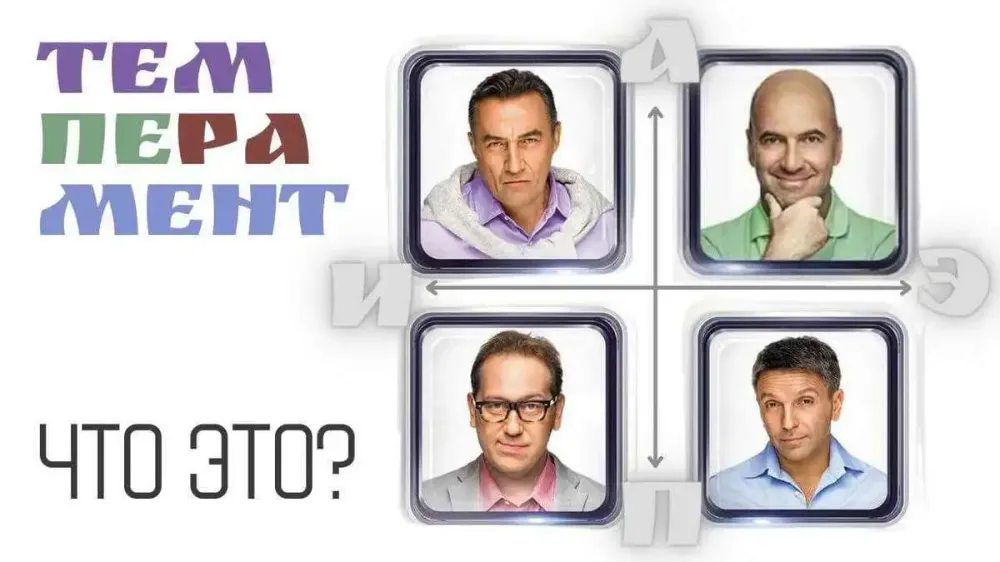
We have taken existing research and work into account and developed our own test for temperaments and for the personality types that are built on them. After a conversation with us you will be able to learn everything about yourself and, if you wish, about your family and those close to you. But let me invite you to check how sharp your own eye for people is. Who in the picture on this post has which temperament? :)
Take the first step…
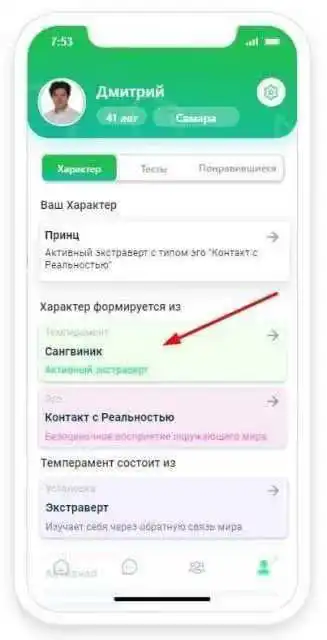
Guessed right? Then you can check yourself now, or even find out who suits you. The starter test is in the app DatiCo, with your temperament right here: