Yin and Yang. Anima and animus. The masculine and the feminine principle. Masculinity and femininity. The active and the passive life position. These are all synonyms. Here we shall talk about the active life position (ALP).
ALP (that is how supporters of the S-Theory like to abbreviate the term) is the dominant masculine principle, Yang, anima. A person oriented towards expansion, conquest, dominance and growth, inclined to argue for and impose their own position. As a rule these are qualities typical of men (although the last presidents of Russia are men with a passive life position).
ALP (that is how supporters of the S-Theory like to abbreviate the term) is the dominant masculine principle, Yang, anima. A person oriented towards expansion, conquest, dominance and growth, inclined to argue for and impose their own position. As a rule these are qualities typical of men (although the last presidents of Russia are men with a passive life position).
The active life position should not be confused with extraversion (there is a cliché that if a person likes to socialise, he is active in society. Life positions are a manifestation of Individuality within the personality: for example, the predominance of the masculine principle in the personality takes on the characteristics of the active life position. And at the same time there are Extraverts in the passive life position, and Introverts in the active one.
The active life position is not the preserve of men alone. Among people with an ALP there are sporty women, clever women, purposeful women and women who are natural ringleaders. In short, the animus can be strongly expressed among the female sex as well.

The ALP has been studied and documented in detail in psychological research. If you want to find a full list of "masculine" qualities, look up the "masculinity index" CNMI-46. It is a large-scale scientific study carried out both in the Western world and in Hong Kong, with a survey of 19,453 participants.
It happened like this: back in 2003, a specification of MASCULINITY under the magical name CNMI-46 was compiled from American literature and brainstorming sessions. It stands for the Conformity to Masculine Norms Inventory, ConformitytoMasculineNormsInventory. And at first it consisted of 94, and later of 46 signs of a "real man". Hence CNMI-46.
In 2016 a meta-analysis of 78 studies with 19,453 participants was carried out, and the 11 strongest masculine qualities were selected. Among them:
- Self-assurance
- Machismo
- Dominance
- The drive to win
- Readiness to show aggression
- Careerism, workaholism
- A taste for extreme sports
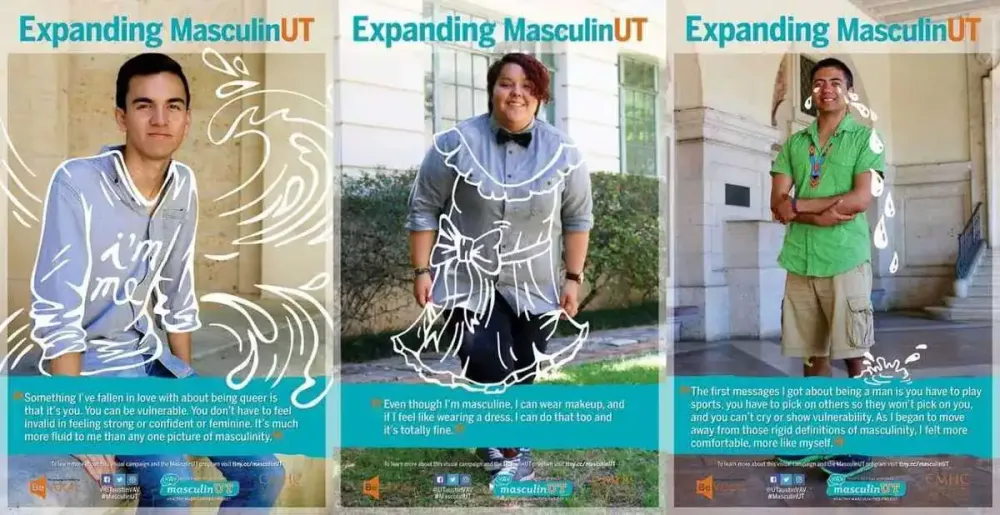
It is not easy today to be a person with an active life position, because these qualities are out of fashion. In 2018 the University of Texas could think of nothing cleverer than to declare men toxic in general and to suggest that they put on skirts and make-up.
That is how the term "toxic masculinity" took off in tabloid psychology. And to make the absurdity complete, it should be added that there is no comparable study on "toxic femininity", nor indeed on "femininity" at all.