You are asked to speak. To make a speech. To give a toast. Spontaneously. No problem: a little work with Sleight of Mouth, and you have a universal template for this job! Sleight of Mouth - also known as reframings, also known as the Sleight of Mouth Patterns, also known as the "talking your way out of an attack" templates - was catalogued and immortalised by Robert Dilts in the book "Sleight of Mouth. The Magic of Conversational Belief Change".
The book came out quite recently, in 1999. So we may consider that we are studying the very latest in applied psychology! Sleight of Mouth lets you widen your way of thinking, change your interlocutor's mind, dodge a verbal blow in a discussion, crush an opponent in words and create dependence. All these skills are instilled with the help of the same 14 patterns:
- Intent
- Redefining
- Consequence
- Chunking down
- Chunking up
- Analogy
- Measuring frame size
- Another outcome
- Model of the world
- Reality strategy
- Counter example
- Hierarchy of criteria
- Apply to self
- Meta frame
In this very post we will try to make a "spontaneous" speech.
A list of the Sleight of Mouth patterns
Say we are unexpectedly invited to take the microphone and make a speech. We ask: "on what topic?" "About love!" Well then, we can always say something to the point with the help of 14 sentences. To start with, we open this article on our smartphone (you did save the link, didn't you?), look at the table below and use it as a cheat sheet. It lists the 14 Sleight of Mouth patterns in the classic form in which Robert Dilts described them. Highlighted in blue is the description of the goal the sentence pursues. Highlighted in red are the cue words or the connectors of the sentence. So, you say the first sentence in the style of the first pattern, "Intent": "I want to talk about love"...
| 1. Intent Switching attention to the task or to the positive intention hidden behind the belief! Words: I want, I BELIEVE, I wish, I plan |
| 2. Redefining Which word could one of the words used in the statement of the belief be replaced with, so as to keep the meaning but give it a new positive undertone? A synonym! Words: To put it differently, let me rephrase, nothing other than, IN OTHER WORDS, that IS, IT IS WHEN |
| 3. Consequence What positive result can this belief, or the relationship it defines, lead to? Every person wants a great deal. They say the bad, and we see the good. An instruction on what to do in order to.. Words: Will lead to, as a consequence, AS A RESULT, that IS |
| 4. Chunking down Which smaller elements or components are contained in the belief, the relationships within which would be richer or more positive than the one defined by the belief? Ask a clarifying question. Words: in detail, in full detail, point by point, SPECIFICALLY, especially if |
| 5. Chunking up Which larger elements or components are contained in this belief, the relationships within which would be richer or more positive than the one defined by the belief? Words: In general, ALWAYS, on the whole, broadly speaking, generally. |
| 6. Analogy Which relationship is analogous to the one defined by the belief, but carries a different undertone (would cast doubt on the generalisation or reinforce it). Words: Reminds me of, LOOKS LIKE, similarly, smacks of, even, IT IS LIKE... |
| 7. Changing frame size Which #1 time frame ( longer or shorter), #2 change in the number of people involved, #3 breadth of perspective could shift the undertone of the belief to a more positive one? Words: Once upon a time, EARLIER, later, IF, over the years, from the point of view of (the situation, the circumstances) |
| 8. Another outcome Which other outcome (or problem) could carry more significance than the one contained in this belief? A person is always looking for several things... Words: YES, BUT..., however, that is not the point, the point is..., that is not the essence of it, I am talking about something else, THEN AGAIN, WHAT MATTERS IS |
| 9. Model of the world Which model of the world would present this belief from a different angle? From whose point of view IS THIS NORMAL. Words: Taking the opinion into account, from the point of view of (a group of people), bearing in mind… |
| 10. Reality strategy Which cognitive processes are involved in creating this belief? (Beliefs are created with the help of the senses). Words: Seriously, really, no kidding, in actual fact, for real… |
| 11. Counter example Which example or experience is an exception to the rule defined by this belief? (I had a different example, other people did). Words: It happens, sometimes, almost, it has happened, though, after all, in any case… |
| 12. Hierarchy of criteria Re-evaluating (or reinforcing) the belief according to a criterion that outweighs in significance any of those on which this belief rests. Words: MORE IMPORTANT, the main thing, above all, most significant, more valuable |
| 13. Apply to self Evaluating the very statement of the belief according to the relationship or the criteria defined by that belief. Words: Judging by myself, looking at myself, in my view, in my own case, I myself, going by my own experience |
| 14. Meta frame Evaluating the belief from the frame of an ongoing, personally oriented context. A belief about a belief. A conclusion. A rule! Words: In the days of, so then, therefore, from which it follows, THUS |
How did giving a toast work out?
You have been invited to a get-together or a banquet, or you are at a meeting. On the agenda: a discussion of the migration of long-eared owls. And you know nothing about owls and nothing about migration. But you have to say something.... Here is how it worked out for me with the help of the table above:
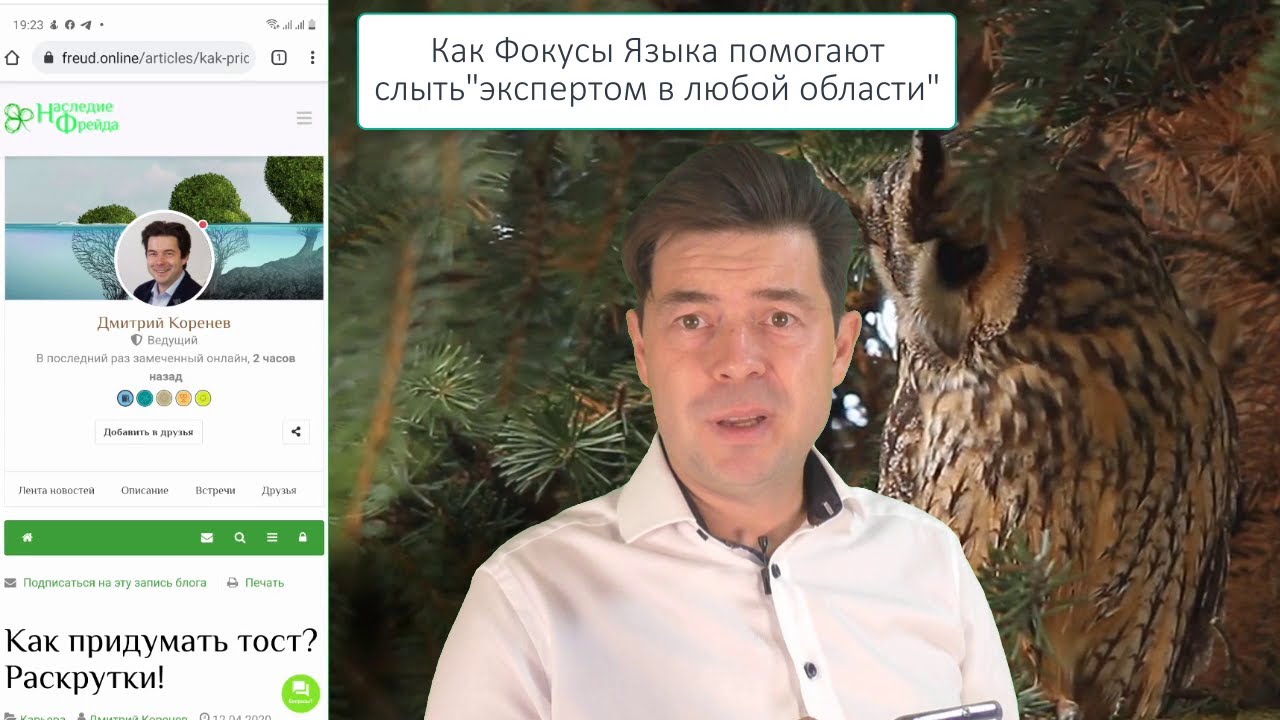
Let us try to make a speech about love). Note the connector words marked in red:
- Intent: Today I want to talk about love.
- Redefining: Love is a feeling that all of us are familiar with.
- Consequence: Through this familiarity we come to know the world.
- Chunking down: That world which is made up of many elements: of joy and worries, closeness and hatred, passion and arrangements.
- Chunking up: Of all those elements that adorn life.
- Analogy: Love is like a complicated construction kit. There are many parts in it, we see them dumped in a box, and all we can do is want to build a building out of it.
- Changing frame size: And over time this wanting only grows stronger.
- Another outcome: And what matters more is not the wanting, but the resolve to finish building this house.
- Model of the world: Because wanting and resolve are known to all creative people, such as us)
- Reality strategy: Because they and we feel in our very gut that we can live and breathe only by this act of creation.
- Counter example: Maybe the construction kit of love is missing a couple of parts? That can happen too! And it is no reason to be upset if the result keeps you waiting!
- Hierarchy of criteria: After all, the main thing here is not the result, but the striving to reach it!
- Apply to self: I have built a lot, much of it did not work out, and I go on building this feeling, love!
- Meta frame: Because only in movement, in the striving to build, can we come to know ourselves as human beings!
This technique is called the Sleight of Mouth Domino, where you link one sentence to the next with a connector word. The result is a connected speech that flows in an unknown direction. What other examples are there of using Sleight of Mouth? You can talk your way out of an attack very correctly and diplomatically with the help of the article "Talking Your Way Out of an Attack. Sleight of Mouth". Now you try it!
Let us look at one more example of how the task of giving a toast was mastered by Alexander Vasenyov at a negotiation and sales training session:
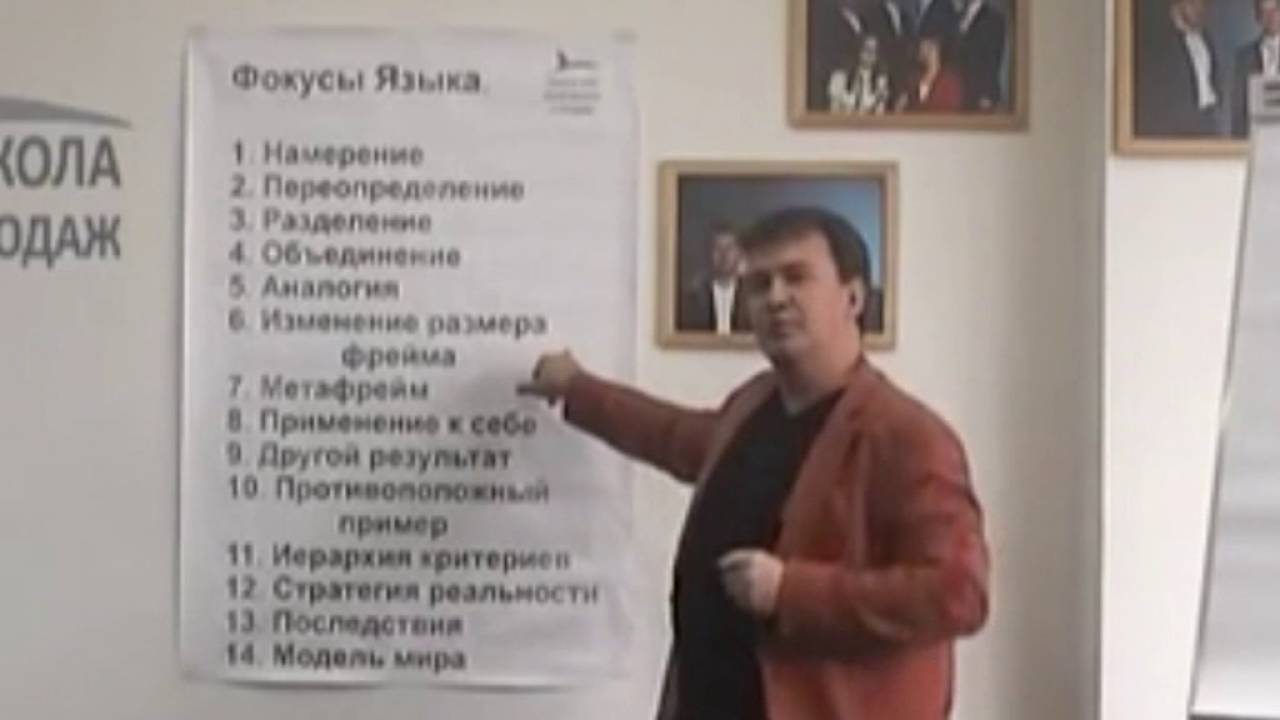
Now you try giving a toast!
At the meetings of the "Freud's Legacy" club we practise both giving a toast, and talking your way out of attacks diplomatically, and changing people's minds. Would you like to join us? Fill in the form, we will call you back and tell you the details