Trolling online, mobbing at work, bullying at school - these are forms of harassment, of psychological violence, expressions of deliberate verbal aggression directed at us. Harassment has many names and one and the same essence.
It is a form of psychological game made up of two parts:
- a provocation, and
- the mockery that follows, with the aim of
- lowering our self-esteem.
Every game has losing strategies and winning ones. Most articles recommend "IGNORING them, deleting them and on no account entering into a dialogue" with Trolls. This "defensive" strategy DOES NOT WORK, and it even spurs the harassment on. It is far more interesting to take up the question of how to make use of Trolls and get them working for us.
The author of this article is your humble servant, administrator of two Facebook groups with 38 thousand members, who has lived through veery many skirmishes. which is what prompted me to share this knowledge with you. First, let us agree on a definition of the word "trolling". For the group I put it like this:
Trolling
- three or more statements,
- judging the other person negatively
- without argument or any connection to objective facts
Using exchanges with Trolls in the Facebook groups "Freud's Legacy" and "Russian Austria" I shall go through why ignoring does not work, what use they can be, which devices Trolls employ, and how to put them in their place or "tame" them.
What sort of people are these Trolls?
There are Trolls who work for money. They receive an assignment for each day, leave up to a hundred comments in twenty-four hours and earn up to 1000 euros a month in Russia. Although in Israel, rumour has it, the pay can reach 5 thousand dollars. Here are the rates from a local agency:
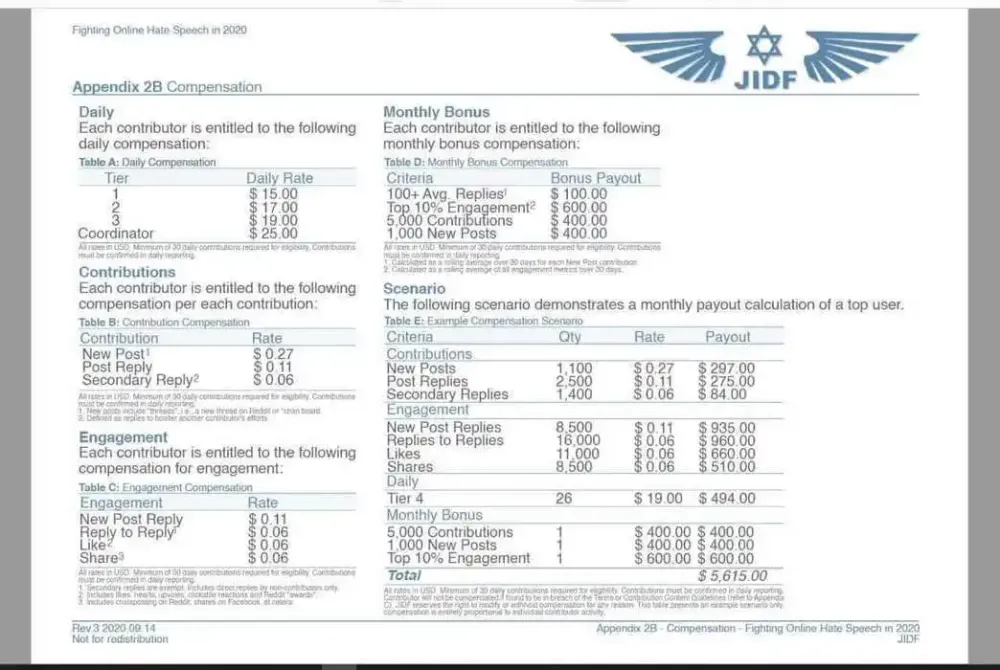
How to fight troll farms is a subject for high commerce and politics. We shall focus on the psychological and negotiating side of it.
What sort of people are they - Trolls, Mobbers, Bullies and the rest of the verbal provocateurs and abusers? In 2019 the linguistic centre Brand Analytics analysed 7 million messages on social media (https://br-analytics.ru/blog/agressivnost/), and found that....
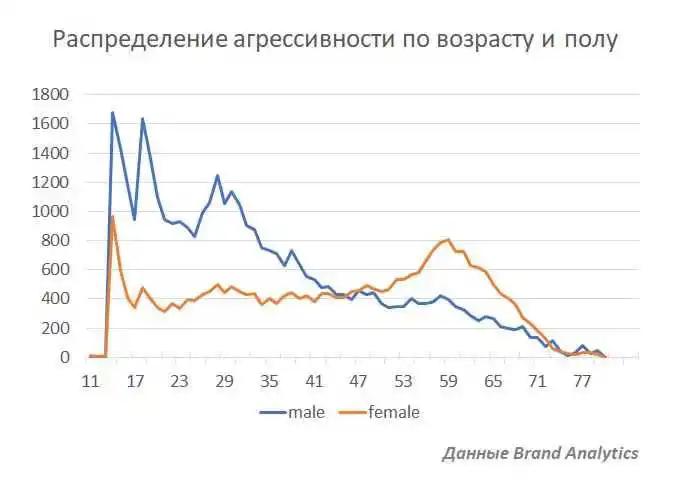
That is all you need to know about expertise. But let us return to the psychological question of what they have "under the bonnet". Mikhail Litvak (in the book "If You Want to Be Happy"), in the chapter on "energy vampirism", described them through the psycho-type "Bluebeard". The same chapter describes what their childhood may have been like and what their motives are, and... do note this quotation of his:
Can you get round a Bluebeard without humiliating yourself and without losing the respect of the team? You can, if you master the techniques... If you manage to win a Bluebeard over to your side, he can become a reliable and loyal colleague who will be the first to point out your mistakes to you.
Mikhail Litvak in the book "If You Want to Be Happy"
So let us listen to clever people). All the more so as Trolls are living people too. They can, for instance, rationalise what they do and cover the harassment with fine idealistic aims - "taking fools, suckers and rabbits for a ride", say, and charlatans of course. And most important of all, Trolls themselves understand that what they do is verbal violence and that the "target" has to put up with a great deal.
Target: "On the basis of the information you have gathered about me, what would you guess? Am I a strong person or a weak one?"Troll: "Strong, since you put up with all this"
from an exchange on Facebook
Why can harassment not be ignored?
Ignoring Trolling will not work, for many reasons. The main one is this: "if a stone has been thrown at us, next time a brick will come flying". If we do not fight back at the first stage of the pressure, we are giving a sign: "I can be treated this way". And if that is so, the rule comes into force:
Nobody makes agreements with the weak; the weak are dictated to
rule No. 4 of negotiation
The second reason chimes with the first. At the instinctive level a person's silence is read as one of the three strategies of INSECURE BEHAVIOUR. We may be classed as the FEARFUL, or timid type. That is when an animal runs away at the first sign of danger. In life it looks like this: the other person starts shouting "How dare you! You boor!" and walks out, slamming the door. Or like this: "..I shall simply leave your group". And that is that: no man, no problem. The person has removed himself, which is exactly what the troll wanted. The rival is "eliminated".
The third reason chimes with the second. By staying silent you hand the trolls ammunition and lose the sympathy of the audience. If a person does not answer a "question" or an "accusation", then he has nothing to say and he is "guilty". And that will be the closing line of the attack.
What good is Trolling?
Trolls give information for free
Think about it: what a rare opportunity in modern life - to find a person who will voluntarily study your profile, read your posts and run a long brainstorming session to find your weaknesses! Who else, apart from psychologists you pay for, will point out our flaws to us?
- Our friends may say nothing out of respect
- Our colleagues - out of a sense of competition.
- Our acquaintances - out of indifference. Everyone has troubles of their own!
Trolls have none of these problems, and that makes them an excellent instrument of provocative "therapy" (if we make use of them):
- No respect - Trolls see their aim as wounding us as much as they possibly can.
- No competition - Trolls live in a different universe of "fun".
- Trolls are interested in us (!!!), because they think they are having fun at our expense.
Trolls are the perfect instrument for collecting feedback about yourself, your project or your initiative without going to marketing people or psychologists and without polling your acquaintances. By their very nature Trolls will run a natural brainstorming session and voice everything questionable that a project could in theory contain. Of course, 95% of the "mockery" goes nowhere (see their "Beating the Grass" technique below), but the other 5% will be right, will it not? And it is that 5% we can take away and rebuild with.
Trolls increase your popularity
Trolls throw in up to a hundred comments a day. In your group. Has traffic lost its value, then? And do you suppose people have lost their appetite for watching a "battle of gladiators" from the sidelines? Do you think nobody is following this correspondence with curiosity?
Now imagine that we, with well-practised composure and communication skills, have achieved a decent result. How will the audience react? What will that do for our popularity?
Trolls teach us communication
Trolls teach us how to conduct ourselves properly. It is a convenient environment for learning how to react to rudeness, to a threat, to pressure in a public setting, and to keep the audience's sympathy while doing it. With Trolls as our material we can build clear patterns for answering and for defending our identity.
"Beating the Grass" - the Troll's tactic
In ancient China, in the 6th century AD, there appeared a military treatise, the "Thirty-Six Stratagems", describing a set of covert devices for reaching a goal. I call them "a set of dirty tricks", because cunning, so highly prized in ancient China, counts as cowardice in Western society. Which does not make the stratagems any less effective. One of the stratagems is called "Beat the grass to startle the snake" (打草驚蛇). Through actions that look meaningless at first sight ("beating the grass") the target is provoked into acts or statements it should have refrained from ("startling the snake"). That was how a commander could obtain hidden information about his enemy.
Trolls use this tactic, but not out of any great learning. As a rule Trolls are natural intuitives. Along with their aggressiveness they are witty, perhaps because in childhood this was a defence against being hurt. At the same time they have no worked-out profiling skills, and that is what comes out as the "Beating the Grass" technique. They start firing every weapon they have, jabbing at every conceivable part of the body and the soul, accusing you of every possible sin. The aim of this tactic is to feel out the "target's" weak spot and provoke a defensive emotional reaction. Here, for example, is how they felt around for mine:
- CANNOT communicate: "your knowledge of communication is superficial"
- HAVE no empathy: "you are worth nothing as an observer of human souls"
- CANNOT be specific: "women do not like men who talk too much. they need specifics"
- TAKE no account of the audience's opinion: "Ah, of course, if somebody disagrees with your opinion and is able to defend his own - he is a troll)"
- DO NOT work where I said I do: "you call yourself a banker and have not even bothered to find out what the word means"
- AM NOT informed about my own field: "You are trying to make a diagnosis while being completely uninformed?"
- DO NOT know the founders of psychology: "you are evidently unaware of other names"
- AM NOT mentally balanced: "His friends really did write to me privately and asked me not to upset him, he has flare-ups".
- DO NOT give quality content: "what you are peddling is covered in college or in the senior years of school in [X]"
- CANNOT sell myself (said about a business trainer in Ukraine's top 10))): "Does somebody really pay you money? You are a hysteric, not a professional"
- DO NOT give unique content: "So many articles have been written about this already!... one could write articles about absolutely anything"
- HAVE no standing: "Why does he keep posting links to his own articles? There is no such writer as Korenev"
- AM NOT in demand (in a group with 5,700 readers): "Your popularity is presumably zero.but your stupidity is off the scale"
- DO NOT attract attention (in a post with 70 comments): "You can carry on talking to yourself and revelling in your supposedly expert opinion".
- HAVE no private life: "it is time you started a family instead of hopping from one Skype call to the next at 41"
- AM NOT heterosexual: "when two 40-year-old blokes are sitting on a little sofa, one giggling oddly and the other giving him a languid look..."
- AM NOT homosexual (see the previous point): "What you like is the fact that I am a woman... [Troll No. 2], happily, has no breasts..."
I think these examples make it clear that this is not about facts, not about personal qualities and not about observations. This list of "NOTs" can go on for a long time, no matter what we do or how well we do it. Sometimes the accusations come in bunches of 5 to 10 in a single sentence, and by then they look like Schwarzenegger's squad spraying the jungle in the film "Predator".

Sometimes, though, the Troll gets so carried away hunting for new "flaws" that his finds contradict the "accusations" he has already made. Self-assured provocation unsupported by psychological skill leads either to "going round in circles" (which can be exposed to the audience) or to a dump of disinformation (whose obviousness can be pointed out).
Why does good defeat evil?
The Troll's weak spot is already built into his main instrument, "Beating the Grass". Since, being an intuitive, he cannot pin down the other person's weak spot for certain and fires away at everything that moves, seems to move or might be there, sooner or later he will start repeating himself. As a rule it makes no difference to him what he finds fault with. Trolls are associated with the negative element. That is, with Evil. Have you ever wondered why Evil wins at the beginning of stories and films, but Good wins at the end?
Evil has no moral boundaries and therefore has more room to move. At the start Evil has more choice. Even if we have combat NLP skills, that is, are perfectly able to "trample" a Troll, it must not be done. The audience will not understand. So the arsenal holds the classic subtle replies, pointed politeness, and... care for the Troll's delicate inner world - they are people too!
But the time factor plays for Good. In time Trolls begin to repeat themselves, and that is where they can be caught. Any psychological attack runs out of steam if it produces no result: the other person has not run away, is emotionally stable, keeps a "tally" of the Trolls' statements and steps aside from the attacks. So Evil has to be inventive and to keep looking for new strategies. And that is only possible thanks to psychological preparation.
Tactical weapons against Trolls
The essence of Trolling is to use provocation to produce an emotional reaction in you and to draw a reply out of us, ideally a return dig at the Troll's own person, something like "look at yourself first!". Any reply on the substance - explanatory, self-justifying, personal - provokes a counter-attack from the Troll. So the best weapon is politeness, nothing personal, and the use of Sleight of Mouth (the details are in the article "Dodging the Dig»).
Sleight of Mouth patterns are ready-made verbal moves with which, when a dig comes, we glide gently to one side. And put a question back to the Troll. For example:
Troll: "Dear Dimitri -first lesson of psychology-by hanging a label on a person of fragile emotional make-up you are subconsciously setting a programme for him for many years ahead. Were you not taught that?"Target: "Of course. Where exactly did you see a label, and who in this discussion is of fragile emotional make-up?"
From anti-trolling on Facebook
It is important to record and to remember every comment and reply the Trolls make. After a while the "ammunition" runs out and the Troll starts repeating himself, or contradicting himself. That is exactly the moment to go on the offensive, to expose the contradictions and to point out the repetition. All in a tone of friendly "bewilderment".
Strategic weapons against Trolls
Working with Trolls calls for more than verbal and negotiating skills. Far more important is emotional stability. Why do most recipes come down to the advice "whatever you do, do not talk to Trolls"? Because people who have not worked on themselves, who are unprepared and untrained, are very easy to catch on a sore spot in the soul.
And anyone who does want to prepare himself mentally for difficult negotiations, to feel calm in a stressful situation and to treat communication with a verbal aggressor as a game of chess is welcome at our meetings.
P.S.: with great gratitude to the trolls, on the basis of exchanges with whom this article was written.