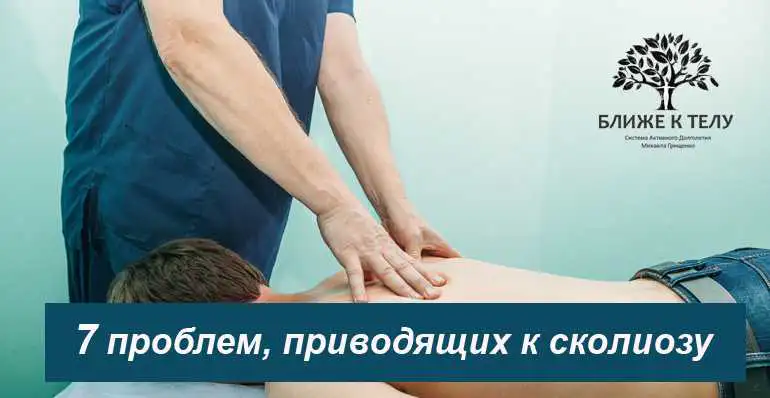
Scoliosis is a body position in which the spine takes on an unnatural curve. Depending on the conditions, the curve of the spine takes the shape of an S, a C or a Z, and the degree of curvature can change and increase over time. In most cases scoliosis can be corrected and no further treatment is required. The symptoms accompanying this disorder are limited and do not lead to serious consequences. More severe cases, however, cause various changes throughout the body and call for help from specialists.
Here are the main causes of lateral curvature of the spine (scoliosis):
Idiopathic scoliosis
Idiopathic scoliosis is a curvature of the spine that arises without any established cause, and it is undoubtedly one of the most common kinds. One of the first signs is a visible difference in the height of the shoulders. By various estimates it accounts for up to 75% of all cases in which people seek help for lateral curvature.
This type of spinal deformity is marked by a rapid, unexpected onset and swift progression, which makes a lasting result hard to achieve. It requires constant correction and monitoring by specialists. Early diagnosis and all-round help matter, including various methods of correcting posture, so as to avoid surgery for this condition.
Neurological problems
One of the most frequent causes of scoliosis is also problems of a neurological nature accompanied by a response from the muscles. In this case the curvature of the spine is a protective reaction and is directly connected with radicular or other syndromes of neurological origin. Whether scoliosis develops will depend on the particular circumstances of the underlying illness. One group of muscles goes into ever greater spasm over time, while another, on the contrary, grows weaker, which increases the curvature. It is important to identify the cause of this state as early as possible in order to begin correction.
Imbalance (the skeletal system, the ligaments)
One possible cause of scoliosis is unequal limb length. If you have had no direct injury to the legs and no congenital defect, this is most likely not a true discrepancy: the difference in leg length is a consequence of a tilted pelvis. Here one of the likely causes of poor posture is changes in the feet, such as flat feet or valgus foot. Scoliosis caused by an imbalance in the skeletal system can in most cases be corrected with therapeutic exercise and orthopaedic aids.
Congenital scoliosis and hereditary predisposition
In some cases children may be born with scoliosis already present, which is known as congenital scoliosis. This disorder is very rare; the severity and degree of each case will differ and will depend on factors including both the development of the foetus and the period at which the developmental defects were discovered. Your doctor will be able to give you more precise and more detailed information about congenital malformations.
A genetic predisposition can lead to scoliosis or increase the likelihood of its developing. Most cases of scoliosis of hereditary origin are difficult to treat, but detecting postural disorders in adolescence considerably improves the outlook and helps to remove the consequences associated with poor posture. Besides all this, a genetic predisposition to scoliosis plays a part in the development of osteoporosis and raises the risk of neurological disorders.
Tumours
Some tumours (neoplasms), both benign and malignant, can cause scoliosis to develop in the long run. One of the most frequent causes of postural disorders is neurofibromatosis, a genetic disease that causes benign tumours to grow along the nerve endings. The severity of the disease will also affect the degree of spinal curvature. It is important to start treatment as early as possible in order to improve the outlook and avoid complications.
Congenital diseases — Marfan syndrome, Rett syndrome, spina bifida, cerebral palsy
(A separate article will be devoted to these disorders)
Psychosomatics
Since the spine stands for support, reliability and confidence, the psychosomatic development of scoliosis will be directly connected with acts or deeds performed to please other people at one's own expense. The subject is in fact a very broad one and calls for closer examination, not only by the sections of the spine involved in the disorder, but also case by case.
Follow our publications and come to the live meetings at our club >>>
Take care and stay healthy!