‘They have asked me to come in to work — could you please look after my daughter? Yours will have more fun that way,’ your friend asks. And you had been counting on finally getting some rest that day. But you do not want to let your friend down either — she helps you out sometimes too.
What happens to us when we say no?
What do you feel when you agree to do something you do not want to do? And what do you feel when you refuse? Six of one and half a dozen of the other, as they say — the feelings in a situation like this are no better either way. In the first version of the example above there may be irritation with your friend; anger at yourself for being unable to say no; attempts to convince yourself that it was a good decision after all. In the second, a sense of being a bad person, guilt, a feeling that you and your friend have drifted apart.
So why is it so hard to say no? And is there any way out — a way not to go through all this and, having refused, to calmly get on with your own business?
Why is it so hard to do?
Because we humans are social creatures, at the level of biochemistry and the reptilian brain any rejection or breaking off of a relationship — even a purely hypothetical one — is read as danger. Being left alone, ending up outside the pack, once meant certain death. The brain spots this threat on the way in and immediately presses the red button: careful, danger! ‘Say yes and the relationship will survive,’ it suggests. This kicks in at the level of instinct. But we also have the neocortex, our ‘rational’ brain. It helps us assess how real the danger is and make decisions based on the present moment rather than on hypothetical situations from the past.
When you start saying no to what drains you and gets in the way of your life, the yeses grow with every day. The yeses accumulate automatically — like interest in a bank.
James Altucher
What can help you learn to say no?
- Expect less of yourself. If you drop the expectation that saying no absolutely has to be easy, a very large part of the tension goes away. Yes, at first it may not be simple, but that will change bit by bit.
- Separate feelings from facts. Take it as a given that unpleasant feelings may stay with you for a while, but they will not last for ever. Once you have said no and felt the discomfort that comes with it, focus on the facts. In all likelihood your friend will accept your no and the friendship will survive. Your refusal may affect the relationship the way a cloud affects the sky by covering the sun. After a while the sun comes out again. The fear of rejection often holds us back, yet in reality no rejection actually happens.
- New actions first — new feelings later. When we act in a new way we may feel far from pleasant, because we are stepping outside what is familiar. It is normal to act in a new way and feel a whole bouquet of ‘old’ feelings while doing it. For example, to refuse and then be tormented by guilt even though the relationship survives and formally everything seems fine. But if you understand this mechanism and give yourself time, the feelings gradually adjust, and it becomes easier and easier to say no without a trail of guilt.
- Praise yourself. When you have managed to take your own side, give yourself credit. Then the new actions get support and reinforcement. The voice that goes in for self-devouring is usually well developed enough already.
- Come at it from the other side. You can approach this from the opposite direction. Look at how you react when someone turns down a request of yours. Do you accept it when other people say no? Your husband refusing to take out the rubbish, for instance? Try to notice how you take refusals. As a rule, the easier it is for you to accept someone else’s no, the easier it is to say your own.
- Be ready to take a risk. Saying no is always a risk. Someone may take it badly and the relationship really may suffer. But as they say, nothing ventured... And what is at stake is your peace of mind and the sense that you are on your own side, doing what you want rather than what those around you want.
- Say no calmly and confidently. Saying no does not have to come with a steely note in your voice or a raised tone. In time you can learn to do it calmly, with dignity, without making excuses, feeling confident inside. After all, you have every right to.
- Keep it short. When you say no, you do not have to go into lengthy explanations and hunt for weighty reasons — or invent them. It is enough to state your position briefly: ‘I am sorry, I will not be able to help you out.’ For many people it comes as a discovery that ‘I do not want to’ is quite enough, and that a refusal does not have to be backed up with convincing facts.
What does being able to say no give you?
Used often and skilfully, that short but weighty word ‘no’ can get you quite a long way. At the very least you will have far more free time.
From the internet
What does the freedom to say no give you? Surprisingly, it gives you stronger and healthier relationships. Because you do not then have to sulk at the person you said yes to when you did not want to. You do not have to avoid them just in case they ask again for something you will not be able to refuse. And it gives you an inner sense of freedom to live your own life rather than the one those around you have mapped out for you.
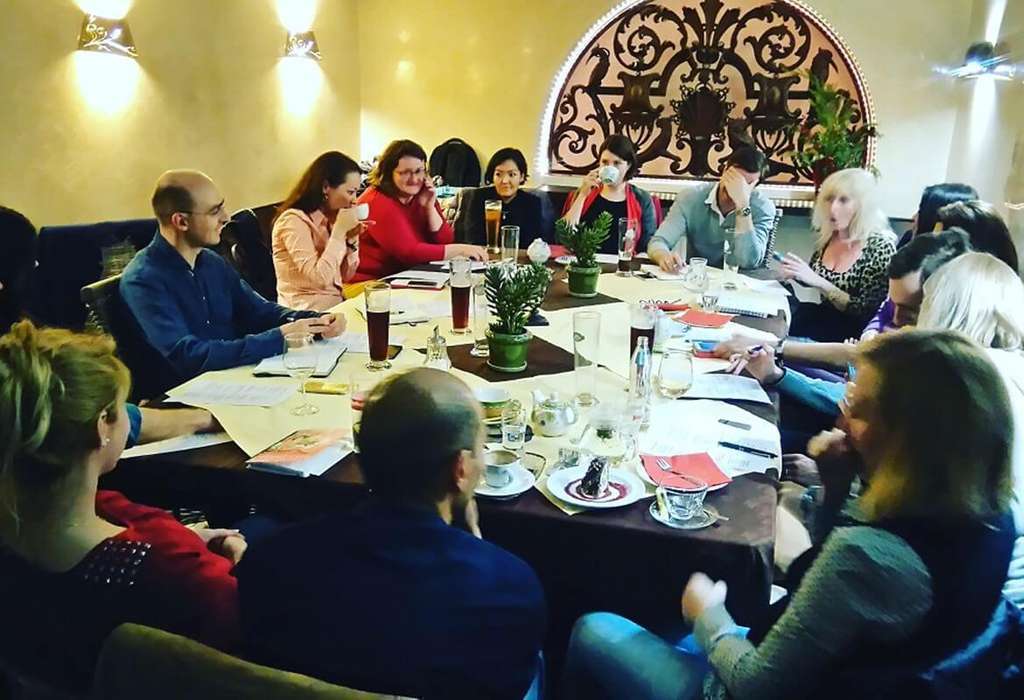
If saying no and listening to yourself and your own wishes is still hard for you, come along to the club. That is exactly what we do here: listening to ourselves and our feelings, and finding the courage to follow our own choices.
You can see the list of upcoming meetings here: https://freud.online/events