Which three books should someone interested in psychology read? At least one from each of three areas: (1) the basics of psychological counselling, (2) an overview of the existing schools of psychology, and (3) an account of one particular counselling method.
It is better to pick recent books, written in the past twenty years, which already carry the experience of several generations of practitioners. And it certainly helps to choose an author whose life chimes with your own past. Now for the details, for the most curious and for those who want to work in the field.
The basics of psychological counselling
This category of book gives you a feel for what it means to be a counsellor. Which problems does counselling solve, and which is it better to stay away from? What does the process look like? What is required of the counsellor as a person? There are plenty of books here, and the best advice is this: read the author’s biography on Wikipedia, read a couple of their quotes, and pick the one who is most like you or who resonates with you. Take your pick:
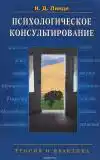
Nikolai Linde, “Psychological Counselling: Theory and Practice”. A post-Soviet practitioner who developed his own school, emotional-imaginative therapy. Are feelings, images and imagination your world? Then this author is on your wavelength.
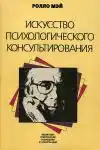
Rollo May, “The Art of Counseling”. If religious belief is your thing, this author conveys the substance of counselling in a religious context as well.
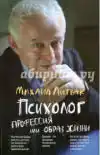
Mikhail Litvak, “The Profession of Psychologist”. An author of the Soviet school: duty, obligation, doing things properly. Sound like you? Then he is your man.
When it comes to the basics of counselling, the author matters less. The process is one and the same, and most professionals convey it perfectly well.
An overview of worldviews
Nothing sets a future counsellor straight like realising how many-sided the world and people’s worldviews are. Put simply, psychology has three broad directions:
- psychoanalysis and Freud’s legacy, with their emphasis on the traumas a person went through in childhood. My own addition: the psychoanalytic schools help you lay the “foundation” of a healthy personality, clear away the emotional loose ends of childhood and tune yourself to living rather than to brooding.
- behaviourism, or the idea that we are all “Pavlov’s dogs”. We can all be trained, and the task of psychology is to observe and to gather statistical evidence. Once a person has closed the childhood chapters, this is the sphere of dealing with society and of teaching yourself new skills.
- humanistic psychology, or the idea that a human being is something lofty, more than food, sleep, parties and reproduction. It suits people over 35 who are looking for meaning in life especially well.
Textbooks work best here: they survey the variety of theories, the variety of authors and of the experiences out of which they built those theories, and the variety of personalities. After all, every personality has its own school of psychological counselling).
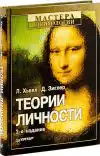
Hjelle and Ziegler, “Personality Theories: Basic Assumptions, Research and Applications”. A magnificent survey of the history of psychology, a description of every well-known school, information on research methods, an assessment of the pros and cons of each school, and evidence on how they hold up in real life. Warmly recommended!
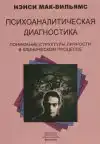
Nancy McWilliams, “Psychoanalytic Diagnosis: Understanding Personality Structure in the Clinical Process”. This one is written for continuing professional education, yet still in plain language a general reader can follow. It conveys the variety of personality types, and the understanding that each type of client calls for its own approach. With one client it is far more useful to show strength and dominance; with another, empathy and acceptance. You will see that from Nancy’s book. What is more, she gives an excellent overview of how psychology evolved from Freud up to the 1990s. And on top of that, through Nancy you will dive into the world of psychoanalysis, into an understanding of the defense mechanisms of the psyche and of how childhood shapes different personality types.
One particular counselling method
Once you have read about the variety of personalities and of counselling methods, you can go into detail and get to know the technique itself. Here the choice of books is vast, and the best handhold is to read about the author first, pick a biography that fits you, and give it a try.
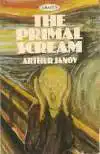
Arthur Janov, “The Primal Scream”. Arthur is the harshest, least politically correct and most blunt analyst in the Freudian line. Instead of cooing over the client, he drives them hard and throws the “puppy into the water” — right where the pain usually sits: in the lack of parental love. Forget Janov’s methods: they work, but they require the practitioner to be constantly at the client’s side, which is unrealistic in our world. What Janov does publish, though, is a great many letters from clients who went through the therapy. Through them you will understand how a person freed from their neuroses feels and lives.
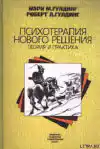
Mary and Robert Goulding, “Changing Lives through Redecision Therapy”. Transactional analysis is another psychoanalytic school, and one the general public can follow. The complex constructs you meet in Nancy McWilliams are rendered here as easy notions. The Gouldings give a wealth of examples and dialogues from their practice, transcripts of their sessions, and you get a vivid picture of what a session can look like in a modern form, even in a group.
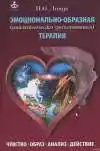
Nikolai Linde, “Emotional-Imaginative Therapy”. Working in the Gestalt manner, with imagination, with bodily sensations, changing emotional relationships — that is Linde’s territory. He has brought body, emotion and fantasy together into one school beautifully, and the book gives a great many examples of work with clients along those lines.
Once you have read these books you will have a technical picture of exactly how to work with a client in one of the many schools you have chosen.
Conclusions
Many books, many authors — but few schools. That is where to start: what psychological counselling is, how many schools there are, and what the craft looks like inside one school of your choice. Shall we start reading?