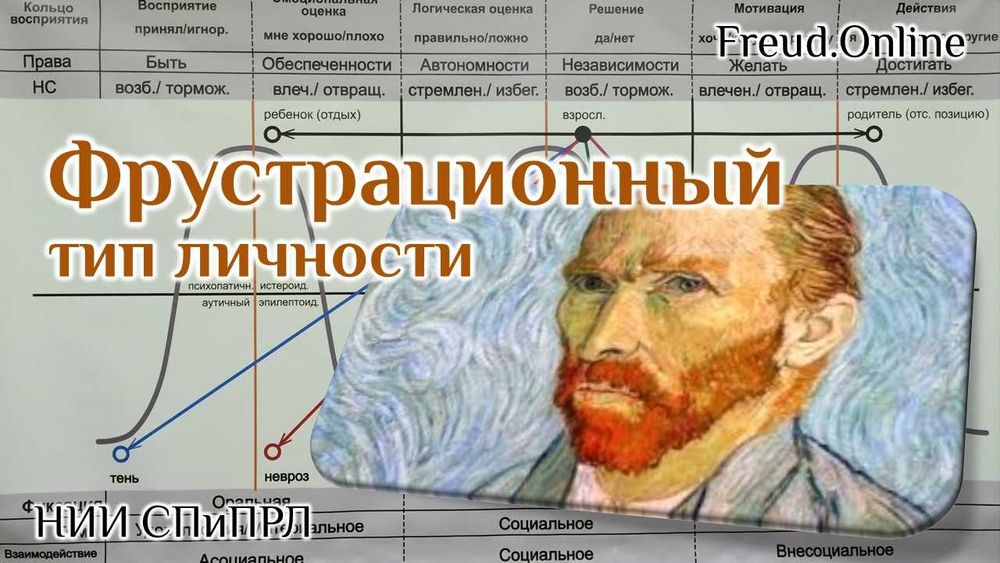
An inner prohibition against a fast, sudden, unconsidered start — and against finishing, against achieving (they are forever slowing down). A need for unhurriedness, for thinking every action through (better to leave something important undone than to do it). A rejection of formality, pomp, excessive strictness and seriousness. Distrust of logic; knowledge through personal experience. Difficulty accepting the negative results of their own actions (accepting responsibility for their own decisions). Indirect frustration of the people around them and of themselves, through carrying out agreements late or not at all (“stringing people along”).

Disharmonious and Conflict-Prone Traits
- Hard to get going; they “put on the brakes” at the start.
- A “tramp-like” quality in their appearance, their way of life and their worldview.
- They put off dotting the i's to the very last; they do not want full clarity and certainty in anything, and they avoid clear, unambiguous answers to direct questions by every possible means, keeping themselves a “way out” and room to wriggle
- Avoiding responsibility for their decisions, actions and promises, they prefer to go back on their word, their promises and their agreements: “that was not an obligation I took on voluntarily”, “I did it under pressure”, “I meant something completely different”.
- A typical life position: “it will all somehow sort itself out, it will all somehow happen”, “they will come of their own accord, offer everything and do everything themselves”. They prefer the most responsible tasks to be done for them, while still staying at the helm.
- They typically accumulate negative feelings and emotions for a long time and then stage an “unfounded” revolt, an outburst out of nowhere: “Leave me alone!”.
- Avoidance, non-participation, keeping their distance from helping those close to them in difficult, complicated, responsible situations.
- At the very moment when the final step has to be taken, when they should reach out for what they want and achieve what they have been striving for so long, they brake sharply and disappear from view (sometimes switching to another, often completely trivial topic or occupation). They put the most important things off until later.
- Absent-mindedness, forgetfulness.
Harmonious Traits
- A “Winnie-the-Pooh” quality — roundness, plushness, positivity, good nature, unhurriedness.
- The philosophy of the “Mitki”, a Taoist streak (they make do with the simplest things as if at play; peaceable and calm).
- Creativity, giftedness, a well-developed imagination.
- Basic trust in the world, in life, in people.
- Tolerance. In everyone they see an interesting, worthy person.
- The ability to compile and integrate knowledge from different fields.
- They see and present themselves as competent in any field that interests them, and take on anything new easily and boldly (without having enough knowledge for it).
- The ability to see the whole once they have seen a part. Breadth of thinking, of vision, of action.
- A wait-and-see stance, a strategic mind.
- They get around any rules and prohibitions, any strictness and restrictions, easily, gently and without conflict.
- Where someone else would run into a conflict, a fine or a reprimand, they will often earn a smile, a handshake and a pleasant new acquaintance.
Fears, Sources of Displeasure
- Of abrupt, sudden, unconsidered changes, of hasty decisions, of being presented with a fait accompli, of having to react quickly.
- Of achieving, of completing, of finishing, of dotting the i's, of anything being given a clear final shape.
- Of formality, of strictness and seriousness in relationships and in actions.
- Of responsibility, of accepting the results of their actions and decisions (especially the negative ones).
- Of being confronted with facts, proof and irrefutable logical arguments against them and their behaviour (of being “caught out”).
Sources of Pleasure
- Having a “den” of their own, a “hermit's cave”.
- Solitary creative work, a solitary flow.
- Interacting with others from the position of a teacher.
- Long intrigues, strategies, “games of chess”.
Careers (Comfortable, Self-Actualizing)
- Hermit craftsmen
- Freelancers (it is hard for them to work from – to, by an organisation's strict rules; better to work for themselves)
- Actors
- Directors
- Politicians (strategists)
- Diplomats
- Spiritual teachers (for students of every kind)
- Singers, poets, storytellers, travellers.
Games – Roles – Manipulations
- “Leave me alone with your important business — I'm doing creative work.”
- “I never said that, I never did that, it wasn't me, you misunderstood me.”
- “Look at yourself, you're no better, and as for you…”
- “I need to think it all over — call me back in a week or so.”
Appearance
Often sloppy and unkempt, “tramp-like”; even on formal occasions they wear jeans and T-shirts
Motor Activity
“Winnie-the-Pooh” — waddling, unhurried
Personality Development (Paths)
- Starting easily. Finishing and achieving.
- Ease of movement and of action.
- The ability to be both plush and formal.
- Taking responsibility for the results of their own actions (both positive and negative).
- Respect and gratitude towards those who carry out and realise their goals.
- Attention to other people's opinions (especially those different from their own), to their experience, to logical arguments, facts and proof