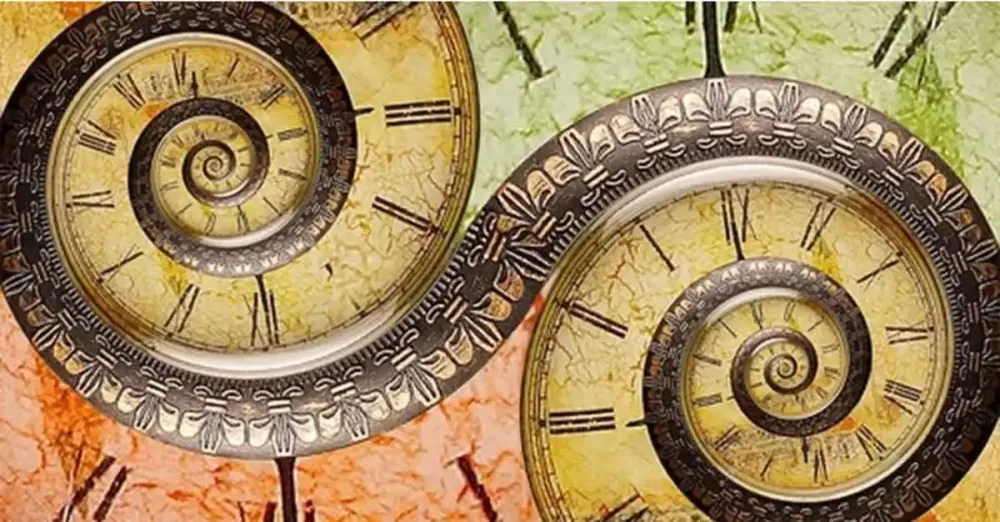
There is a thing in life called the seven-year development cycles. You develop away for seven years, and then bang — the world around you suddenly looks different. Psychologists explain this by the development of our psyche. It is easiest to show with children. For the first six years of life their world, and the only "living" people in it, is their family. Even the other children at nursery belong more to the toy category. Great that they are there, but there is plenty to do without them.
And around the age of seven — crash — children grow into the realisation that the world is richer: besides the family there are also peers, and they influence something too. For the next seven years children learn to coexist with those peers, and that is no easy matter either. A family, after all, agrees to things more readily; the dynamic and the hierarchy there are simple. Out here you have to negotiate, make serious compromises, enter alliances and fight for leadership... In short, it is all far more serious. And from about the age of fourteen it is time to find your own place in this society that has grown more complicated still, to find your own people and, at the same time, to stop depending on their opinion, to get rid of those who do not suit you or who do you harm... And on top of that there is first love, and the first attempts to separate from your own family, and rebellion...
Psychologists say that most of us muddle through all of this one way or another. The interesting part begins at 21. It is also the part many people argue about. The thing is, this cycle is tied to the family — or, to be precise, to founding a tribe of your own and... producing offspring. Bang, crash, wallop! Children at 21?! That is the last century, patriarchy, conservatives and "the god-botherers"!
That may be so, but for thousands of years families were founded at exactly this stage. Physiology is at its most favourable for having children in this period, there are fewer consequences for health and recovery is faster... And the expectations of society point the same way. Girls were, of course, married off earlier than that, and gave birth earlier... But, firstly, the family as "my tribe" was still seen as something for the time when people were ready for it; and secondly, we are talking about a more active development that women in many communities were denied. And this fact — that the age of 21 to 28 was meant for founding your own tribe, and nobody knows how many more generations it will take for both brain and body to reshape themselves for our new realities — is particularly interesting. Because educated people today use this age for study and career growth. Which makes for a very curious combination: society demands self-actualization from us, active participation in society and rapid career growth, when our mind has not quite grown into it yet. Everything listed above belongs to the next stage, or age: 29 to 35. So what do you get before that? That famous "office plankton", and the rare but striking driven young professionals who stand out from the crowd and who really do respond most strongly to the slogans about everyone in a big company being one big happy family. And it is for the sake of that family that they slog away until late, and then it is with that same family that they drink beer in a bar on Fridays.

What happens in the period from 29 to 35? According to the theory of the seven-year cycles, this is when we are due to become disillusioned with the family. And in parallel, as I wrote above, to throw ourselves into a career, into self-actualization, into showing up in society and so on. Our brains start working even more impressively than before. Ambition, motivation and independence appear; we are ready to take on ever more responsible projects. Where do we apply those brains? A great many of the people I know from the big office family start families of their own in this period. And, note this: they genuinely treat it as a project. Hence, apparently, the fashion for being the best of parents (self-actualization, innit), and the frantic dashing between early-development schools, after-school clubs, courses, extra classes and other faff (crossed out) useful, developmental activity. After all, the whole force of your ambition can go into the "family" project, since in the office family we duly become "disillusioned" by the age of thirty — or at least it becomes harder to make us slave away for it in exchange for praise.

And what about 35? That very self-realisation, when it is time to separate from society as well, to become disillusioned with what we worked at so stubbornly and to take it, at the very least, far more calmly. And there is more than one cycle ahead, more than one crisis and more than one further expansion of consciousness without any accompanying substances. But that is for some other article.
I am not prepared to say whether all of this is good or bad. It is a description, and one attempt to explain new realities and new tendencies. Not for everyone, of course, but this is how it looks to me. And it is by no means certain that it is all bad. Yes, for some people the tribe of their own stays at work for good. Yes, some only ripen into their psychological 21 after forty, find themselves a young partner and found their tribe all over again. And yes, more conscious parenting is probably not at all a bad idea, as long as it is done for the child's sake and not for show. Or maybe everything we sing about really is only about ourselves, and all I am describing is my own passage through these cycles. Maybe, in principle, everything is. All the same, it was not I who noticed the passage through age crises, but a great many psychologists, philosophers and esotericists. Others may feel differently, but I always find it interesting to watch how it shows itself in our fast-changing world.
And finally: how do we notice these crises? Personally, by the realisation that there is nothing left for me to do here. There is nothing tragic in it, nothing of what we usually mean by a crisis. The heavens do not collapse, the ground does not give way underfoot. In short, drama is possible but by no means compulsory. Personally, I simply see clearly that the stage is over and it is time to move on. And how does it happen for you?