There are people whose psyche is tuned for emotions. Unlike those who tend to settle everything with their head, these people settle everything by intuition, by sensations and by inner states: by attraction and aversion. And that is wonderful, because we are talking about people with the ‘Psychological’ Ego type, whose main mental instrument is ‘Contact with Emotions’
We all have emotions and we all have inner experience. Our emotions are the system that outwardly expresses our felt inner state. Our sensations are a deep system of motivating signals.
We experience emotions, but we always show them: we shout, we cry, we swear, we whisper tender words, and so on.
Emotions always have an outward addressee, yet the main message our emotions carry is aimed not at the other person but at ourselves. The main job of our emotions is to tell us how we are right now.
You may have noticed that you first start shouting and only then realise that you are angry. Or you start crying and only then realise that you feel sorry for yourself, that you are sad. Emotions are directed outwards, but their main address is ourselves.
say people whose Contact with Emotions ‘hurts’Your emotions are poorly developed
But sensations and emotions are not a sore spot for everyone. First of all it helps to understand that ‘Contact with Emotions’ is an Ego type. That is, a particular way the psyche works — what exactly a person's endocrine, nervous and neural systems are focused on. Besides ‘Contact with Emotions’ there is also ‘Contact with Reality’ and ‘Contact with Cognition»
We cannot be aware of emotions and sensations at the same time; we have to choose one. For example, a person, focused on experiencing their sensations usually stays silent at that moment and shows nothing outwardly. Try listening to your own sensations right now.
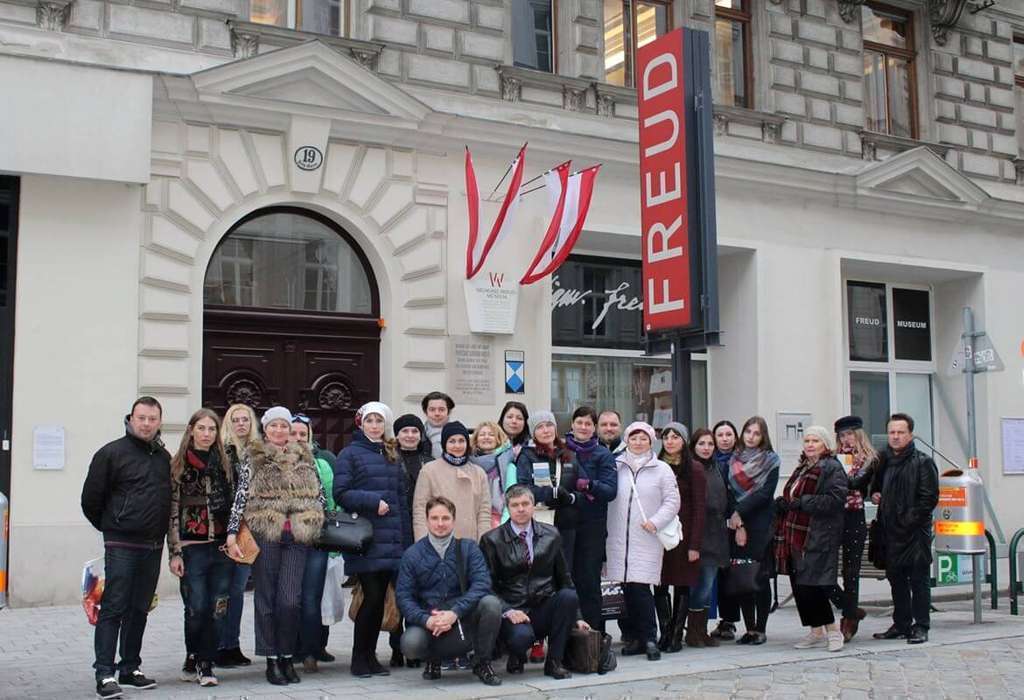
So, in people with the ‘Psychological’ Ego type the main mental instrument, ‘Contact with Emotions’, revolves precisely around the outward expression of emotions and inner experience. Outwardly this shows up as attraction (to people, hobbies, events, food), and inwardly it often spills over into aversion. Incidentally, that attraction and aversion, love and hate, sadism and masochism, voyeurism and exhibitionism are two sides of the same coin was noted as long ago as Freud, in his paper ‘Drives and Their Vicissitudes’.
Their sore spot is closeness
If you have chosen someone with the ‘Psychological’ Ego type as a partner, here is what is worth knowing about their ‘thing’, closeness. Everything with them revolves around either needing closeness or avoiding it.
If they avoid closeness, then too little closeness – hurts, and too much closeness hurts too. They need it, but they find it hard to establish. If someone has already become close, it is hard to let them go. And even if it hurts, I will put up with it, because this person is close.
Or the other extreme — every interaction is conducted at a high level of closeness from the very start. Closeness is never established. The interaction goes straight in as if, we had been close for ages. There is no getting used to each other, no entering into a relationship. The barrier comes down at once: I do not have to establish closeness and boundaries.
Closeness for them switches on easily and switches off just as easily, because you cannot trust for ever: right now we trust, and an hour later – we do not. And too much love lays claim to closeness. So I feel unfree, and I need to run.