- "Did you know that Margaret Mitchell saw Melanie, not Scarlett, as the heroine of the book?" Tamara asked me, as if in passing.
- "Melanie who?" I said, taken aback.
We had met so that I could question her about her relationship. Tamara had read all my stories, both inside the "Love Stories" project and outside it, and it was fairly easy to talk her and her husband into becoming the models for another one.
Background: The stories are published from the feedback we received and with our clients’ consent. The names have been deliberately changed. At the end you will find a counsellor’s commentary analysing the relationship.
Skip to the counsellor’s commentaryTamara also knew that in this project we compare stories from real life with stories immortalised in world cinema, and so she managed not only to spare me a frantic search through the memory of every love film I had watched in thirty-odd years, but also to do part of my work for me. At the time, though, in that café over a cup of vanilla rooibos, I did not know it yet.
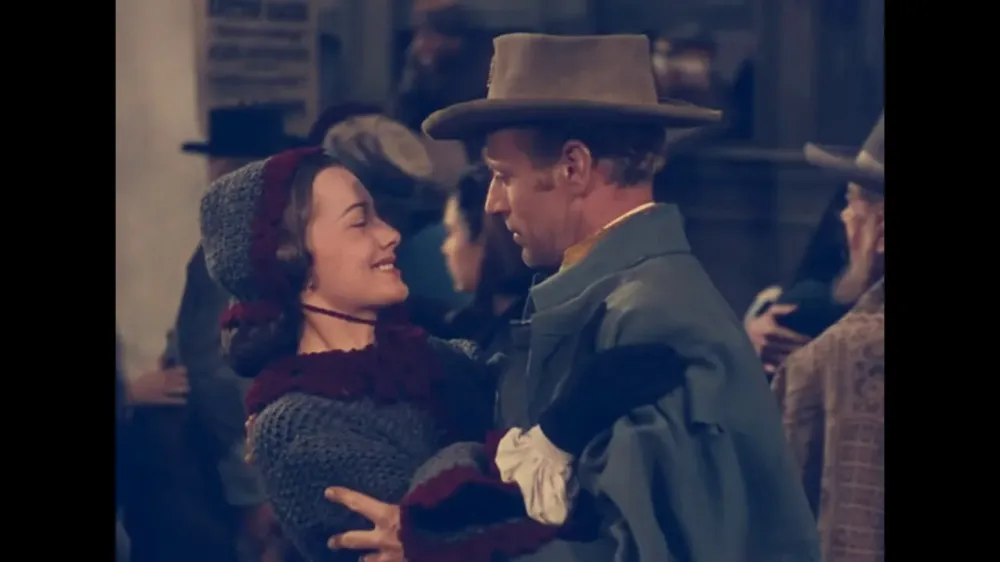
- "Melanie Hamilton from 'Gone with the Wind'. It was people who were dazzled by Scarlett O'Hara and started looking at her, but the writer did not like Scarlett."
Margaret MitchellI was trying to describe a far from admirable woman of whom little good can be said, and I was trying to keep her character consistent. I find it absurd and ridiculous that Miss O'Hara has become a sort of national heroine; I think it is a very bad thing — for the moral and mental state of a nation — if that nation is capable of applauding and admiring a woman who behaved in such a way...
- "Funny," I said. I had seen the film long ago and still did not see what she was driving at.
- "Well, nobody is interested in quiet, peaceable couples, the unremarkable, domestic kind. We only remember Melanie because we remember Scarlett — and only because Scarlett was chasing Melanie's husband."
And then it dawned on me: yes, without knowing it Tamara had found the perfect parallel in world cinema for herself and Ivan. That very quiet, exemplary family, the backbone of society. Good, decent, kind people — and, for most of us, unbearably dull. People find passions more interesting: intrigue, impulses and kisses against the backdrop of a burning Atlanta. The aggressively feminine Vivien Leigh as the determined Scarlett, who swore she would lie and steal and kill but never go hungry again, and the ironic hedonist Rhett. Scenes from the film came back to me one after another, and now I knew exactly how I would build the next story.
So: Tamara and Ivan. The perfect, exemplary, quiet and peaceable couple.
Tamara
Tamara was an astonishing, quite incredible woman whose life read like something between the lives of the Christian saints and the characters of Hoffmann's tales. She was a primary school teacher. The kindest and sweetest of women, always a little tired and a little dishevelled, incapable of sitting still for ten minutes simply for her own pleasure, because there is always somebody to be helped and somebody to be rescued. Neither a hard childhood nor the need to survive in the 1990s, working round the clock wherever she could to support the family, had broken her. All through her youth she prayed to God for a husband she could look after, and in the end she married a man who, three years into their life together, had a stroke and was left disabled, leaving her with two children born a year apart and himself as a third child. Tamara bore that cross too without flinching. Her husband died when the children were 11 and 12. And five years after that she realised that the children were about to fly off into adult life and she would be left completely alone in the huge flat her husband had left behind. Another woman might have been glad of the rest at last, but not Tamara. Tamara was struck dumb with horror at the mere thought of such loneliness, and so she decided she urgently needed to find herself a man.
Where does a woman over fifty look for a man in the modern world? It is that wonderful age when the career has settled down, the circle of friends has formed, you have neither the strength nor the wish to do the rounds of the bars, mortgage, children, cats and back pain keep you from anything wild, and to a sleepless night of passion with a hypothetical chance of multiple orgasm you would rather prefer a cosy evening with your favourite series. At that age few people go looking for domestic happiness in a bar, at work you know everyone inside out, striking up an acquaintance on public transport is not done, and at belly-dancing classes there are a dozen other women just as desperate as you are. And beyond all that there is neither the time nor the energy left for anything. So Tamara decided to look on dating sites. And she found Ivan.
Ivan
Ivan was a surprisingly decent and calm man. His life was neither a fairy tale nor a novel. It flowed along steadily between the dacha and work, making neither waves nor whirlpools nor eddies. All his life Ivan worked as a sound technician at a national television channel. He rummaged in cables and equipment, adjusted, tuned and set things right, quietly waiting for his pension to come. In his free time he was building up his dacha, buying all sorts of cost-saving technology for it and preparing a place where he could enjoy his rest during that very pension he was waiting for. He had been married once and had no children; his wife, a very energetic person who was forever demanding something, divorced him and married a very rich businessman, after which she never gave Ivan another thought. Truth be told, Ivan did not really need a wife. He could look after himself beautifully, and his favourite saying was "my sex is food". All the same, being without a partner felt somehow not quite right. So he too registered on a dating site. And they met.
As with Ashley and Melanie, there was no particular ardour or passion between Tamara and Ivan. Ashley married Melanie because it was a family tradition to marry one's cousin. Ivan and Tamara started seeing each other because society "disapproves" of being alone. And yes, it was a fine union, but not at all for show — only for themselves. They went to various restaurants together, met friends, went to concerts and to the theatre. Ivan was correctness itself, so much so that Tamara began to worry that she was too old and too plain and that this was why she was not wanted. All these worries she kept to herself, saying out loud only how good and kind Ivan was, how caring and attentive.
Before long she was at his house extraordinarily often. She cooked him all sorts of wholesome, tasty dishes, helped him look after the garden; they drove to IKEA together for things for his dacha, to builders' merchants and to markets. She tried to help him in everything, quite reasonably expecting that he would do the same. Alas, when all the wall cabinets in her bathroom came crashing down, those same cabinets also crushed her illusions about Ivan. Perhaps Tamara had carried everything on her own shoulders for too long, or believed too firmly in a bright future and in "real men", but her request for help was not recognised at all.
- "Vanya, my bathroom has collapsed"... she wrote to him, attaching photos, in the belief that a real man would understand everything at once.
- "You have my sympathy, mine collapsed once too, it was no fun at all," Ivan replied, leaving Tamara in mute bewilderment — what on earth are you supposed to write next in a case like that?
- "I really don't know what to do..." she wrote timidly, nursing a faint hope that Ivan would think better of it.
- "Well, calling in the tradesmen won't be cheap, but you are a strong woman, you will manage on your own!" Ivan finished her off.
The phrase "a strong woman" is the bane of many lives in our country. Society and its stereotypes tell women to be weak, while necessity makes them do more and more of the men's work. In fact everyone who copes with their life and their responsibilities is strong, but it hurt Tamara very much to hear it. Another woman might have told Ivan where to go after that, but not Tamara. As with Melanie, Tamara's kindness knew no bounds and was ready to excuse a great deal. Naturally she was deeply hurt, withdrew into herself and started wondering what she was doing wrong in life to make men wipe their feet on her — but, oddly enough, Ivan learned about this hurt too only much later. She understood, of course, that she was behaving remarkably foolishly; yet by the time of our conversation that behaviour had justified itself and turned out, in Tamara's view, to be all but the key moment in the development of their relationship.
God alone knows how much longer they would have gone on holding hands platonically, weeding the vegetable patch and photographing sunsets and suburban landscapes on Vanya's smartphone, had Ivan's ex-wife not been widowed. Ada had always been a striking, strong-willed woman: aggressive, emotional and demanding. Now she was rich as well. And since the only fault she had ever found in Ivan was his lack of career ambition, and therefore of enough money for her shopping and her beauty treatments, now that the question of the bank balance had been settled for a long time to come, Ivan struck her as a flawless candidate.
At that point in the story, as I remember, I felt a burning annoyance. I had gone to such trouble to find a couple with the right personality types for an interview and a story, and then some Margaret Mitchell went and stole my plot a hundred years ago. She may not care any more, but I am the one who will have to convince people afterwards that Ivan and Tamara are real, with only their names changed. Still, you cannot leave a word out of a song, and there is no telling when another such couple will turn up, so I shall have to go on.
Tamara's existence did not trouble Ada in the slightest. She knew her ex-husband inside out, and she saw no serious competition in quiet, modest Tamara, who asked for nothing much. Just as she had thirty years earlier, she burst into Ivan's life like some incredible whirlwind, demanding all his attention for herself with no break for lunch. And poor Ivan had a very hard time of it. On one side there was Tamara: decent, kind and honest, in no way to blame for Ada's appearance. Tamara genuinely cared for Ivan, helped him and never scolded him. On the other side there was Ada: unruly, capricious, breaking every rule there is, and utterly intolerant of objections or refusals. Beside Ada he felt sweetly helpless, waiting only to be "boarded", captured, overrun and told what to do. Tamara did not do that; soft and perfect, she left him the right to make that damned choice himself, and it made his head split.
- "Will you call me tomorrow?" Tamara would ask, almost plaintively.
- "Tomorrow I'm picking you up and we're going to the Serovs'! Wear a jacket!" Ada would inform him, as an order.
Why on earth had he gone looking for new acquaintances? He had lived alone and could have gone on living alone. Now there was simply too much action in his life. So much that he could not take it. More than anything in the world he wanted to run away. To drop everything and escape to some desert island. He did not want to start again with Ada, but he could not resist her either. And at the same time he saw quite clearly how badly he was treating Toma, and had absolutely no idea how to tell her about it and apologise.
- "You are the perfect woman, Tamara, I cannot imagine anyone better, but..."
- "But what?" Tamara flinched.
- "You are too good for me, you don't even demand anything, you don't ask for anything. How am I supposed to feel like a man? I want to help you too."
- "What do you mean, I don't ask?" Tamara gasped. "What about the bathroom?!"
- "You did it all yourself, without me."
- "But I did ask you..."
- "Did you? You mentioned it once, that's all."
- "Twice, actually... And how many times was I supposed to ask???"
- "Until I came and did it. As it is, you managed without me, so what do you need me for?"
To say that Tamara was hurt would be to say nothing at all. That conversation was the last straw that made her all but bottomless cup of patience overflow. Completely without emotion, she thanked Ivan for the information, hung up, carefully put the phone down on the bedside table — and only then burst into tears.

For both of them a dark stretch of life began. Ivan could not make himself trust his ex-wife again. He had genuinely loved her once, but that was very long ago. Much in the house reminded him of Tamara — she had helped him do so much there. He would catch himself wondering how things might have been if... But the moment Ada came into the room, Ivan pulled himself up short, as if afraid she might read his thoughts. "At least I'll have a rich life in retirement, la dolce vita, no less!" he told himself, and for some reason it made him feel sick.
Tamara, for her part, began to think seriously about why she was so unlucky in her private life, why no man had ever valued her and what she needed to change in herself. That is how she came to our club. When she found out her personality type, she was glad that now she knew why she was the way she was. It took her longer to understand it and to see all its advantages. About six months later — which is very quick indeed — she fell in love with her personality type and also stopped being afraid of being alone. "I am wonderful at caring for people, but only now have I understood that the first person to care for is yourself," she said at one of our meetings.
She and Ivan were brought together by chance. It took Ada a year to remember why she and Ivan had not been able to live together, and to move down south, where the men are livelier and warmer. He did not dare call Tamara — he knew he had made a mess of things, he was afraid, he imagined all sorts of things and swore never to set foot on any dating site again. And then one day, walking in a park with a palace on the edge of the city, he came face to face with Tamara. She was showing friends round the park and telling them something with great enthusiasm. And suddenly everything was as it had been before: a warmth in the soul, a gladness in the heart.
No, it did not all end as simply as that. Tamara forgave him at once, of course — or said that she forgave him at once. But Ivan did not forgive himself: he had behaved badly. So this time he courted her with all his might, diligently and unbelievably romantically, so that no one would be left in any doubt. And then he proposed to her by all the rules: in a suit, on one knee, in the middle of a smart restaurant. And they have lived that way ever since: quietly, peaceably, with a romance of their own, walking hand in hand, watching sunsets, going to restaurants, cooking together and digging in the garden. And what more do you need to be happy?
Counsellor’s commentary
Tamara is the depressive personality type according to the S-Theory. She is the embodiment of kindness and patience; her decisions and actions are subordinated to proving her own "goodness" and to the judgment of others. People like this depend on other people's opinion and do not believe in themselves enough, and so they often endure every hardship in silence and live for others. It matters to them to be useful to those around them, because otherwise those people might turn away from them. They are also convinced that happiness has to be earned and suffered for, and that it cannot last. She blames herself when she is treated badly and looks for the problem in herself first, because subconsciously she believes that she is not good enough. At the same time, her compassion and her ability to come out of conflicts peacefully are excellently developed. She suffered as she forgave Ivan his behaviour, but in the end they kept their bond.
Ivan is the compulsive personality type. In his worldview, his actions and his thoughts — in everything — he leans on the traditions, canons, logic and rules that already exist (those of his family, of society). "That is how it is done", "that is how one should live", "that is the right way to act". Without such a reliable, stable support he is tormented by doubts and by the difficulty of choosing "what is right". Ivan, by his nature, is not very fond of responsibility and is more likely to obey other people's rules than to set his own. That may be the sole reason for the things left unsaid in his relationship with Tamara: she will not demand or impose, and he will do everything at his own pace until someone authoritarian like Ada appears. At the same time, he strives to be proper and to act properly, even when it is out of fashion. Compulsive people are people of logic and facts, who do everything they take on very thoroughly and carefully. They seek to give everything a rational grounding, because if something is not rational then it cannot be.
In the traditional order of things there are a great many couples like this. A quiet family, not very noticeable. She is busy with the household and with bringing up the children. As soon as they have finally decided to be together, the relationship quickly turns into a family; they are immersed in family life, yet the romance of the relationship is preserved all the same.
Seduction here works through the observance of formal social rituals. The courtship will be whatever is customary at the time, whatever society currently accepts and approves of. Eroticism is all but absent; romance is socially approved. In her eyes he matches the model of "a good man". In his eyes she fully matches the notion of "a proper wife". Compulsive people have difficulties with emotions, experiences and feelings, and their emotional side is entirely suppressed. Even so, they are among the most romantic of people, because the world of romance is a social world.