
Who could tell you more about the five-factor model of personality, or the Big Five, than the man who used it to win Donald Trump the presidential election and to take Britain out of the European Union. Meet the talk given by Alexander Nix, chief executive of the now-vanished firm Cambridge Analytica.
Alexander talks about the OCEAN psychometric methodology (also known as the five-factor model of personality, also known as the Big Five), about Big Data, and about how they are used to predict people's behaviour. The persuasive power of psychometrics was demonstrated by Nix in the campaign for Britain's exit from the European Union (known as BREXIT) and during the US presidential election of 2016.
The original English-language talk from the Online Marketing Rockstars Festival 2017 is below.

Here we give the transcript in translation. At the end we will tell you how the Cambridge Analytica story ended, and where the Big Five model is limited as a theory.
Digression: if you would like to read Alexander Nix's talk in English, follow this link:
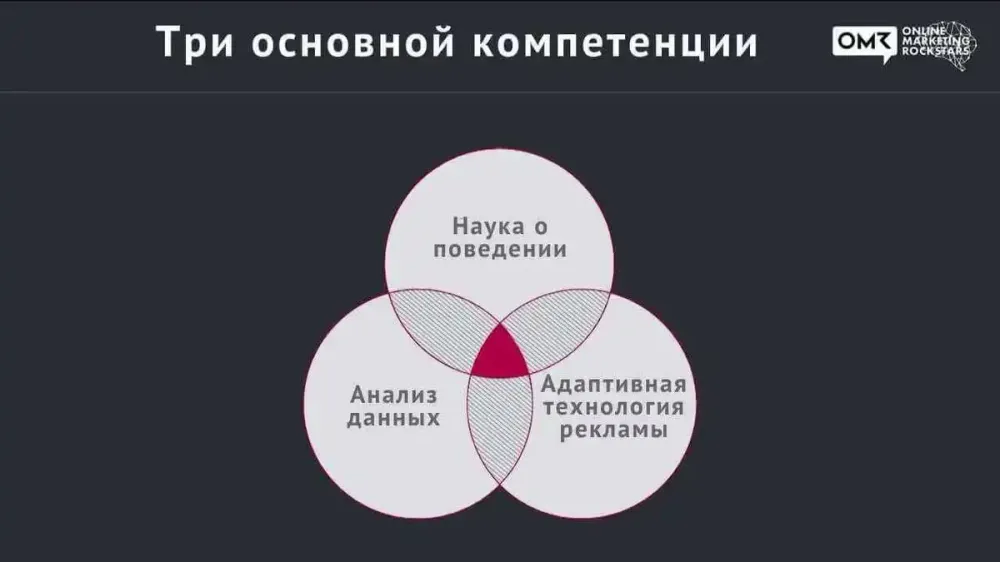
"Today I would like to talk about three technologies, three methodologies that are shaping the way political campaigns, brand promotion and advertising campaigns are run:
- the science of studying behaviour
- Big Data, and
- digital marketing technology
Behavioural science
The first of them is the science of behaviour.
And probably the easiest way to explain it is with an illustration. If you have been lucky enough to earn yourself a private beach and you would like people not to swim in your patch of ocean, you can put up the sign on the left of the picture. That is an informational message, and it is aimed at informing people about the situation.

Alternatively, you can try using something like the message on the right. That is a behavioural message, and it addresses a deeper motivation. Clearly, the threat of being eaten by a shark is a very strong argument for giving up swimming in the sea.
That said, it is extremely difficult to do, and most advertising and communications agencies today still segment and target on the basis of demographic and geographic data, consumer characteristics and lifestyle, as well as media consumption statistics.
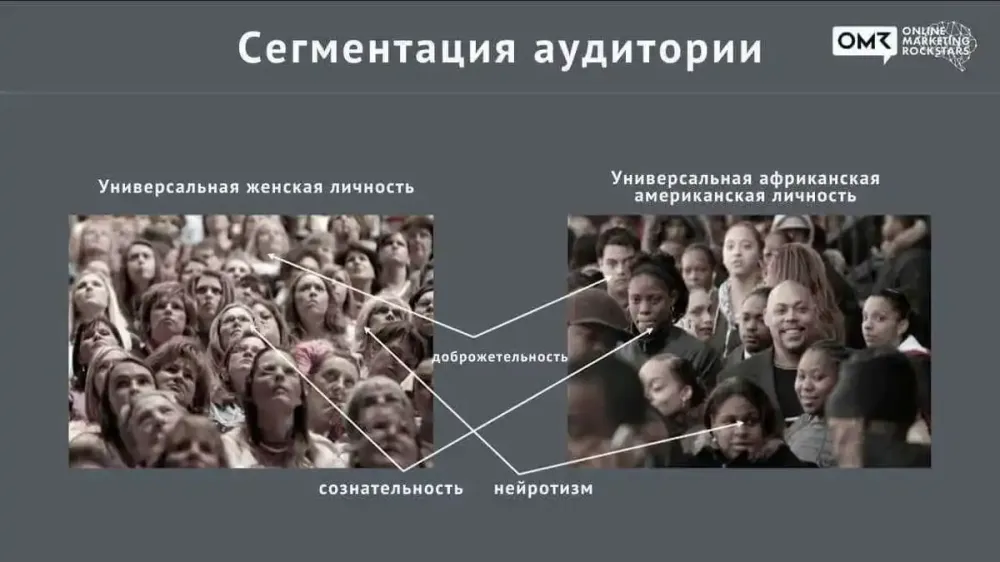
But if you stop for a moment and think about it, the idea of segmenting an audience by, say, gender looks utterly absurd. The idea that all women should receive one and the same message simply because of their sex, or all African Americans because of shared background, or all old people, or rich people, or young people because of their demographics, simply makes no sense.
Obviously your demographics, your location, your media consumption, your consumer characteristics and your lifestyle will influence the way you see the world.
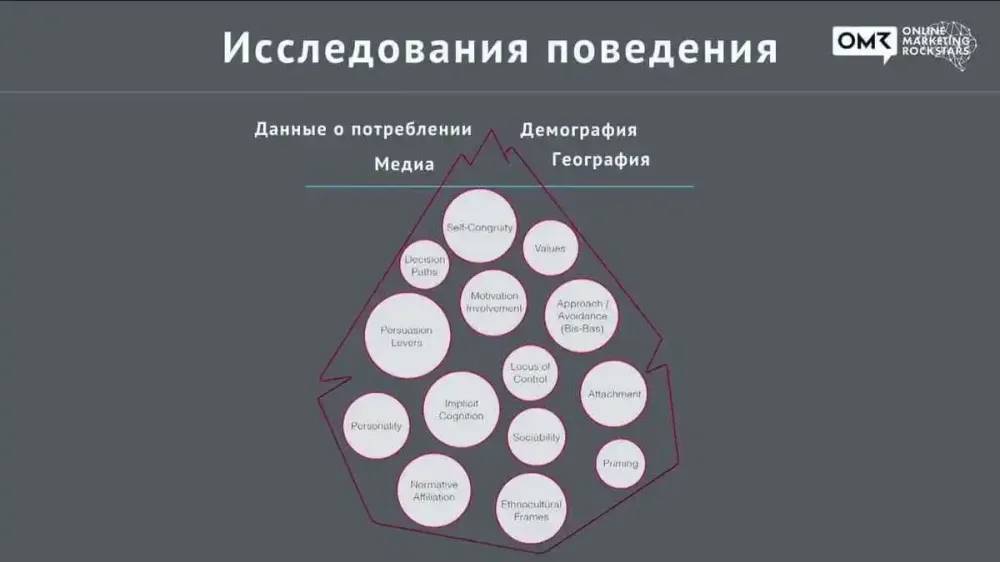
But no less important, and possibly more important, is personality, or psychographics. Understanding personality is the key, because it is personality that influences decision-making, and obviously your decisions will determine how you vote, or which products and services you buy.
The five-factor model of personality
So at Cambridge we developed a very detailed quantitative instrument for researching the core traits that make up your personality.
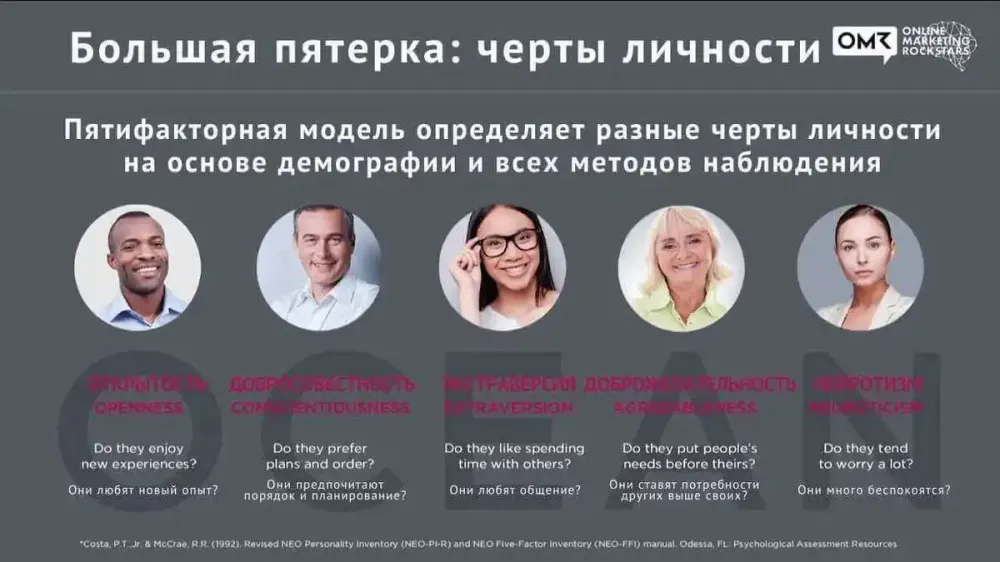
We use experimental psychology. This is the five-factor model of personality called OCEAN. OCEAN is an acronym:
- Openness, Openness. How open are you to new experiences?
- Concientiousness, Conscientiousness. How much do you care about order, routine and planning in your life?
- Extraversion, Extraversion. How socially oriented are you?
- Agreeableness, Agreeableness. Do you tend to put your own needs above the needs of society, or the other way round.
- And finally, Neuroticism, Neuroticism, a measure of how prone you are to worry.
Why does this matter? It matters because if you target an audience purely by demographics, you can end up sending one and the same message to people who in fact have very different views of the world. In the example below you see two men of the same sex, the same income and the same lifestyle.
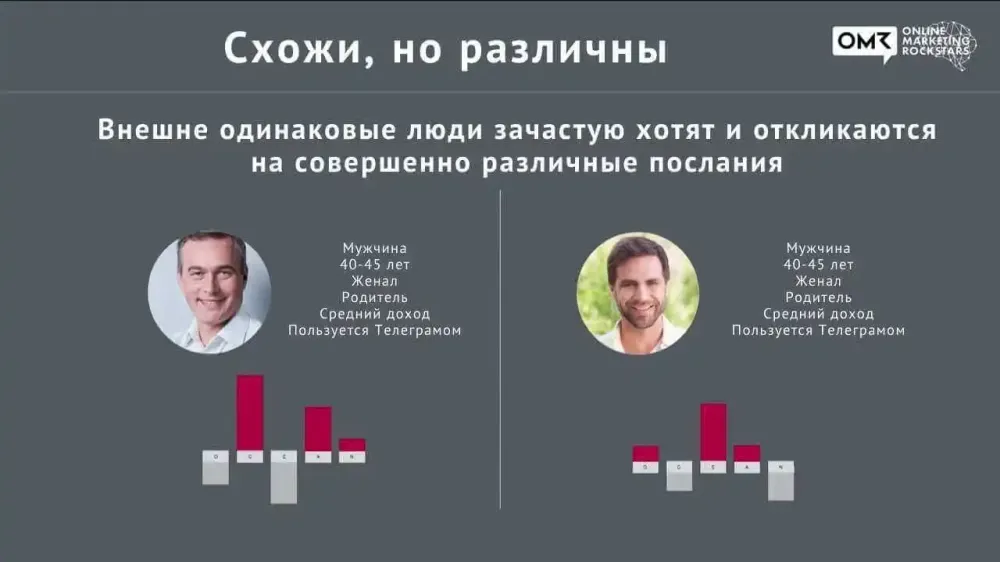
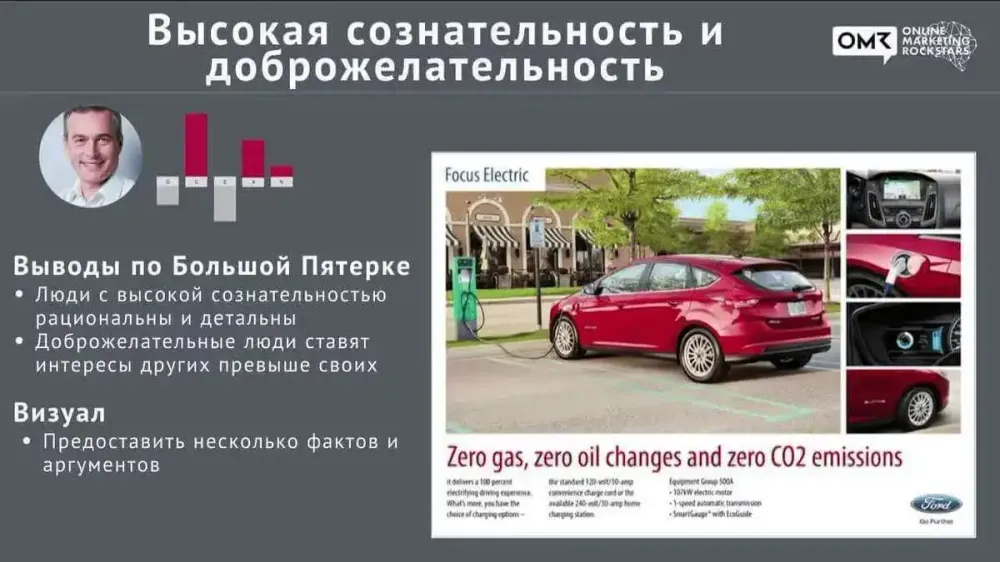
But we can see that the gentleman on the left has a very conscientious and agreeable character, whereas the gentleman on the right is highly extraverted. So if we knew that both of these men were watching the car market, we could use psychographics to target them and send them different messages. In particular, the "conscientious" man might be more interested in a product with qualities that are more relevant in today's society — an electric motor, for instance. A conscientious man can be won over by a rational, fact-based argument like the one set out in the creative below.
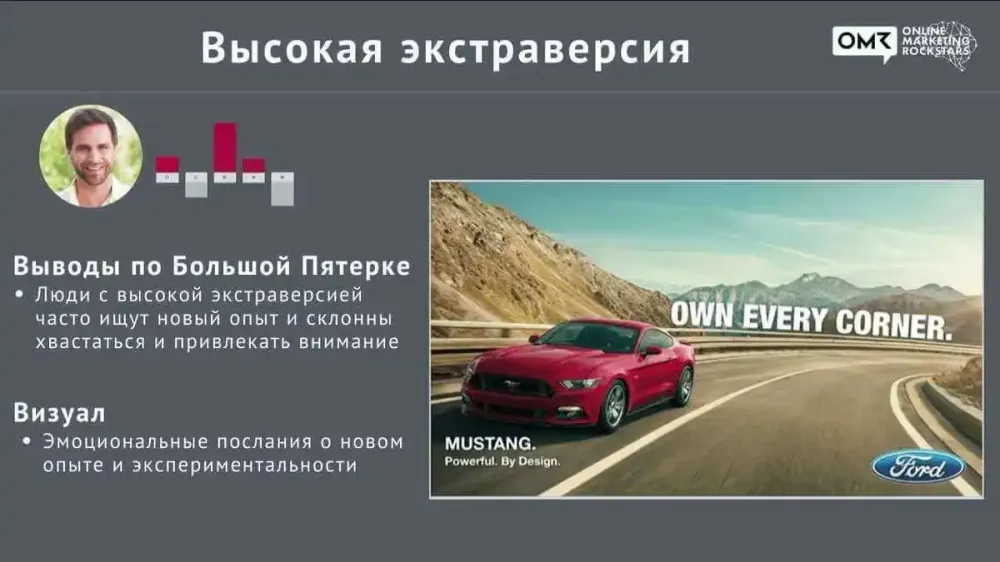
This creative stands in contrast to the extravert, to whom we might want to sell a sports car, using language and imagery that evoke the emotions and the experience of buying a car like the one we are offering.
Big Data
The second technology I want to talk about is data analytics. Big data is fundamentally changing the way we communicate. Back in the 1950s, the Mad Men era, the creative was delivered to the audience from the top down. That is, brilliant minds came up with creative concepts and pushed them out in front of an audience in the hope that they would resonate.
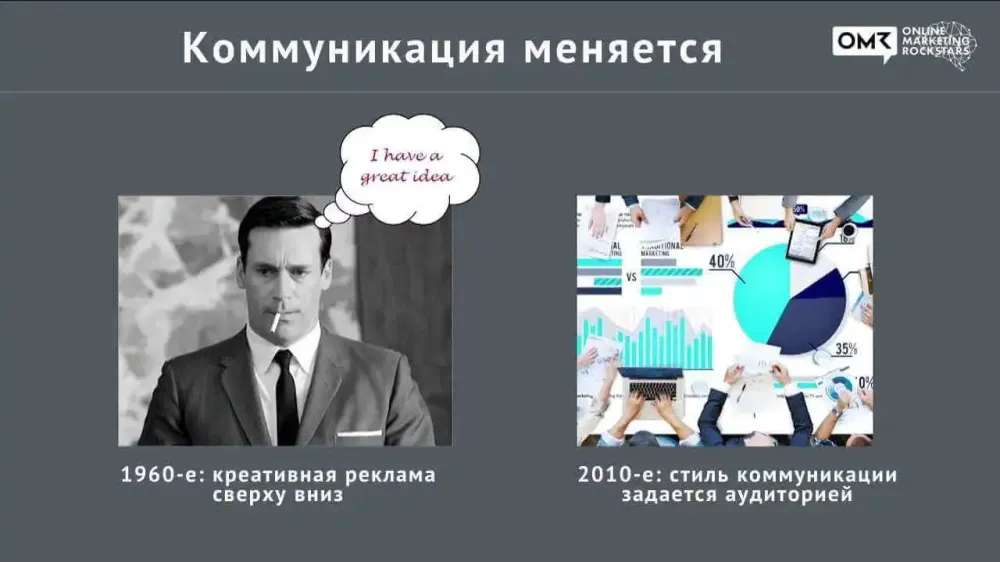
But today we can use Big Data to understand precisely which messages each particular group in the target audience needs to hear, long before the creative process even begins.
So what is Big Data? It is in fact the sum and aggregation of as many data points as you can get your hands on. That includes:
- Factual data: demographics such as age, sex, ethnicity and so on.
- Attitudinal data: what car you drive, what magazines you read, which social networks you use, which church you attend, which golf club you belong to and so on.
- And of course behavioural or personality data, an understanding of your worldview.
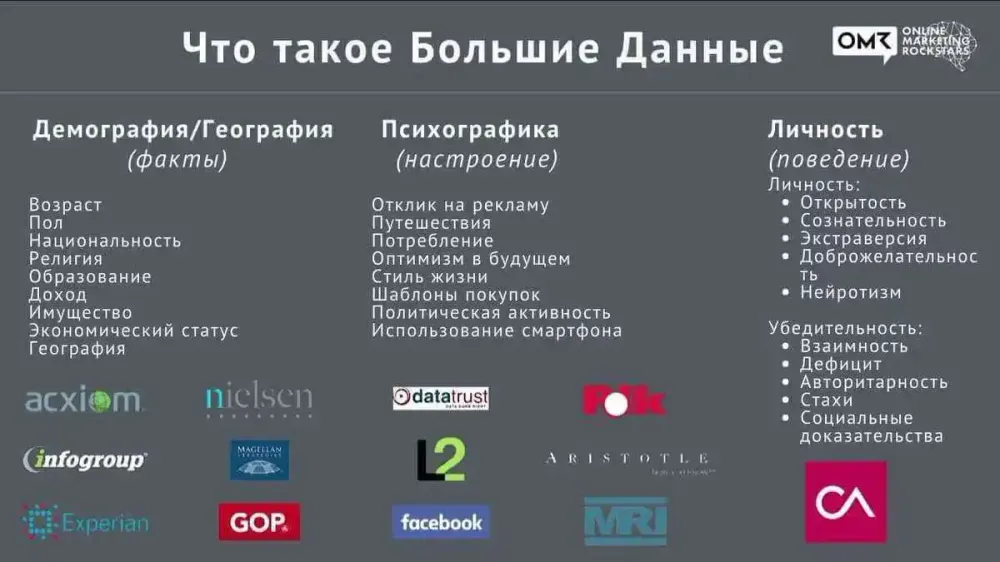
So we can take all this data, arrange it in a single database and use it to build complex but very powerful models of the audience we want to engage with, and then use those models for far more individual engagement through communication.
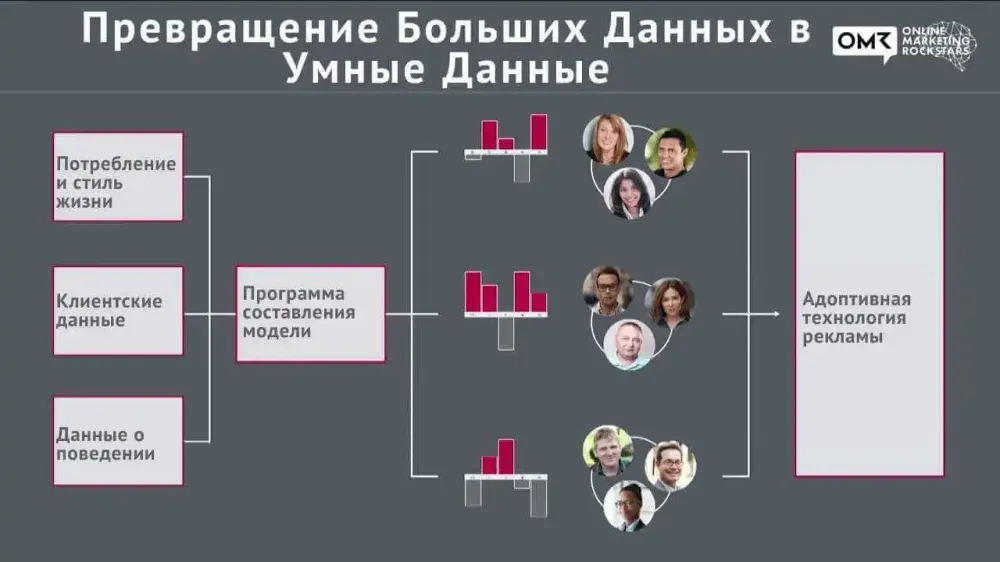
Let me illustrate this with a fairly simple example of a dental product — toothpaste. Below you see a data dashboard:
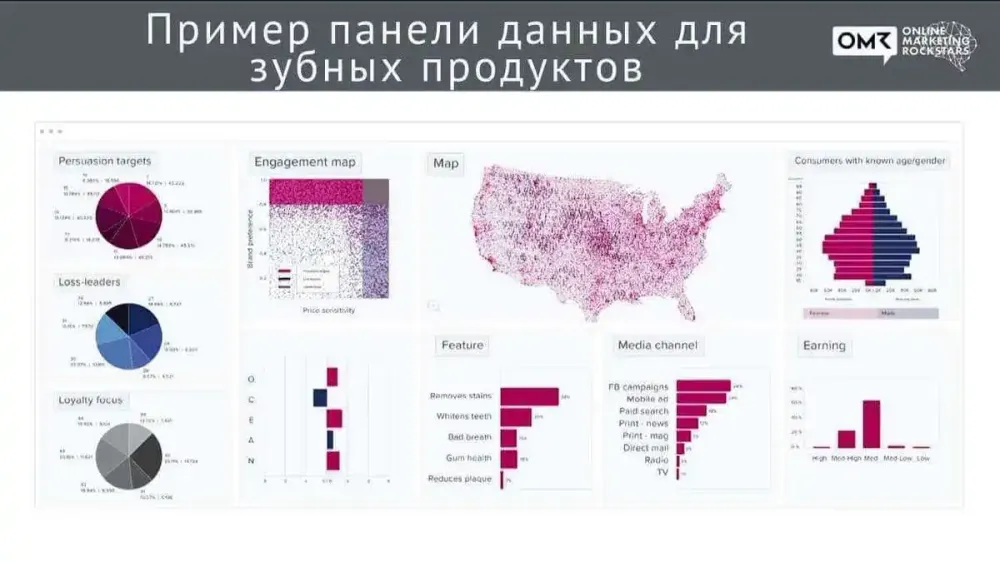
The communication methods here are split between two audiences:
- the people who are more likely to be swayed by economic arguments, by price sensitivity, and
- on the other, right-hand side we see the audience more likely to respond to their preferred brand.
So clearly the people highlighted in blue on the right may respond better to a discount offer. That could be a positive way of drawing them in. Conversely, the people who prefer their favourite brand will need persuasive arguments based on product features such as those listed here: stain removal, teeth whitening, bad breath, gum health and so on. This dashboard also tells us which media channels the different audiences are most likely to engage with, and their earning capacity, and therefore their spending capacity, and the key demographics. On top of that is layered an understanding of personality, or psychographics.
So how does the "self" show up in the creative? If the audience we are seeking to engage consists mainly of women aged 25 to 30, single, on an average income and so on, that has to be reflected in the creative, both in the imagery and in the language we use.
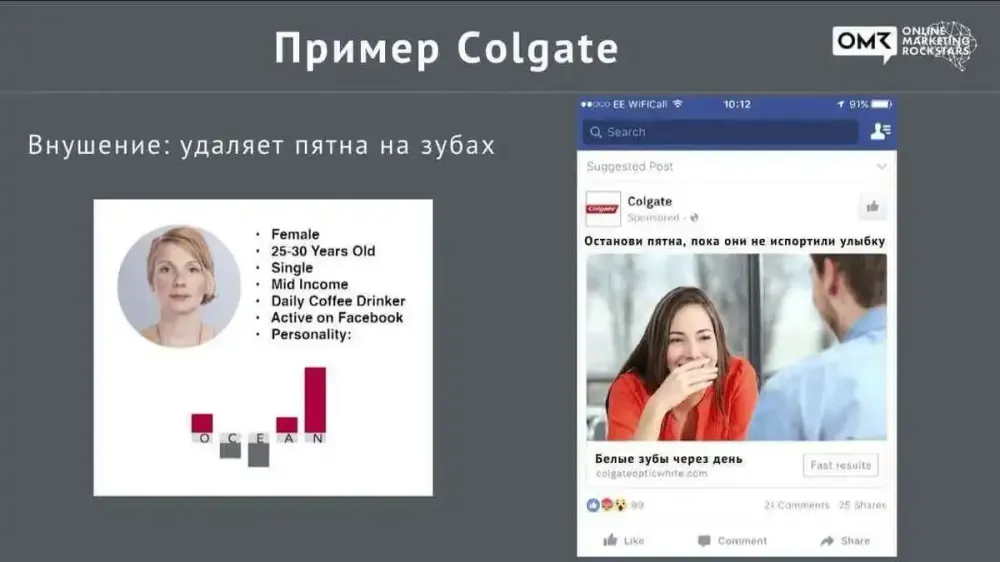
We can see that this person or this group is active on Facebook, so that could be our channel of communication. Most importantly, we know that we need a persuasive message built on the fact that this toothpaste removes stains. And finally, the personality of this group is neurotic, so we need an emotional message.So the fact that the stains can disappear before they spoil your smile is a genuinely very strong signal.
Adaptive advertising technology
The final stage of this toolkit is adding targeting technologies. I firmly believe that mass advertising is dead. The idea that millions of people will receive a single message is something our children will never understand.
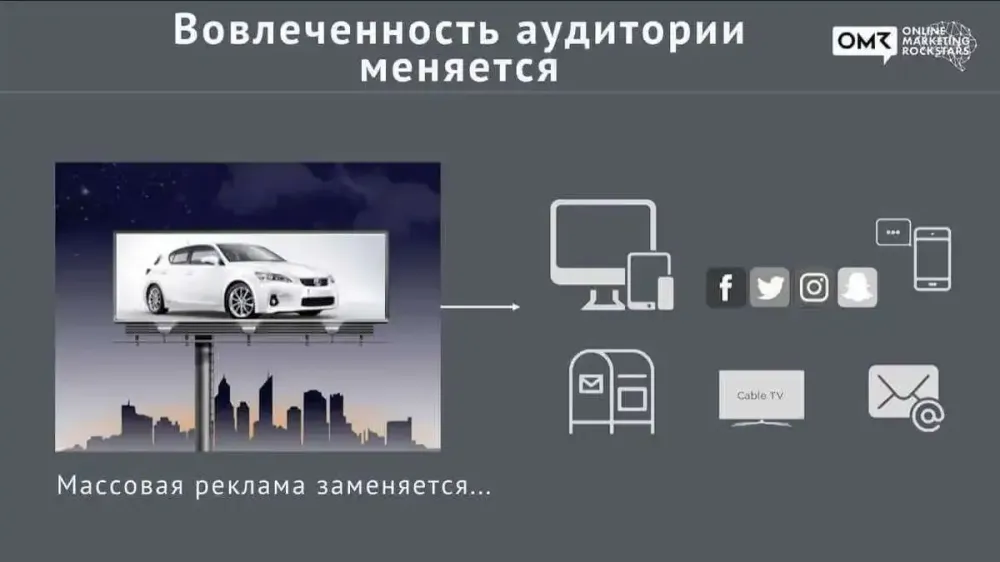
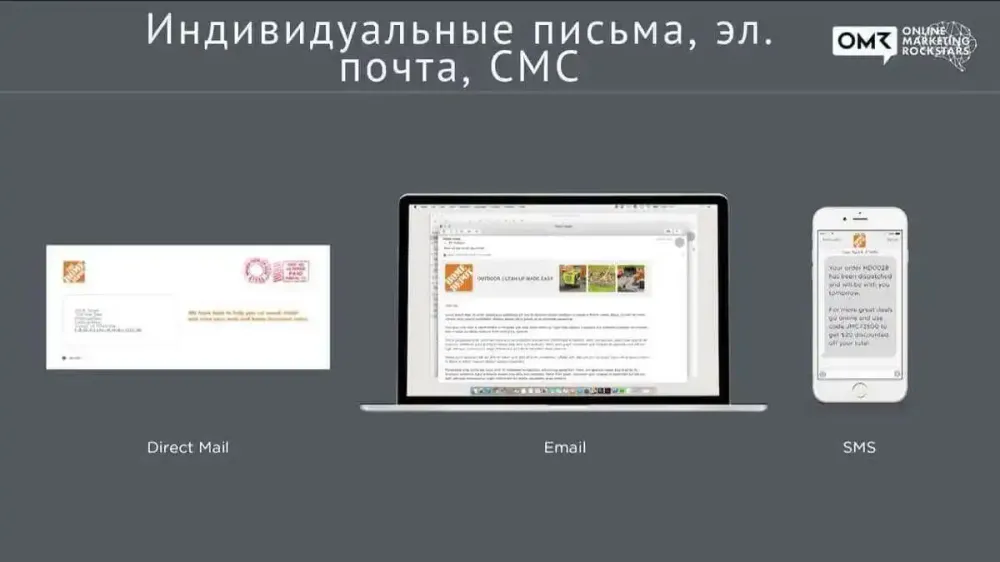
Communication is becoming ever more individualised. We are moving towards an era in which we will have personal relationships with brands. So whether we communicate with you by post, by email or by text message, these will be individual letters addressed to you personally, as individuals, so that a husband and a wife in the same household may receive different messages even when those messages come from the same company and are about the same product.
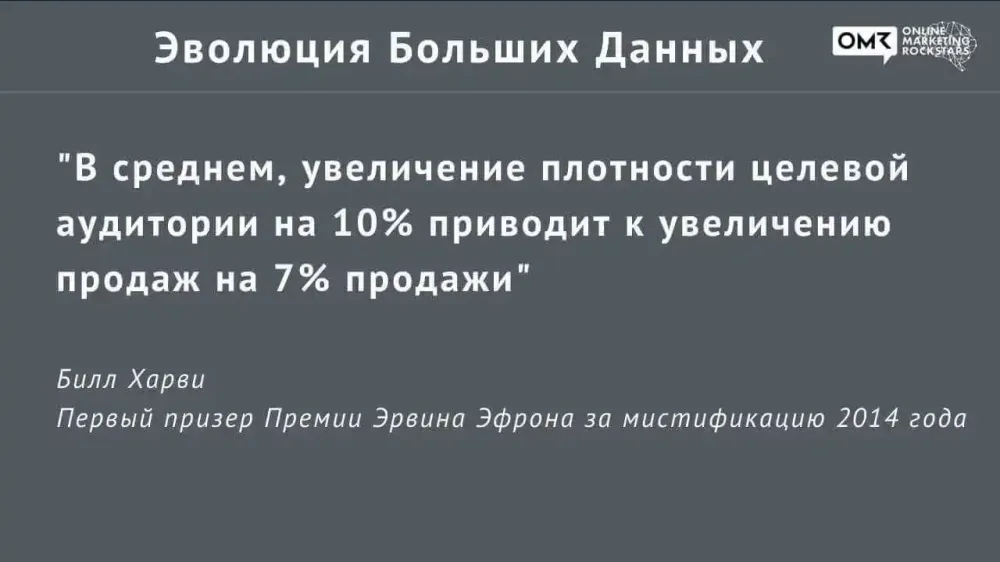
Bill Harvey said: "a 10% increase in the density of the target audience leads to a 7 per cent increase in sales".
We can use digital marketing to upload target segments using cookies, in order to identify and reach the densest possible audience for particular messages.
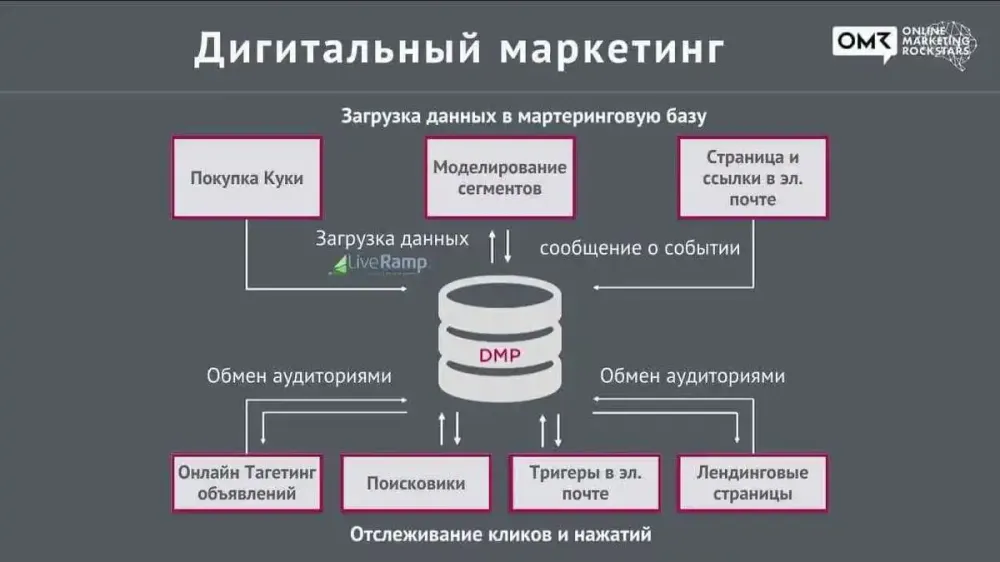
In America we can also read viewing-habit data from television set-top boxes. We can match those habits to the target segments for an advertisement and place products only in those television programmes that have the highest density of the target audience.
If you doubt what I am saying, look at where the money is going. Look at where the big brands and the big advertising agencies are investing. Over the last couple of years Walmart and Ford have put hundreds of millions of dollars into building analytics systems or buying them.
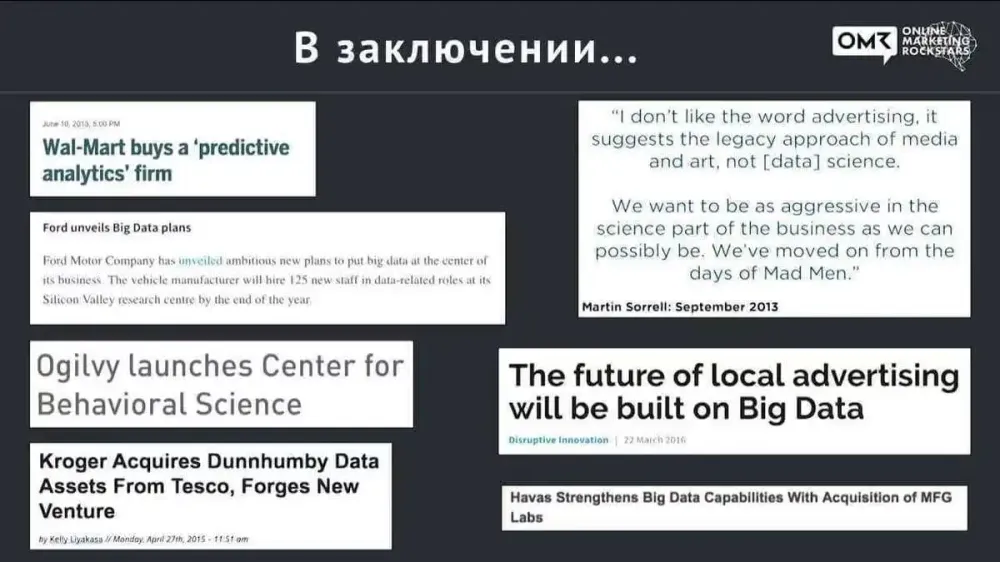
Ogilvy, the advertising giant, has launched a Behavioural Science Centre in an attempt to understand the influence of psychology on marketing. Kroger, the retail giant, has acquired Dunnhumby, the British analytics firm. Martin Sorrell, the advertising guru, was talking at least four years ago about the shift from creativity to science and data. And the French conglomerate Havas is moving in the same direction.