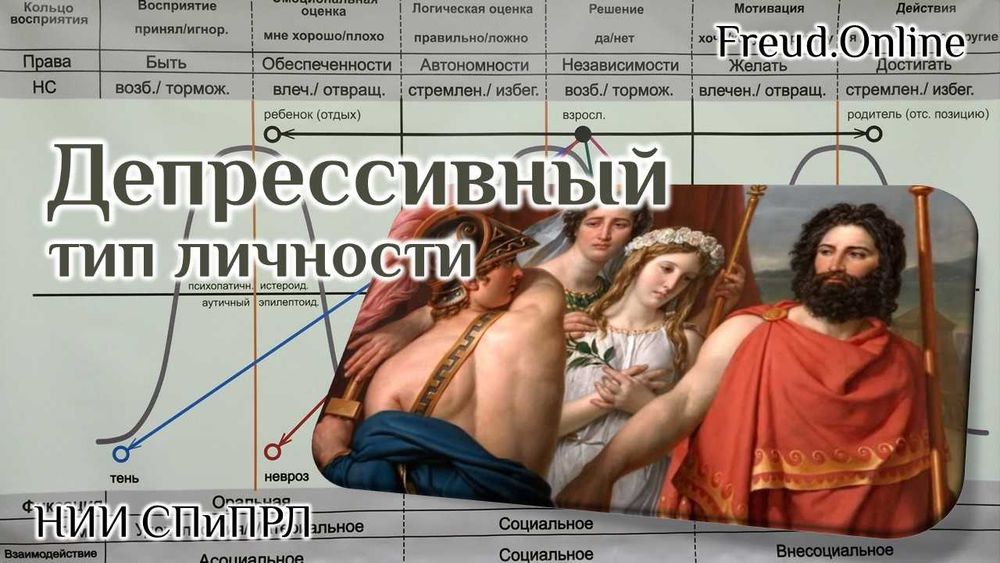
Every decision and every action is subordinated to proving their own “goodness” and to outside assessments. Dependence on other people's opinions. A lack of faith in themselves. A pessimistic outlook. A love of overcoming difficulties. A conviction that happiness has to be earned and cannot last long. Their whole life, all their strength goes “to others”, because loving themselves and doing something for themselves is “selfish” and “not good”.

Disharmonious and Conflict-Prone Traits
- The stance of “everything for others, nothing for myself”.
- Guilt (with or without a reason).
- A suffering, martyred cast of mind.
- Painful altruism.
- “Saintliness” (I suffer, I overcome myself, I deny myself everything, and all around me there is cruelty and violence — I am a saint).
- Clowning, playing the fool — “I am bad”, “I am a rebel”.
- Dividing everything into “good” and “evil”, “white” and “black”, “right” and “wrong”. Waging “holy wars” against “evil”.
- Sacrificing themselves, their own interests, their desires, the shirt off their back, out of a need to get a “good mark”, “praise” and the feeling of having overcome something (“I gave my whole life for you”).
- Provoking violence — the “victims” of villains.
- Hyper-caring.
- Workaholism.
Harmonious Traits
- Caring, always ready to help.
- Obliging, dependable in carrying things out.
- Generous, they share whatever they have without a second thought.
- They put their whole soul and all their strength into their profession and their work, especially if it involves helping or rescuing others.
- Kind, they empathise easily.
- They will solve the task even if a great deal has to be overcome to do it.
Fears, Sources of Displeasure
- Happiness (unsuffered-for and lasting)
- The absence of problems, of suffering, of something to overcome
- Undeserved achievements and successes that have not been suffered for
- “Bad marks” (criticism, “not being good”)
- Categorical, peremptory statements addressed to them
- Wanting something for themselves, admitting that they love themselves
Sources of Pleasure
- Having their inner struggles, torments, suffering and overcoming of difficulties noticed (and valued) by those around them.
- Having their “saintliness” acknowledged by others.
- Memories of, and daydreams about, the rare moments of a distant and unreachable happiness, of a bright future (“if not me, then at least the children will live a normal, happy, comfortable life”).
- Children and caring for them, giving them everything.
- Dependence (on those close to them and on their assessments).
- Being punished for “bad behaviour”.
Careers (Comfortable, Self-Actualizing)
- Rescue workers, doctors, benefactors, patrons of the arts.
- Servants of the Orthodox church, monks, sisters of mercy.
- Teachers and nursery teachers who suffer for their little ones.
- Caring, passionately loving mothers. Caring wives to their husbands, professional housewives.
- Charity work, “working for free”.
- Actors — sufferers and rescuers.
Games – Roles – Manipulations
- How wicked and cruel you all are, and how kind I am.
- Suffering poets, sighing admirers.
- The “little Christs”, “sanctimonious ones”, “Mother Teresas”.
- “Holy martyrs”
- The “victims” of maniacs, monsters and alcoholic husbands.
- Heroes who sacrifice themselves, their lives, the shirt off their back.
- “Nothing depends on me, it is all down to my husband.”
- “I am bad” (rebellion, digs, spite)
- “I will save you even if you do not want me to”
- The domestic tyrant working for the common good
Appearance
Worn out, dishevelled, tired, guilty
Motor Activity
Weary, slightly drooping and slack, suffering
Personality Development (Paths)
- A positive outlook on life. Living and suffering are two different things.
- Accepting that lasting happiness is possible without having to overcome anything or suffer for it.
- Choosing for themselves who is going to assess them and whose opinion does not interest them.
- Taking off the mask of “saintliness” and “martyrdom”.
- Doing something for themselves, for their own sake, loving themselves and not being embarrassed about it (healthy self-interest). I am not alive in order to wait on other people.
- Understanding that between white and black, light and dark, good and evil there are many other shades — the world is many-sided and does not have to be “saved” or “changed for the better” all the time.
- Not taking the blame for other people's suffering