I will never stop marvelling at the genius of the old storytellers who invented the phrase “and they lived happily ever after”. Behind that phrase, as behind mayonnaise, you can hide any flaw, crack or whiff of staleness: the fact that once the tale was over the newlyweds lived in completely different wings of the palace, if in the same palace at all; the fact that affairs with the servants did not count as adultery; and a great deal more besides. The most interesting thing in these stories is the idealised figures of the princesses and their princes. The kind that simply do not exist. From a counsellor’s point of view, under modern conditions such people simply would not be able to live happily ever after together. Apart — now that is another matter. And I am far from the first to conclude that a princess by no means always needs a prince. And then one day the fairy tale came true...
Background: The stories are published from the feedback we received and with our clients’ consent. The names have been deliberately changed. At the end you will find a counsellor’s commentary analysing the relationship.
Skip to the counsellor’s commentaryAt one of our profiling interviews there sat before me a young woman who embodied that very ideal image. Lena was a real princess — no need to slip a pea under the mattress! These days you only meet her kind in fairy tales. Golden hair, a languid gaze, femininity in every movement of her fingers, beautiful dresses and frilled sundresses, the knack of caring for everyone and a sincere, almost childlike faith in a great and pure love. If people would merely laugh at me for saying “I am a girl and I should not have to decide anything”, she would not even have to say it out loud. Yes, a girl; yes, she must be looked after. She seemed to have absorbed with her mother’s milk a purely feminine wisdom about how to stay beautifully silent, how to accept presents, even how to be capricious properly, so that people felt nothing but sympathy for her. In short, I envied her without a shred of malice, knowing that I could not even parody such a thing. At the same time Lena had an excellent job, a car loan already paid off in full, and was thinking about a mortgage; the princess was quite level-headed and well adapted to life.
She even had, in principle, a “real prince” in mind: a quiet, dreamy romantic and idealist who, in her words, could spend hours “conversing about beautiful things” without so much as attempting to kiss her. Even his name was romantic: Roman. But something there was not right, so on purely practical grounds she came to us. When she heard the description of the man who would suit her, Lena burst out laughing.
– That is definitely not a prince! she remarked.
– Indeed, it is more of a dragon, I agreed. All that is left is to match the colour of his scales to your evening dress.
The problem was that “dragons” are domineering, independent creatures who despise weakness of any kind, and so they do not come to us all that often. “Dragons” are used to simply taking what they want rather than waiting for a bunch of counsellors to offer them something.Lena had to be patient for a couple of months until Maxim turned up.
The dragon
Maxim was the sort of man you could drop into a desert with a penknife without worrying — he would survive. He would survive a Martian invasion, and probably the open sea as well. And he would take enormous pleasure in surviving. Bright, noticeable, dressed to the nines, a regular at various restaurants and other smart events, a fairly pushy businessman and a fairly blunt man. He had an opinion on most questions, a stock of comic stories from his travels and a rather forceful way of talking. In short, the very dragon: showing off his impenetrable scales, his mighty wings, his sharp teeth and his sharp turns of phrase, and... very much in need of his princess.

On the appointed day Maxim booked a table at the fashionable restaurant “The Scarlet Flower”, and they met in person for the first time. Lena looked at him as at a real live dragon, with a light mixture of fright and delight, glancing up childishly from under her brows. Maxim, meanwhile, was all but devouring her with his eyes as he lounged in his chair. The awkward silence dragged on.
– Right then. My name is Maxim. My bank balance is impressive. My character is foul, demanding and impudent. But I am ready for a family, I want children, and not one but two at the least. You do not have to work. I will provide two holidays abroad a year, he introduced himself in a tone that brooked no objection.
Lena stared at him in fright, not knowing how to react. She was “saved” by the waiter bringing the menus, but Lena was not allowed to hide behind the leather folder.
– Have the steak! That is what I come here for. Nobody else in town knows how to cook them like this! And my usual wine! — the recommendation slid imperceptibly into an order, and all that was left for Lena was to nod in confusion; it was too late to object. In any case she had not known what to have, so in a way he had made her life easier. When the waiter had gone, Maxim fixed his companion with an attentive stare again.
– Your name is Lena. Your character, apparently, is modest and timid. The counsellors assure me that you are a model of femininity and gentleness. Do you at least want children?
– I-I do... Lena faltered.
– Come on, do not be afraid! Maxim laughed. I like you! I will not eat you straight away!
The evening passed calmly, and at some point Lena realised that Maxim was simply like that by nature, pushy from birth; he did not know any other way — “ugly of face but kind within”. She managed to peer through his “scales” and see how vulnerable and gentle he really was, and after that she relaxed. It was actually easier that way. Maxim seemed capable of taking care of everything in the world, of protecting her from every storm and every problem. With him she did not have to strain or decide anything; on the contrary, she could relax and feel like a Woman with a capital letter. Next to him Lena felt like some unearthly diva around whom everyone fussed simply because she was with him. And the way everyone fussed around Maxim was quite beyond belief.
Meeting after meeting, restaurant after restaurant, Lena grew fonder and fonder of Maxim. She wanted to please him, dressed more brightly and more sexily, and behaved right at the edge of what she allowed herself. That balancing on the edge thrilled her, stirred up her feelings and, most importantly, seemed to appeal to Maxim. It was as if a princess who had moved into a dragon’s lair had got into the treasury, pulled on some shining armour and started waving a little dagger adorably under the dragon’s nose so that he would play with her some more. Hers was the game and the flirting; his was all the rest of the initiative. Lena did not even notice how she moved in with him, cut off her old contacts and began an entirely new life.
She only came to her senses when Roman — that very prince from her past and almost forgotten life — got through to her and even met her at some launch for yet another fashionable and therefore invariably drinking artist. Maxim used to drink with him now and again and afterwards would invariably sponsor at least the snacks, and at most the artist’s life between exhibitions, so he was on the guest list. How Roman got there was a mystery, but on seeing Lena with Maxim he set course for them and, first of all, assured everyone how glad he was for them, ordered them both a glass of wine and... stuck fast — they only got rid of him by leaving the exhibition. Afterwards he tormented Lena with messages: could she really not see how she had changed, how her suitor did not respect her, how he was violating her boundaries... until Maxim picked up the phone, said a few unkind words to Roman and then demanded that Lena block his number.
Naturally, Lena noticed everything Roman was worried about; she had never been a fool, even if Maxim sometimes hinted at it. But that is what makes him a dragon. So what if he scratches you with a scale here or catches you with his tail there... it happens to everyone. In return, he is far more reliable than a “prince”, and far more concrete than talk of lofty matters with nothing to show for it.
And boundaries... Just try violating the boundary of the sea! There is a reason why the male energy, Yang, is hard and warlike, fire and metal, while the female one — Yin — is fertile earth and moving water. Iron only makes earth softer, and in water it sinks altogether. And Lena, as a true princess, made full use of that.
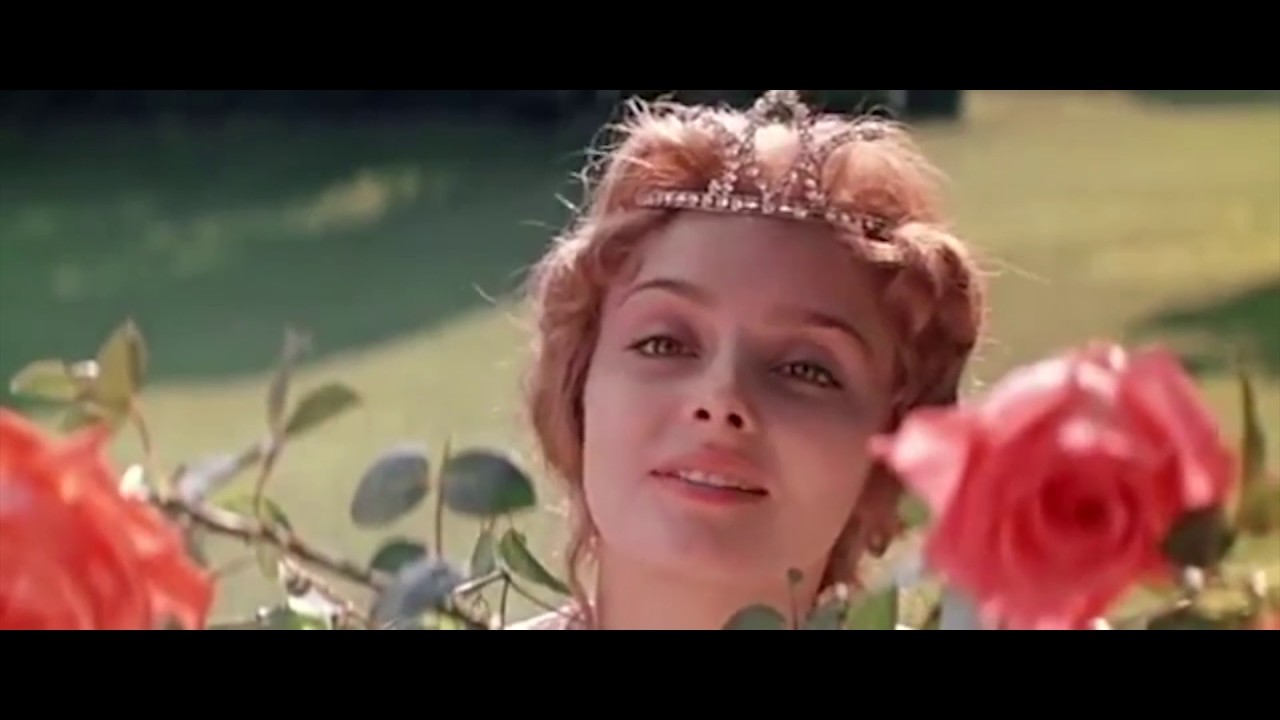
She met every attack and every violation of her boundaries with that same feminine wisdom: calmly, elusively, gently, damping it all down at the very start. If that did not work, she answered his straightforwardness with a scattering of options, a wealth of emotions and feelings, objections, counter-arguments and even counter-attacks. And when, worn out with spinning like a top and deciding to end it all with a single blow, he struck to kill, she stopped resisting and let him bite — after which, having discharged himself, he became the most caring and loving “dragon” in the world, one you could twist round your little finger. It was like a dance in which the man appears to lead, but only where the woman turns him, and in time it is no longer clear who is leading whom, who is steering whom. All that is clear is that they are together and taking a great deal of pleasure in it.
So life confirmed once again that princesses by no means always need saving from dragons. There is a reason why in the more modern internet fairy tales it is with dragons that princesses form the most reliable and solid union.
Counsellor’s commentary
Lena is an epileptoid woman. At the core of her personality lies a rather emotional contradiction between the fear of attention and the desire for attention. Direct attention is forbidden, but indirect attention — to her affairs, her home, her man — is one of the most popular ways of resolving that contradiction. Epileptoid women are very domestic, feminine and high-minded, though by no means defenceless, and when they need to they can attack and win with real skill. Even that, however, most often happens in line with their favourite strategy of playing the wounded child, against which there is very little one can do.
Maxim is the psychopathic personality type. He is the embodiment of most of the clichés and stereotypes about the “real man”: strong, successful, domineering and blunt. He is used to taking everything from life and to keeping himself, those close to him and anyone else within reach under control. He is that very “leading partner” who attracts epileptoid women above all; with him she is as safe as behind a fortress wall, she can let her femininity open up to the full and need not think about tomorrow.
An epileptoid woman and a psychopathic man are victim and aggressor, beauty and the beast. He attacks, he invades; she herself would never and under no circumstances, it is all him and all because of him. She can relax and hand the initiative over to him, and that attracts them both. In contact with him her sexuality begins to open up. She starts to behave and to dress more provocatively, “calling” him to the hunt. Only she knows how good he is, and she defends him in front of everyone. From time to time she tells him that he is too aggressive. A psychopathic man draws attention to himself easily, and he does it just like that, without intending to. The epileptoid, on the other hand, has a fear of attracting attention, and that can be part of the attraction.
Her sacrificial streak makes his excitement stronger still. And at the last moment, as a victim should, she slips away. On the psychological level of their interaction the pair swap roles: he becomes the victim and she the aggressor, who either nags and grinds him down or takes the wheel.
This is the classic, traditional marriage, in which the man plays the leading role, earns, makes the decisions and sets the direction. The relationship is built on response, on physical contact, on touch and on sex.
Would you like to know your own fairy tale?
The fairy tale came true, and there is a hint of real life in it. A life that does not suit everyone, but suits a particular personality type. Want to know your type and to be yourself in your relationships? Fill in the form below at the Dating Club run by counsellors: we will call you back and tell you the details.